The right safari clothes for women are a small set of neutral pieces that all mix: a long sleeved shirt in khaki, olive or sand, light stretch trousers, a supportive sports bra, closed trainers, a hat with a chin strap, a fleece or down layer for cold dawn drives and one dress for camp. The same capsule covers game drives in Kenya, Tanzania and Botswana plus most of a gorilla trek, inside a bag light enough for a bush flight.
Everything below turns that capsule into outfits: what to put on for a dawn drive, a hot afternoon, a lodge dinner or a travel day, which cuts cope with a high vehicle step, and how to handle bras, periods and toilet stops. Colour rules, layering and weather for every traveller live in our what to wear on safari guide; this page stays with women’s clothing and the buying decisions behind it.
Safari Outfits for Women: Combinations for Each Part of a Safari Day
A typical safari day swings through four or five changes of temperature and setting, and a good outfit plan follows them. The wake up knock comes before six. The first game drive runs until mid morning, the middle of the day is hot and spent in camp, the afternoon drive ends with a sundowner, and dinner follows. Travel days between parks add a road transfer or a bush flight. Here is what works for each, built from the same handful of pieces.
Notice how often the same items appear. Two shirts and two pairs of trousers carry almost every row above. Settle on three or four colours that all sit together, say olive, sand and stone plus one accent shade saved for scarves, and any top will match any bottom.
Dressing for the Game Drive Vehicle: Fit Rules for Women’s Safari Clothes
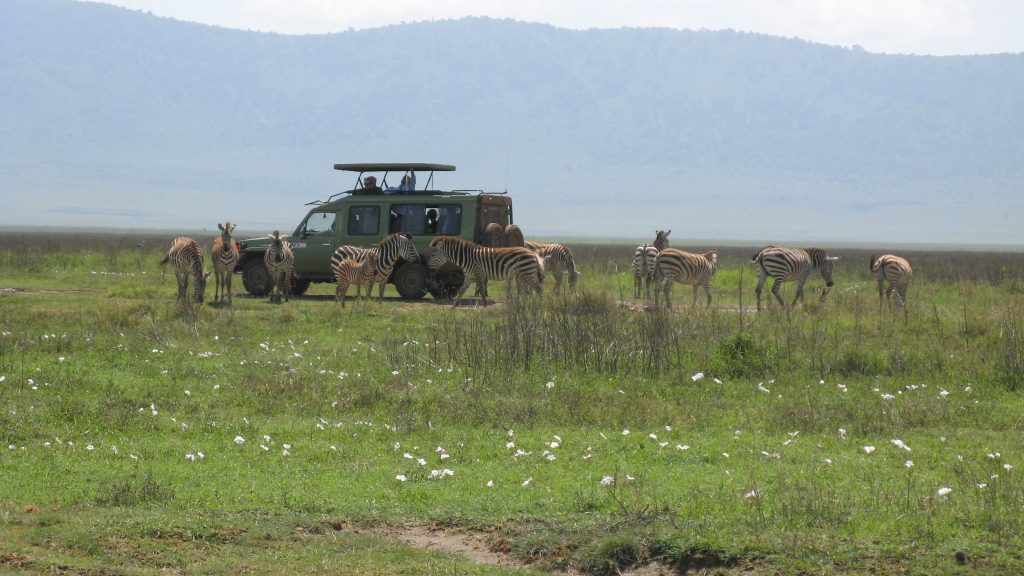
Dress for the vehicle, not the photo. On a game drive safari you sit for six to ten hours a day, stand up through the roof hatch whenever something appears, brace on corrugated tracks and climb a tall step in and out many times. Anything that rides up, gapes at the buttons, clings in the heat or needs tugging becomes an irritation by the second morning.
Three fit tests catch most mistakes. Sit down in the trousers and lift a knee high, as if stepping into a Land Cruiser: the waist should stay put and the seat should not pull. Raise both arms over your head in the shirt: it should not untuck or open between buttons. And wear everything for a full afternoon at home before it goes in the bag, because a seam that rubs for an hour rubs for a week.
Fabric matters as much as cut. Quick dry nylon blends and merino stay fresh and dry overnight after camp laundry. Linen feels cool but creases and lets mosquitoes bite through. Heavy cotton twill looks the part and lasts for years, though it dries slowly in the rains. Most women settle on a mix: technical fabric for drives, natural fabric for camp.
Safari Colours for Women: Neutrals, Accents and Shades to Skip
Earth tones form the base of a safari wardrobe for practical reasons. They hide dust, look calm in the bush and photograph well against grass and sky. Khaki, olive, sand, tan, stone, soft brown, muted green and light grey all work and all mix. In a vehicle, guides worry far less about colour than social media suggests, since animals read the truck as one shape and pay little attention to its passengers.
Three situations change that. On foot during a walking safari, you are close to animals with nothing around you, so guides ask for muted greens and browns and nothing bright. In tsetse fly country, which takes in parts of Tanzania, Kenya, Zambia, Zimbabwe and northern Botswana, dark blue and black attract the flies and their sharp bite; light blue, sometimes suggested online as a safari shade, is best left out there too. And camouflage print is a poor idea in any country, because several governments reserve it for the military.
Why not white? Nobody bans it. It just turns orange brown after one drive on red murram roads and shows up from far off on a bush walk. Save white for dinner, the beach and the flight home.
Personality still has a place. A printed scarf, a coloured kikoi, a bright dress in camp or a pair of statement earrings sits happily on top of a neutral capsule without breaking any rule.
Safari Shirts, Tops, Vests and Jackets for Women
If you buy one new item, make it the safari shirt. A women’s cut beats a unisex one: shorter in the body, narrower across the shoulder and with space at the hip, so it stays closed when you sit. Most women end up with a women’s vented UPF 50 button up shirt from makers such as Columbia, Royal Robbins, Craghoppers or Eddie Bauer. Roll up sleeve tabs, a back vent and pockets that close count for more than any logo. Our best safari shirts guide compares fabrics, UPF ratings and insect treated shirts, and the guide to insect repellent and permethrin clothing covers repellents for Africa.
Choose the layer beneath as something you would wear on its own by lunchtime. A lightweight merino tank or a fitted wicking tee sits under the shirt at dawn and stands alone in camp. Merino resists odour for days, handy when laundry falls a day behind.
Plenty of women would rather look soft than technical. A loose linen button down in sand or sage feels lovely in the dry season, yet it creases, blocks less sun and lets mosquitoes through, so it works best as the afternoon and dinner shirt.
Pockets solve a problem every woman on safari meets: women’s trousers rarely have useful ones, and a phone, lip balm, lens cloth and sunscreen all need a home in the vehicle. A lightweight women’s utility vest with zip pockets fixes that, and photographers like one for spare batteries and memory cards. Specialist safari outfitters sell vented versions in khaki and olive.
Then comes the jacket that named the whole look. A belted safari utility jacket with four patch pockets, in cotton twill or linen, is what fashion writers call a saharienne. Warm it is not. It is a smart layer for the flight, a lodge dinner or a town day in Arusha or Nairobi.
Warmth comes from a women’s packable down jacket or a light quilted vest over a fleece. Open vehicles on the Serengeti plateau, in the Mara and on the Ngorongoro rim are cold at six in the morning, and southern African winter dawns can bring frost. Ask women what they wish they had packed and this tops the list. An oversized hoodie does the job on a budget, though it eats space in a soft bag. In the rains, a thin women’s waterproof breathable rain jacket with pit zips doubles as a windbreaker, although many camps keep ponchos in their vehicles; our rain jacket guide covers what to look for.
Safari Trousers, Shorts, Skorts and Leggings for Women
On a safari game drive, trousers beat everything else. They shade your legs through hours of sitting, block mosquitoes at sundown and stop bare thighs sticking to a hot seat. Rise and stretch are what to check. A mid or high waist holds its place through endless sitting and standing, and a touch of stretch keeps the knees from bagging out by day three. Fabrics and convertible styles get a fuller comparison in our safari pants guide.
From most useful to least:
Inseam is the detail tall women miss. Several outdoor brands sell long inseam hiking trousers, and they matter on a gorilla trek, where the cuffs tuck into socks against safari ants. Extended sizes are common in trekking ranges now too, so plus size safari trousers turn up far more easily online than in town.
Jeans stay home. Denim gets hot by noon, heavy when wet and takes an age to dry after camp laundry.
Safari Dresses, Jumpsuits and Skirts for Camp and Lodge Evenings
Nothing is cooler in the midday heat than a dress, and most women’s safari packing lists have room for one. The morning drive is the exception. Getting into a tall vehicle in a skirt is clumsy, and a hemline leaves knees to the sun.
In camp, dresses come into their own. A linen shirt dress in khaki or sage takes you from lunch through the hot hours to dinner, with a wrap over the shoulders after dark. A belted safari shirt dress with pockets is the outfit all over Pinterest, and it earns that: the long sleeved versions roll up and button into short sleeves, so a cool camp breakfast and a hot afternoon need only one dress. A creaseless jersey maxi tucks into a corner of the bag and comes out wearable. Go for a length below the knee, which also suits village visits and town.
Jumpsuits and rompers look great in pictures, and the catch only shows up mid trip. On long drives between parks, the toilet is often a quiet bush behind the vehicle after the guide has checked the spot. In a one piece that means stripping almost completely. Women’s trip reports keep naming the jumpsuit as their biggest regret, so if you love yours, wear it in camp.
Skirts fall in between. A loose midi suits Zanzibar or a cultural visit, where people expect covered knees; our main safari clothing guide sets out dress expectations on the coast.
Sports Bras, Underwear and Periods on a Safari Trip
Before a safari trip, these are the questions women send in most. Plain answers follow.
Bras. Rough tracks can jolt you for hours, and standing at the roof hatch adds to the bouncing. Women’s trip reports recommend a medium impact wireless sports bra more than any other item, and wireless designs are kinder in the heat. Two is the right number, so one dries while you wear the other, with an ordinary bra for dinner if you want it.
Underwear. Plenty of camps launder everything except underwear, a widespread cultural norm across East and southern Africa, and you will often find a sachet of washing powder in the bathroom for exactly that. Pack enough quick dry travel underwear to rinse at night and wear again in the morning, or one pair a day if space allows.
Periods. Simple enough with some planning. Bring every supply from home, since rural towns stock little and camps nothing. Period underwear or a menstrual cup means less to carry and less to throw away. Opaque zip bags, wet wipes and hand sanitiser belong in the daypack for bush stops, because national parks allow nothing to be left behind. On heavy days, olive or charcoal trousers are more forgiving than pale stone. If your travel clinic prescribes doxycycline against malaria, ask about thrush, which some women get as a side effect, and pack a treatment.
Hair and skin. Dust and wind in the dry season dry hair out quickly. A cotton or silk scarf over a braid keeps it clean on drives, and leave in conditioner does more good than frequent shampoo. Sunscreen and an SPF lip balm are a given. Leave strong perfume at home, since it attracts insects.
Gorilla treks raise every one of these again on a far steeper trail with no toilets at all; our guide to what to wear gorilla trekking as a woman covers bras, periods and bush stops in the forest.
Shoes, Hats, Scarves and Bags for a Women’s Safari Wardrobe
A vehicle safari needs nothing more than closed trainers or light hiking shoes, because your walking is limited to camp paths, the vehicle and the odd picnic stop. Women’s trail running shoes in dusty grey or tan suit it perfectly, and many travellers love pull on leather boots of the Blundstone type for sandy camp paths. One pair of comfortable sandals covers evenings, and three pairs in total is plenty. Heavy waterproof boots justify their weight only on gorilla treks and walking safaris, which our gorilla trekking boots guide covers. Socks are simple: hiking socks with boots, thin trainer socks otherwise.
Every hat needs a chin strap. A strapless hat leaves a moving vehicle at the first big bump, and nobody hops out to retrieve it with lions about. The dependable choice is a packable wide brim sun hat with a chin strap that shrugs off being crushed in a duffel. For a resort feel, a packable straw sun hat with a chin cord suits camp and the beach. A felt fedora photographs well and spends most drives in your lap, because the wind will not let it stay on. If you wear a ponytail or bun, look at women’s wide brim safari hats with a ponytail opening. Our safari hats guide sets the styles side by side.
No item in the bag does more than a scarf. A kikoi, a plain cotton scarf or a lightweight cotton travel scarf shields your nose from track dust, your shoulders in town, your hair on drives and your knees from the sun. Add polarised sunglasses on a cord, plus a beanie that weighs almost nothing and saves cold dawns.
For the vehicle, a small crossbody bag or a light daypack holds sunscreen, a lens cloth, binoculars and a spare layer, and a padded camera bag is worth it if you shoot with a long lens. A belt pulls a shirt dress or loose linen shirt into shape, and one in tan leather or weave goes with every neutral. Jewellery? Small is better. Sunscreen makes rings slip off and sandy tents swallow them, while a simple sports watch tells you when the drive is due back.
Women’s Safari Clothes by Season and Destination
The capsule barely changes across Africa, but the weight of each layer does. Check the season for every park on your safari itinerary before packing, since one trip can cross three climates.
Women’s Safari Outfits for Walking Safaris, Gorilla Treks, Lodges and the Beach
Different parts of a safari trip call for small changes. Keep the capsule and swap the extras.
Where to Buy Women’s Safari Clothes: Everyday Brands to Safari Labels
You can dress for a safari without setting foot in a specialist shop. Safari clothing for women comes from three kinds of seller, and most wardrobes draw on all three. Mainstream outdoor brands make technical shirts and trousers that do the job well. Specialist safari outfitters in the UK, the US and South Africa make field shirts, skorts, safari jackets, vests and gaiters cut for the bush, often in long staple cotton or with insect treatment built in. Fashion and travel clothing labels make safari inspired linen, belted jackets, wrinkle resistant travel trousers and kaftans that suit a lodge dinner. Amazon stocks the mainstream brands and ships widely, and outfitters in Nairobi and Arusha sell kit too, with a narrower choice of sizes.
The picks below are brands that turn up again and again in the ranking guides and in makers’ own ranges. Fabrics and specs shift from season to season, so read the current label for material and UPF before buying.
Nobody needs a whole new wardrobe. The usual pattern is one or two safari shirts, one good pair of trousers and a hat, with the rest pulled from your own cupboard in neutral colours. Charity and thrift shops are a good hunting ground for linen shirts and olive trousers destined only for the dust.
Packing a Women’s Safari Capsule for a Bush Flight Bag
Bush flights between airstrips in Kenya and Tanzania commonly cap luggage at about 15 kg per person, hand luggage included, in a soft bag without wheels, while many southern African routes allow around 20 kg. Confirm the figure with your operator. It sounds tight. Camps do laundry, though, so it is enough, and families who have done ten day fly in trips with teenagers all describe the same system: every piece matches every other, the camp washes it, and nobody brings more than one pair of shoes plus sandals.
Laundry decides the count more than the length of the trip. With camp laundry available:
| Item | Up to 5 days | 7 to 12 days |
|---|---|---|
| Safari shirts | 2 | 2 to 3 |
| Tanks or tees | 2 | 3 to 4 |
| Trousers | 1 to 2 | 2 |
| Shorts or skort | 1 | 1 |
| Dresses | 1 | 1 to 2 |
| Sports bras | 2 | 2 |
| Fleece or down | 1 | 1 each |
| Shoes | 2 pairs | 2 pairs |
Travel in the bulkiest things, the fleece and trainers. Compression packing cubes keep a duffel tidy when it doubles as your wardrobe in a tent, and they make a clean sports bra easy to find at half past five in the dark. For the bag itself see our safari duffel bag guide; for everything beyond clothes, the African safari packing list; and for Uganda and Rwanda extras, the gorilla trekking packing list. Boots, binoculars and every other item each have a buying guide in our safari gear and clothing guide.
Safari Clothes Women Regret Packing
Women coming home from a safari name the same unworn items over and over. Our guide to what not to wear on safari covers the full list.
Safari Clothes for Women: Common Questions
What should a woman wear on safari?
A neutral long sleeved shirt over a tank, light stretch trousers, a supportive sports bra, closed trainers, a brimmed hat with a chin strap, a scarf and a fleece or down jacket for the early drive. For dinner, swap into a dress or fresh trousers.
What are good safari outfits for women?
For drives, a safari shirt over a tank with mid rise trousers and trainers. For camp, a shirt dress or linen trousers with sandals. For dinner, a midi dress or wide leg trousers with a wrap. For travel days, leggings or joggers with the safari shirt worn as a jacket. Keep every piece in three or four neutral shades so they all mix.
What colors do you wear on a safari?
Earth tones: khaki, olive, sand, tan, stone, brown, soft green and light grey, which hide dust and suit bush walks. Avoid dark blue and black where tsetse flies live, bright shades on walking safaris and camouflage anywhere.
Why can’t I wear white on safari?
White is allowed. It simply shows red dust after a single drive and stands out on foot, so most women save it for dinner, the beach and travel days.
What is the safari outfit called?
Traditionally, the safari suit: a belted bush jacket or saharienne with four patch pockets, paired with matching trousers or shorts. These days most people mean a neutral field shirt and trousers rather than the full suit.
Where can I buy African safari clothes?
Outdoor brands such as Columbia, Royal Robbins, prAna and Craghoppers cover nearly everything and sell through Amazon and outdoor stores. Specialist safari outfitters add field shirts, skorts and treated fabrics, and shops in Nairobi and Arusha carry basics in fewer sizes.
Can women wear dresses on safari?
Yes, around camp, at lunch and for dinner. For game drives, trousers or a skort are easier, since you climb into a tall vehicle again and again and sit in strong sun for hours.
Do I need a sports bra for safari?
Most women say yes. Bumpy tracks can go on for hours, and a medium impact wireless sports bra is much more comfortable on a game drive than an everyday bra.
How do I manage my period on safari?
Pack all your supplies from home, think about period underwear or a menstrual cup, and keep opaque zip bags, wipes and sanitiser in the daypack for bush stops, since parks allow nothing to be left behind. On heavy days, darker trousers help.
How much does a women’s safari wardrobe cost?
Not much if neutral clothes already fill your wardrobe. Roughly, expect a women’s UPF safari shirt from a mainstream outdoor brand to cost around US$40 to US$90, quick dry trousers about US$50 to US$110, a packable safari hat US$25 to US$80 and a sports bra US$25 to US$60. Two shirts, one pair of trousers and a hat cover most women. Prices move often, so check current listings.
Are shorts OK for women on safari?
Yes, in camp and in the vehicle around midday, with sunscreen. At dusk switch to long trousers for mosquitoes, and keep trousers on for walking safaris, gorilla treks and village visits.
What should women wear for gorilla trekking?
Quick dry long trousers tucked into socks, a long sleeved shirt, waterproof hiking boots, a rain jacket and gardening gloves. Leggings on their own are too thin for nettles. The gorilla trekking clothing guide has the full outfit, and the women’s trekking guide covers bras, periods and sizing.
What should I wear to a safari themed party?
Anything goes at a party: a belted khaki shirt dress or a field shirt with shorts, a straw or bush hat and a leopard print scarf. Ready made safari costume sets are sold too, though pieces you would wear again give better value.