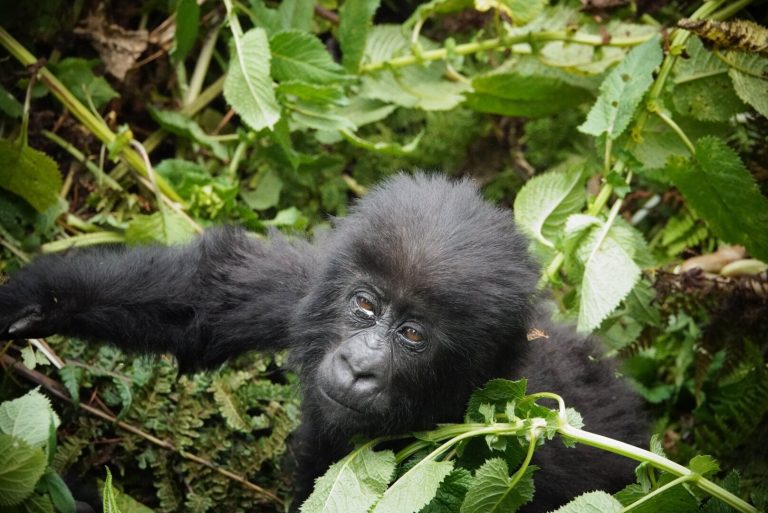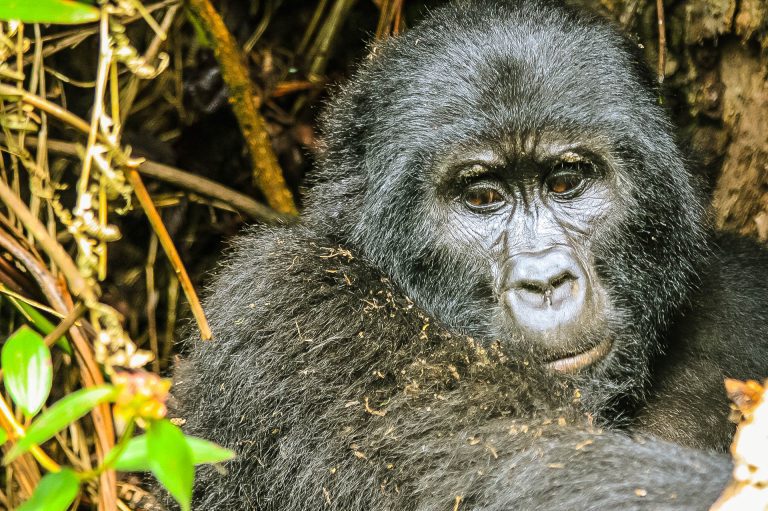
1 day gorilla trekking in Rwanda works from Kigali: a driver collects you at about 4 to 4.30am, you check in at Kinigi for the 7am briefing, trek to a habituated mountain gorilla family, stay one hour with them and are back in the city by early evening. Licensed Kigali operators sell this day tour with the permit and a private vehicle included. Every trek starts in Volcanoes National Park, in Rwanda’s northwest.
The day is long, and it fits some trips far better than others. This guide runs through the hour by hour plan, the hour itself, the flight test that decides whether the day trip is safe for you, what a fair quote lists, what to carry and the variants worth weighing first. The full trek, families and park rules get their own page in our Rwanda gorilla trekking guide. Prices sit in the FAQ at the end.
Is a 1 Day Gorilla Trek from Kigali Realistic?
Yes, for a reasonably fit person with a Kigali hotel night on each side of the trek. The one day gorilla trek is possible because the park is close: roughly 110 kilometres of sealed road run north from Kigali to Musanze, and Kinigi park headquarters is a short hop beyond. Operators allow two to three hours each way. No other mountain gorilla park is this easy to reach on a sealed road from a major international airport, which is why Rwanda is the one country where a same day return is routine.
Distance is not what makes it hard. Stacking is. There is the pre dawn start, then a briefing, then a hike at 2,500 to 3,500 metres that can take half an hour or five hours each way, and after all that the drive home. Expect 12 to 15 hours on the road or on your feet.
Trip reports describe a pattern that repeats. The drive north is dark and quiet. The morning at Kinigi goes quickly. The hour with the family feels like ten minutes, and most people sleep for much of the ride back. Very few regret going. A good number say they would have added a night near the park if they had known how tired they would be, and travellers in their sixties regularly report finding a shorter family manageable on the day.
Hour by Hour: The Kigali to Volcanoes Gorilla Trek Day
Every Kigali gorilla day tour runs to the same frame, since the Rwanda Development Board (RDB) fixes the 7am report time at Kinigi and the rest of the day counts back from it. Your operator confirms the pickup time the evening before; the times below are typical.
Trek length is the one thing nobody can promise. Trackers leave at dawn from the spot where the family nested and radio its position to your ranger, but gorillas keep moving. A family near the wall can have you back at the car by 10.30am, and a medium trek is usually done by about 2pm. A high family on Karisimbi can keep you out until mid afternoon, which pushes the whole return into the dark.

The Kinigi Briefing and Gorilla Family Allocation on a Day Trip
On a same day gorilla trek, which family you get matters more than on any other trip, because a long hike eats into a day that is already full. A permit does not name a family. Rangers allocate them at Kinigi, weighing fitness, age and what driver guides request for their guests.
Twelve habituated families are open to visitors in Volcanoes National Park, each seen by one group of eight a day. Among the names you may hear are Sabyinyo, Agashya, Amahoro, Umubano, Hirwa, Kwitonda, Susa, Karisimbi and Titus. Sabyinyo has long gone to older or slower walkers because it tends to range near the park edge. Susa and Karisimbi live higher on the volcano and often mean the longest walks. Nothing is fixed, though. A family that was twenty minutes from the wall yesterday can be two hours up the slope today.
So tell your driver guide, before you reach Kinigi, that you are on a day trip and how fit you are. If you are strong and happy with a long day, say so too; the high families usually go to people who ask for them.
Trackers matter here as much as rangers. They set out before you, cut a path where needed and stay with the family, and the ranger relies on their radio calls to time the walk. Follow their lead at the end of the trek, when the group stops, drops bags and closes in.
The rules are read out to everyone. Keep about 7 metres from the gorillas, speak quietly, no flash, no eating or drinking near the family, and turn away and cover your mouth if you have to cough. Anyone with a cold, cough or fever can be refused, as gorillas catch human illnesses easily. Bring a face mask, since rangers may ask you to wear one for the hour. The minimum age is 15.
Inside the Hour: Watching and Photographing Gorillas on a Day Trek
The hour on a one day gorilla trekking tour runs from the moment the group reaches the family, not from the start of the hike. Your ranger keeps the time and calls you back when it ends. Most people spend the first 20 to 30 minutes taking pictures, and then, almost without deciding to, put the camera down and simply watch. That second half is the part people talk about afterwards.
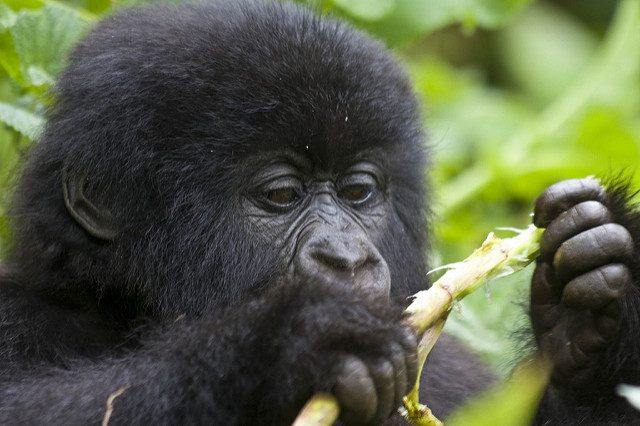
What you see depends on the morning. Some families are resting in bamboo, with juveniles wrestling and a silverback dozing. Others are feeding across an open slope, moving every few minutes, so the group follows on foot. Rain can send them under cover with their backs to you. None of this is staged, and no two hours look alike.
Is it frightening? Usually not. The gorillas are habituated to people and mostly ignore you. A silverback may beat his chest, grunt or make a short mock charge if someone gets too close to a youngster. The ranger tells you exactly what to do: stay still, crouch, look down and let him settle. Gorillas sometimes walk right past the group, closer than 7 metres; you are expected to step back if you can, never to reach out.
For photos, a zoom covering roughly 70 to 300mm handles most situations, and a phone does well at close range. Light under the canopy is dim, so raise the ISO instead of using flash, which is banned. Keep a spare battery in a pocket rather than in the bag the porter is holding. Our page on gorilla trekking and photography covers settings and lenses.
Who the One Day Gorilla Trekking Tour Suits, and Who Should Stay a Night
How many days do you need for gorilla trekking in Rwanda? One is enough to see the gorillas, if your plans fit the day trip. It works well for business travellers with one free day in Kigali, people with a fixed Kigali stopover on a longer East Africa trip, and residents of Rwanda or neighbouring countries who already know the road. It also suits anyone with two Kigali hotel nights already booked and no way to change them.
It suits others badly. Anyone who struggles with early starts or gets car sick on winding roads, or who worries about a long hike at altitude, will have a better day starting from a lodge after a full night’s sleep. The same goes for a family with a teenager who has only just turned 15, and for older relatives who may need the easiest family and a rest after it.
Limited mobility does not rule the trek out. Rangers can allocate the nearest family, and teams of porters can carry a trekker on a stretcher style chair, booked ahead through your operator. On a day trip that adds another moving part, so allow a night near the park if a carried chair is likely.
The step up from a day trip is small. A 2 or 3 day Rwanda gorilla tour keeps the same permit and the same hour, and just moves the long drive to the afternoon before.
Flights, Hotels and Timing Around a Day Trip Gorilla Trek
A gorilla trek from Kigali in one day lives or dies on your flights. Kigali International Airport is served by RwandAir plus carriers such as Qatar Airways, Turkish Airlines, KLM, Brussels Airlines, Ethiopian Airlines and Kenya Airways, with connections through Doha, Istanbul, Amsterdam, Brussels, Addis Ababa and Nairobi. Schedules change by season, so check the current timetable before you build the trip around one flight.
Then run this test. Arrival: you must sleep in Kigali the night before. Landing by late evening is fine. Landing after midnight leaves a few hours in bed before a 4am pickup, and a delay could cost you the trek, because Rwandan permits are close to non refundable and missing the 7am report time counts as a no show. If your flight is marginal, arrive a day earlier.
Departure: fly out the next morning or later. A late night flight on trek day works on paper when the trek is short, and some travellers do it, but nobody can tell you the trek length in advance and evening traffic into Kigali can crawl. Operators who sell the day trip routinely advise one more Kigali night for anyone flying home.
Your hotel’s position matters a little too. A hotel on the north side of the city, toward the Nyabugogo road, saves minutes at 4am, while the airport area at Kanombe adds a run through town. Agree the pickup point with your operator the evening before.
One date quirk: on the last Saturday of each month Rwanda holds Umuganda, a national community work morning, usually from about 8 to 11am. Businesses close and roads go quiet. A trekker already at Kinigi by 7am is not affected, but an arrival transfer or a city tour that morning may wait until it ends, so tell your operator if your dates include one.

What the 1 Day Gorilla Trekking Quote Should Cover
Most 1 day gorilla trekking packages from Kigali carry the same core items, and a trustworthy quote lists each one rather than a single number. Look for these lines.
Prices for the same day trip vary widely, mostly because of how many people share the car. A solo traveller pays for the whole vehicle and driver; a group of four splits it. Forum threads reach the same conclusion each time: get at least three itemised quotes and expect the permit to be the biggest single line by far.
Reviews help, but read them for the right things. Look for mentions of punctual 4am pickups, drivers who knew the trailheads, and how the company handled a delayed flight or a full permit date. Star ratings alone say little. The Rwanda safari cost guide and the budget gorilla trekking in Rwanda page go deeper into the numbers.
Packing and Fitness for a Same Day Gorilla Trek
A day trip gorilla trek means leaving the hotel in the dark with no chance to go back for anything, so pack the night before. Kinigi is often around 10C at dawn and can be warm and sticky on the slopes by midday. Weather swings with the season: June to September and December to February are drier, March to May brings the long rains, and October and November see shorter afternoon storms. Rain is possible in any month, so a rain jacket goes in the bag every time.
Wear long trousers tucked into socks or gaiters, a long sleeved shirt, broken in waterproof boots with ankle support and a warm layer you can peel off. Carry gardening gloves for the nettles and for grabbing branches; some trekkers bring a spare pair to hand to someone who forgot theirs and leave them with the porters afterwards. Add a face mask, sunscreen, insect repellent with 20 to 30 percent DEET, snacks and at least a litre and a half of water. Bring your passport, which rangers check against the permit. A small daypack is enough, and a porter will carry it.
Leave a dry change of clothes and shoes in the car. Mud to the ankle is common in the wet months, and three hours in wet socks is a grim end to the day.
Volcanoes lies in a malaria zone, though the cool altitude keeps mosquito numbers low; ask your doctor about tablets, ideally six weeks before travel. Kigali tap water is best avoided, and your operator should supply bottled water for the day.
Fitness counts for more on a day trip than on a longer tour, because you start tired. Walk hills or climb stairs for a few weeks beforehand, and take a porter even if you feel strong: they carry the bag, give a hand on wet ground and the fee goes to families living beside the park. Mentally, settle in advance that the walk could be thirty minutes or five hours; people who expect a long one rarely mind it. Our Rwanda gorilla trekking packing list covers the full kit, with guides to gorilla trekking boots, gloves, a rain jacket and a daypack.
Variants: Musanze Overnight, Golden Monkeys and the Helicopter Day Trip
Three variations on the Kigali gorilla trek come up again and again, and each fixes a different weak spot of the day trip.
The Musanze overnight is the most popular. Drive up in the afternoon, sleep in Musanze or at a lodge near Kinigi, trek the next morning and be back in Kigali by late afternoon. A 4am start becomes a 6am one, for the price of one night. Lodging runs from simple guesthouses in Kinigi to the top lodges on the park edge, such as Singita Kwitonda, One&Only Gorilla’s Nest and Wilderness Bisate. For most people this is the better version of the same trip, and it is what a 2 day tour is.
Golden monkey tracking is the usual fallback when gorilla permits are full on your date, and an easy second morning if you stay longer. Troops live in the bamboo belt and are often found within an hour. Children from 12 can join. It also reports at Kinigi at 7am, so it cannot share a day with a gorilla trek. See the golden monkey trekking guide.
The helicopter day trip is the luxury fix. Charter flights from Kigali to the Kinigi area take about half an hour and are arranged through operators and some of the top lodges. Cutting out the drive in both directions changes the day completely. Flights are weather dependent, since low cloud on the volcanoes can ground them, and they cost far more than the road. Our guide to luxury lodges near Volcanoes National Park covers the lodges that arrange it, and luxury gorilla trekking in Rwanda and Uganda looks at fly in trips more widely.
Booking the Permit and Dates for a One Day Trek
The permit sets the date, so book it first. RDB issues only 96 gorilla permits a day across the 12 families, and June to September plus the December holidays can sell out six months or more ahead. A month’s notice is often enough in the wetter months. A day trip needs the permit and the vehicle on exactly the same day with no buffer, so changing the date later is harder than on a longer tour.
You can buy the permit yourself on RDB’s online portal and then hire a car and driver, or ask a licensed operator to arrange both. Most day trippers pick an operator, because the permit, pickup time and trailhead transfer all depend on one another. The Rwanda gorilla permits guide explains the rate tiers, rescheduling and the low season offer, which needs nights in Nyungwe or Akagera and so does not fit a one day trip.
The rainy months, March to May and November, often have permits free for the next few weeks, which helps with a short notice trip. Trails are muddier then and treks can be slower. The Volcanoes National Park guide covers the park and its seasons in full.
Rwanda Entry, Currency and Practical Tips for a Gorilla Day Trip
Visas are simple. Rwanda grants a visa on arrival to every nationality, and citizens of African Union, Commonwealth and Francophonie countries get it free; you can also apply online through Irembo before you fly. The East Africa Tourist Visa covers Rwanda, Uganda and Kenya if your trip goes further. Your passport needs blank pages and validity well beyond your stay.
The local currency is the Rwandan franc. Kigali ATMs and most hotels handle cards, but carry small, clean US dollar notes or francs for porters and tips, since there is nowhere to change money on the trail. English, French, Kinyarwanda and Swahili are all spoken, and driver guides speak English as standard. Single use plastic bags are banned in Rwanda, so pack in zip pouches or cloth.
Keep luggage light if Kigali is a stopover: the car has space, but you will want only the daypack on the trek, with everything else left at the hotel or locked in the vehicle.
Beyond the Day Trip: Longer Rwanda Trips and Uganda
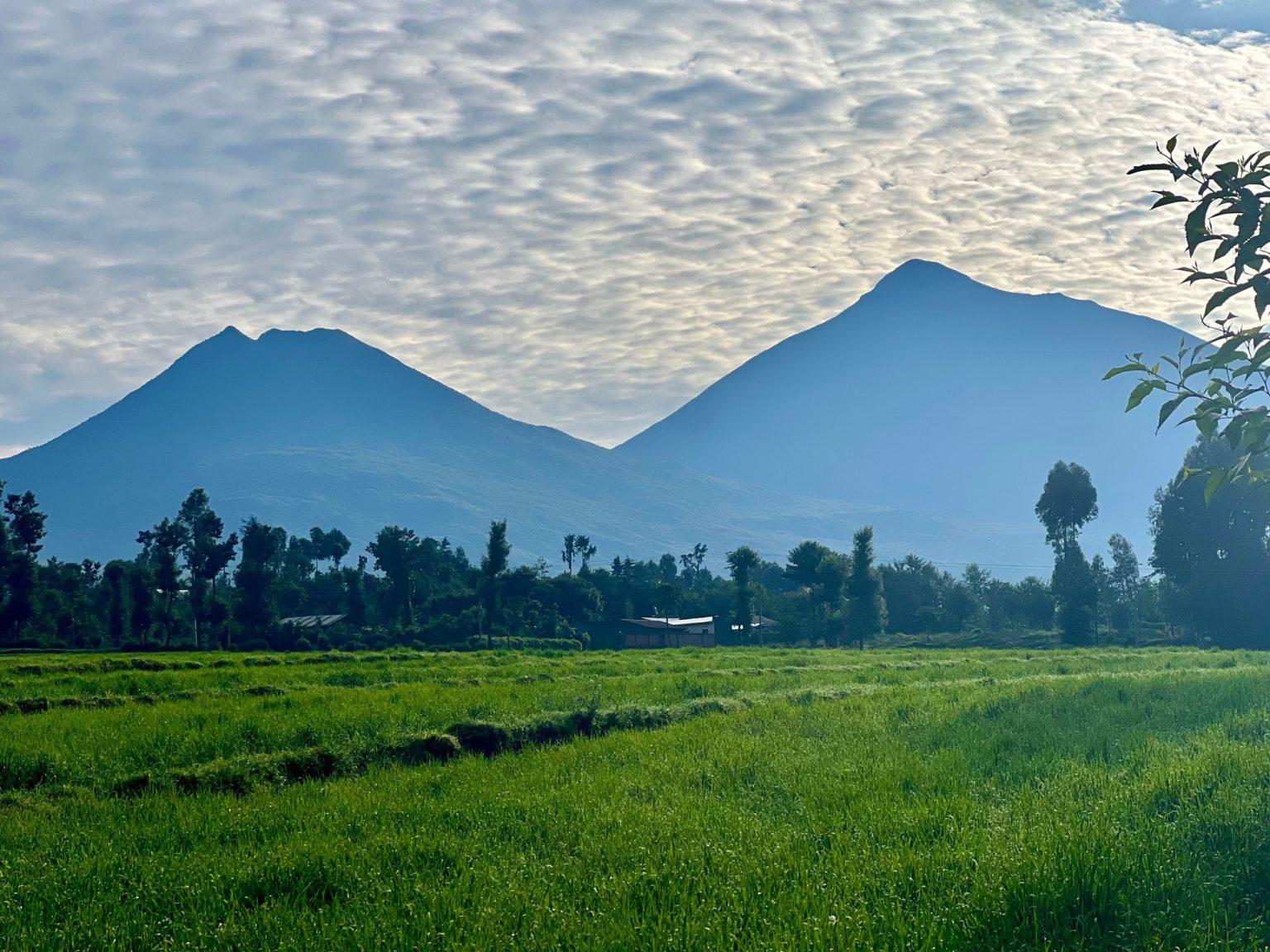
Find a spare day after all and the choices widen. Many day trippers spend the day before the trek on a Kigali city tour that takes in the Kigali Genocide Memorial. A 2 or 3 day Rwanda gorilla tour adds a lodge night plus golden monkeys, the Dian Fossey tomb hike, Mount Bisoke’s crater lake, the Musanze caves or the Iby’Iwacu cultural village. The park sits beneath five of the Virunga volcanoes, Karisimbi, Bisoke, Sabyinyo, Gahinga and Muhabura, with the twin lakes Burera and Ruhondo just east. Nyungwe’s chimpanzees and Akagera’s savannah game drives fill a week, and Rwanda safari activities lists the rest.
Some Kigali operators also sell a “1 day” trek to Uganda’s southern Bwindi sectors or Mgahinga. That is a different trip: a border crossing at Cyanika or Katuna, a longer drive and a much later return, usually with a night on the Ugandan side in practice. Uganda’s permits are cheaper, and Bwindi also offers the longer habituation visit. Our guide to gorilla safaris in Bwindi covers the Uganda side in full. The Uganda gorilla trekking from Kigali guide explains the route, and Uganda vs Rwanda sets the two side by side. Kigali’s direct flights to Nairobi also make it easy to pair a gorilla day with a Masai Mara safari.
1 Day Gorilla Trek from Kigali FAQ
How much does it cost to trek with a gorilla in Rwanda, and what does the permit cost?
The current RDB gorilla permit is US$1,500 per person for foreign non residents, the same on a day trip as on any tour. Private day tours from Kigali that include the permit, vehicle, driver guide and lunch are commonly advertised from about US$1,700 to US$2,100 per person, with solo travellers at the top of the range and groups sharing a vehicle at the bottom. Check that every quote says whether the permit is included.
How many days do you need for gorilla trekking in Rwanda?
One day is enough to see the gorillas, since the trek and the hour with the family happen on a single morning. Two days is more comfortable for most people, because the drive moves to the afternoon before. Three days or more lets you add golden monkeys, a second family or a hike.
Is gorilla trekking in Rwanda worth it on a one day trip?
Most people who go say yes, even after a 15 hour day. The gorillas and the hour are identical to a longer trip. If your schedule allows only one day, go. If you can add a night in Musanze or Kinigi, the same trek becomes easier and more relaxed.
What else should I budget for on the day?
A porter costs around US$10 to US$20 plus a tip, and rangers, trackers and your driver guide are usually tipped too, often around US$10 each to rangers and trackers and US$15 to US$20 a day to a driver guide. If you organise the trip yourself, a 4×4 with driver and fuel is usually US$150 to US$250 for the day on top of the permit. Golden monkey tracking is US$100, and a carried chair for a trekker with limited mobility is quoted at roughly US$300 to US$500 per trek.
Do low season or resident permit rates apply to a day trip?
The low season offer does not, in practice. RDB’s 30 percent reduction (US$1,050 instead of US$1,500, November to May) needs two paid nights in Nyungwe or Akagera plus a park activity. Residents of Rwanda and African citizens have been offered promotional permits at US$500, and Rwandan and East African citizens at US$200, outside June to October; confirm the current rate with RDB before booking.
Do I need a visa, and what does it cost?
Every nationality can get a Rwanda visa on arrival or apply online through Irembo. The single entry tourist visa is US$50, and it is free for citizens of African Union, Commonwealth and Francophonie countries. The East Africa Tourist Visa for Rwanda, Uganda and Kenya is US$100.
What time does a gorilla day trip leave Kigali?
Usually between 4 and 4.30am, to reach Kinigi for the 7am report time. Most travellers are back in Kigali between 5 and 8pm.
Can I fly out of Kigali on the evening of the trek?
Avoid it if you can. Trek length cannot be known in advance, and a long trek or slow traffic can push your return well into the evening. Book the flight for the next morning or later.
How hard is the hike on a one day gorilla trek?
It depends on the family. Some groups reach the gorillas in under an hour; others climb for several hours each way on steep, muddy slopes at altitude. Tell your driver guide you are on a day trip so rangers can consider an easier family, and hire a porter.
Is gorilla trekking in Rwanda safe?
Yes for visitors who follow the ranger. The families are habituated, armed rangers and trackers accompany every group, and Rwanda is one of the safer countries in the region for travellers. The real risks are a slip on wet ground and exhaustion, which porters, sticks and good boots handle.
Can I do the trek without a tour company?
Yes. Buy the permit on RDB’s portal and hire a car and driver for the day. The vehicle has to reach Kinigi by 7am and then take you to the trailhead, so public buses alone will not work for a same day return.
What if I am ill on the day?
Rangers can turn away anyone with a cold, cough or fever to protect the gorillas, and permits are largely non refundable. Travel insurance that covers pre paid activities is worth having.