The best sunglasses for safari have UV400 protection, a Category 3 brown or amber lens and a close fitting wraparound frame that keeps wind and dust out of your eyes in an open vehicle. Polarised lenses cut glare off water, pans and pale grass; pick non polarised if you check a phone or camera screen all day. Add a retainer strap and a hard case. On a Bwindi gorilla trek you will not need them at all.
Most people pack whatever sunglasses they own and discover the problems on day one: a frame that lifts off the face in the wind, a lens that turns the camera screen black, a pair that slides off a sweaty nose and vanishes under the seat. None of this needs expensive kit. It needs the right lens, the right fit and two cheap accessories. This guide covers each choice for game drives, boat safaris, gorilla country and Kilimanjaro. For the rest of your clothing, see what to wear on safari and our full safari gear and clothing guide.
Polarised or Non Polarised Lenses for a Safari Game Drive
This is the question safari travellers ask most, and the honest answer is that both work. A polarised lens contains a filter that blocks light reflected flat off shiny surfaces, the hard white glare that bounces off water, wet mud, the vehicle bonnet and sun bleached ground. Your eyes relax, colours look deeper and you can see into a waterhole rather than at its surface. After eight hours of scanning the bush on a game drive safari, that lower strain is noticeable.
The downside is screens. Phones, camera rear displays, electronic viewfinders and GPS units send out polarised light of their own, and at certain angles a polarised lens blacks them out or makes them patchy. Tilt your head and the screen comes back, but on a moving vehicle, with a lion in front of you and a setting to change, that is a nuisance. Some vehicle windscreens also show rainbow stress patterns through polarised lenses.
So match the lens to how you spend your drive. If you mostly watch, with binoculars and the odd phone photo, go polarised; polarised wraparound sunglasses are the easy default. If you shoot seriously, read a camera screen every few minutes or use a phone for navigation on a self drive safari, a good non polarised Category 3 lens avoids the problem. Plenty of photographers carry a polarised pair for watching and swap to a cheap non polarised pair, or none at all, when the camera comes up.
What matters more than polarisation is UV400. That label means the lens blocks ultraviolet light up to 400 nanometres, which covers UVA and UVB. Equatorial sun in Kenya, Tanzania, Uganda and Rwanda is intense, and high plateaus such as Ngorongoro or the Masai Mara sit well above sea level. A dark lens without UV protection is worse than none, because your pupils widen behind it and let more UV in. Check the label.
Glare Off Pans, Rivers and Pale Grass on Safari
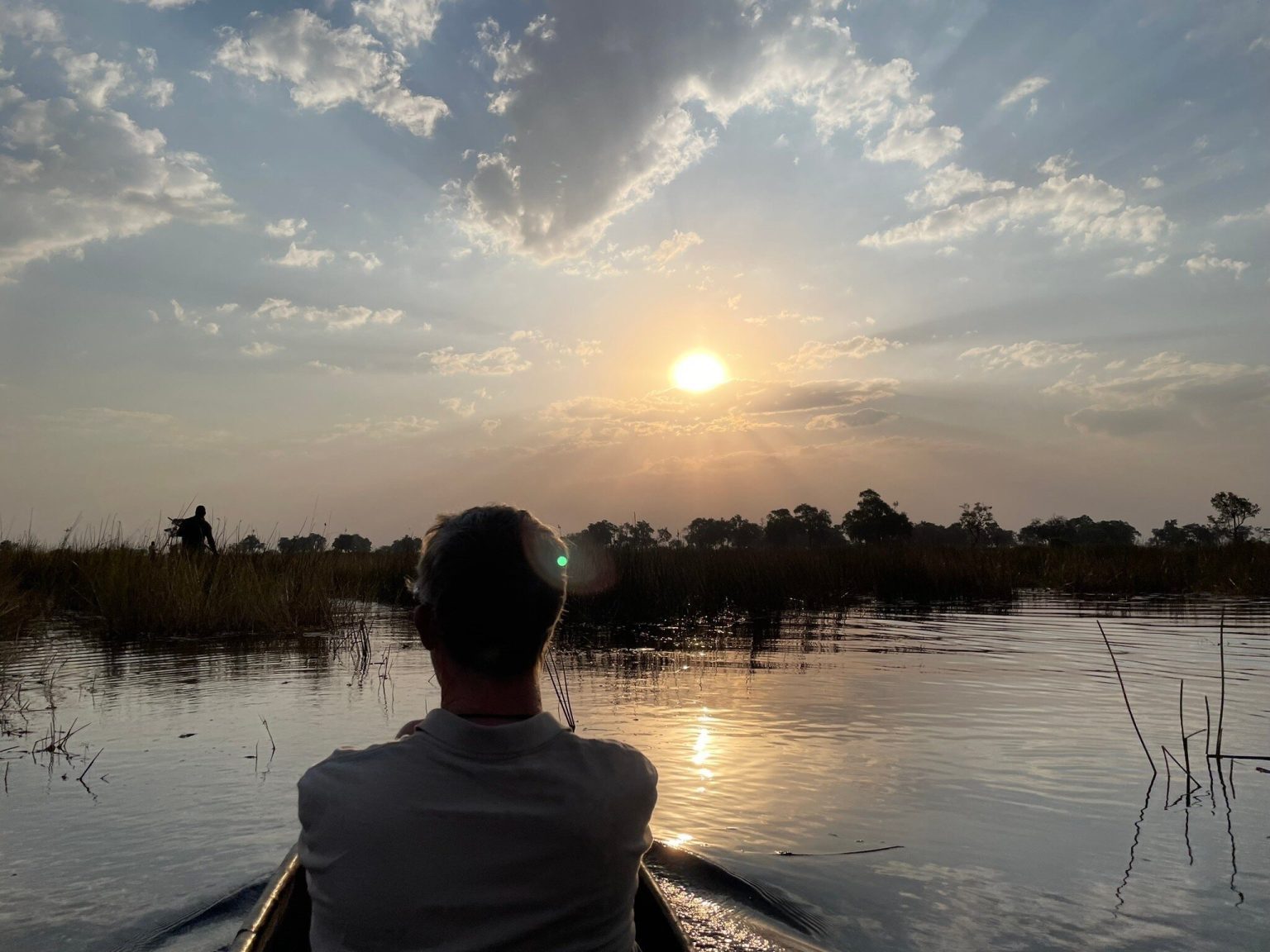
Where you go changes how much glare you face. On a boat safari on the Kazinga Channel in Queen Elizabeth National Park, the Nile below Murchison Falls, the Chobe River or the channels of an Okavango Delta safari, the water throws glare at you for hours, and a polarised lens is close to necessary. It also lets you see the outline of a hippo or crocodile just under the surface.
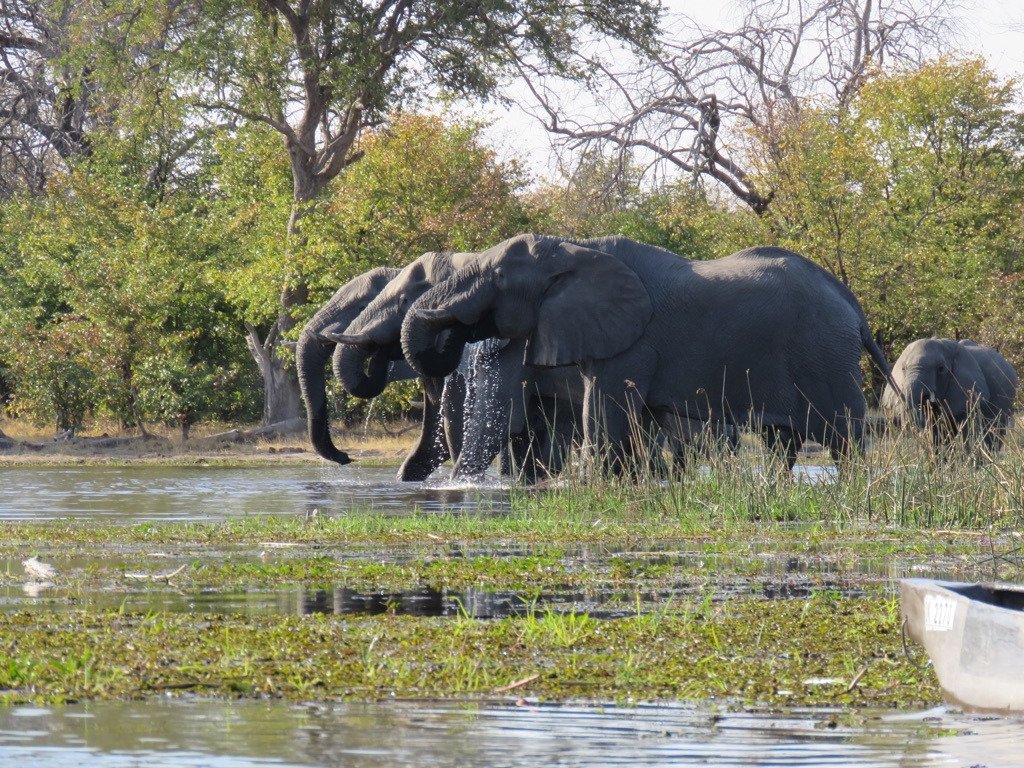
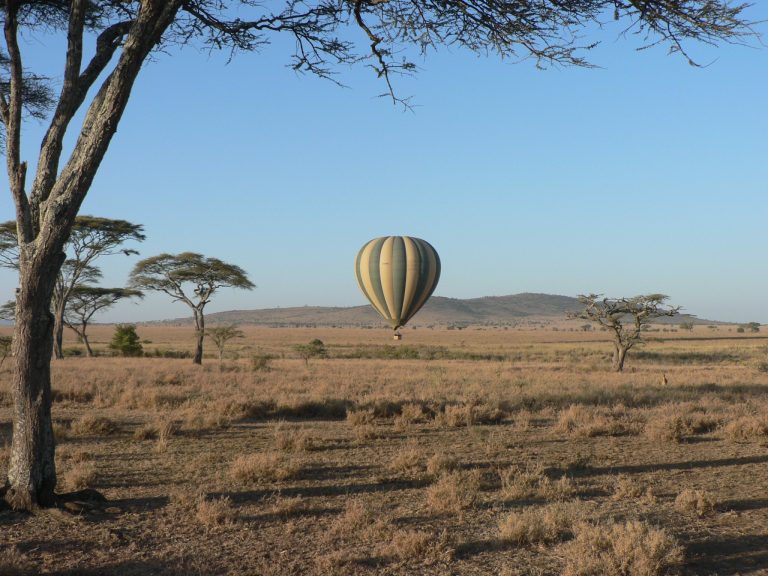
Salt pans and dry lake beds are just as harsh. Botswana’s Makgadikgadi, Namibia’s Etosha Pan and the white soda flats around some Rift Valley lakes reflect sunlight up from below, so you squint even with a hat on. In these places a darker lens and a wraparound shape that blocks light from the sides make the difference. Short dry grass on a Serengeti safari or in the Masai Mara in the dry months does something similar on a smaller scale, turning the plains pale and bright by late morning.
Green season safaris, from November to May across much of East Africa, bring cloud, softer light and green grass that reflects far less. A lighter lens, or a photochromic sport sunglass that darkens and lightens with the light, suits these months and the shaded early mornings.
Lens Colour and Darkness for Safari Light
Sunglass lenses are rated in categories from 0 to 4 under the international standard. Category 3 lets through roughly 8 to 18 percent of visible light and is the right darkness for most of a safari day. Category 2 is lighter and better for cloudy days and forest edges. Category 4 lets through only 3 to 8 percent; it is made for glaciers and high mountains, and it is too dark for driving, so it belongs on Kilimanjaro rather than in a game drive vehicle.
Colour is personal, but it does change what you see.
If you only buy one pair, brown or amber in Category 3 is the safe choice. Polarised brown or amber lens sunglasses are widely sold, and premium makers such as Maui Jim and Smith build their contrast lenses around warm tints; Maui Jim polarised sunglasses and Smith ChromaPop polarised sunglasses are two options to compare.
Wraparound Frames for Dusty Open Safari Vehicles
Most safari vehicles in East Africa are pop top Land Cruisers, and in southern Africa they are open sided. Either way, you spend hours with your head out in the moving air, often behind another vehicle on a dry track. Fine dust and grit get behind flat fashion frames and into your eyes, and strong side light makes you squint even with dark lenses.
A wraparound frame curves around the side of your face and closes most of that gap. Look for a frame that sits close to your brow without the lashes touching the lens, rubber nose pads and temple tips that grip when you sweat, and a lightweight nylon or TR90 frame that flexes rather than snaps when you sit on it. In the dustiest months, especially August to October in the Serengeti, Ruaha and Tsavo, sunglasses with a removable foam gasket seal around the eyes like light goggles. Contact lens wearers notice the difference most.
Frame colour is worth a thought. Shiny chrome frames flash in the sun, while matt brown, olive, tortoiseshell or black blend in with the neutral clothes recommended for safari. Animals in national parks are used to vehicles, so this is a small point, but on a walking safari it is one more thing that does not catch the eye. Our guide to what not to wear on safari explains the colour rules for clothing.
Sunglasses With Binoculars and Cameras on a Game Drive
You will raise binoculars dozens of times on every game drive, and sunglasses complicate that. Through dark lenses the view in the binoculars turns dim, especially in shade or at dusk. Most people simply push their sunglasses up onto their hat or let them drop on a retainer strap, look, then put them back. That habit is the strongest argument for a strap.
If you keep sunglasses on, choose binoculars with long eye relief, around 15 mm or more, and twist down eyecups. Eye relief is the distance from the eyepiece at which you still see the full image, and glasses push your eyes further back. The same applies to prescription glasses. Our guide to the best binoculars for safari lists eye relief for each pick.
With a camera, the issue is the screen and the viewfinder. Electronic viewfinders and rear LCDs can darken through polarised lenses, and if you also use a circular polarising filter on the lens, the two filters can stack and black out the view at some angles. Optical viewfinders on DSLRs are less affected, though dark lenses still make exposure harder to judge. Photographers usually shoot with sunglasses off. If you are choosing kit now, see the best camera for safari, and note that a broad hat brim shades your eyes and the back of the camera at the same time; our best safari hats guide covers brim widths.
Retainer Straps, Cases and Cleaning Kits for Safari Trips
Three cheap accessories save more sunglasses on safari than any frame upgrade.
A retainer strap keeps the glasses on your body when you push them off to use binoculars, lean out of the hatch or hit a pothole. Neoprene straps float, which helps on boat safaris, and cord retainers are slimmer. A neoprene sunglasses retainer costs very little and is one of the most mentioned items in safari trip reports, usually by people who lost a pair over the side of a vehicle or into a river.
A hard case protects the pair you are not wearing. Soft pouches do nothing when a duffel gets thrown into the hold of a light aircraft or stacked under other bags in a vehicle. Bush flights in Kenya, Tanzania and Botswana usually limit you to soft bags of around 15 kg, so pick a slim crushproof sunglasses case rather than a bulky one; the safari duffel bag guide covers the weight limits.
A cleaning kit stops dust turning into scratches. Wiping a gritty lens on your shirt grinds the dust into the coating. Blow or rinse the dust off first, then wipe with microfibre. A small lens cleaning kit with microfibre cloths and spray also cleans binoculars and camera lenses. Pack a cheap spare pair too. Sunglasses get sat on, left at breakfast and dropped in rivers, and replacements are hard to find outside the big towns.
Prescription Sunglasses and Contact Lenses on Safari
If you wear glasses, you have five workable options for a safari trip, and many travellers combine two.
Contact lenses let you wear any sunglasses, but dust is the risk. On dry season game drives fine dust gets under lenses and irritates the eye, and several travellers in safari forums describe switching back to glasses after a day or two. If you wear contacts, bring daily disposables so a gritty lens can be thrown away, rewetting drops, a pair of glasses as backup and close fitting sunglasses to shield your eyes from the wind. Ask your optician about wearing them in dusty conditions before you go.
Why Sunglasses Stay in the Bag on a Bwindi Gorilla Trek
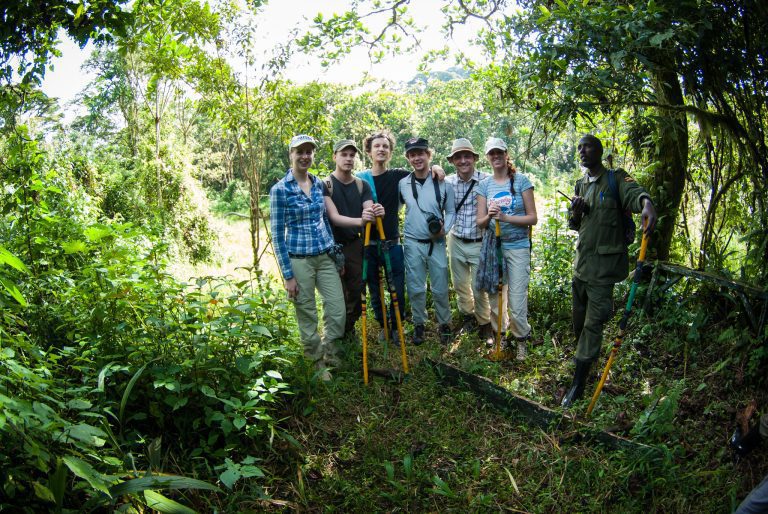
Here is the exception. On a gorilla trek in Bwindi Impenetrable National Park, Mgahinga or Rwanda’s Volcanoes National Park, you walk under a thick forest canopy where the light is dim and green. Paths are steep, muddy and full of roots, and you need every bit of light to see your footing. Dark lenses make that harder and more dangerous. Once you reach the gorillas, often in thick vegetation, you want to see their faces clearly, and so do your photos.
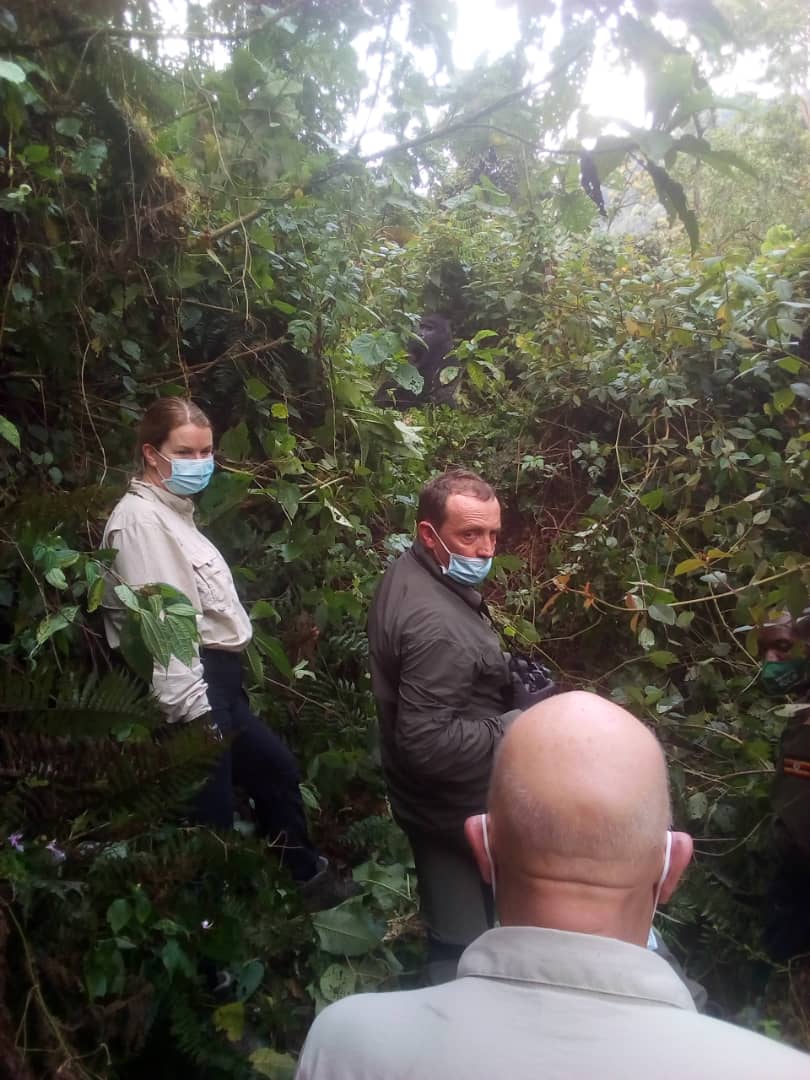
Leave the sunglasses in your daypack, or on a strap round your neck for the drive to the trailhead and the open tea and farm country you sometimes cross at the forest edge. Bring them for the drive between parks and for the rest of a combined trip; a Bwindi trek is often paired with game drives in Queen Elizabeth National Park or Lake Mburo, or a flight on to the Masai Mara, where the light is very different. The gorilla trekking packing list covers what does go in the daypack, and our guide to gorilla trekking in Uganda and Rwanda explains how the trek day runs. The same applies to chimpanzee tracking in Kibale, which is also in shaded forest.
Kilimanjaro and High Altitude Safari Trips
Climbing Kilimanjaro is the opposite of Bwindi. Above the forest belt there is no shade, the air is thin and UV strength rises with every thousand metres. On the upper mountain, especially after fresh snow near the summit, light reflects up from the ground and down from the sky. Ordinary Category 3 sunglasses are fine for the moorland days. For the summit day, many climbers switch to Category 4 glacier sunglasses with side shields, which block light from every angle. They are too dark for anything else, driving included.
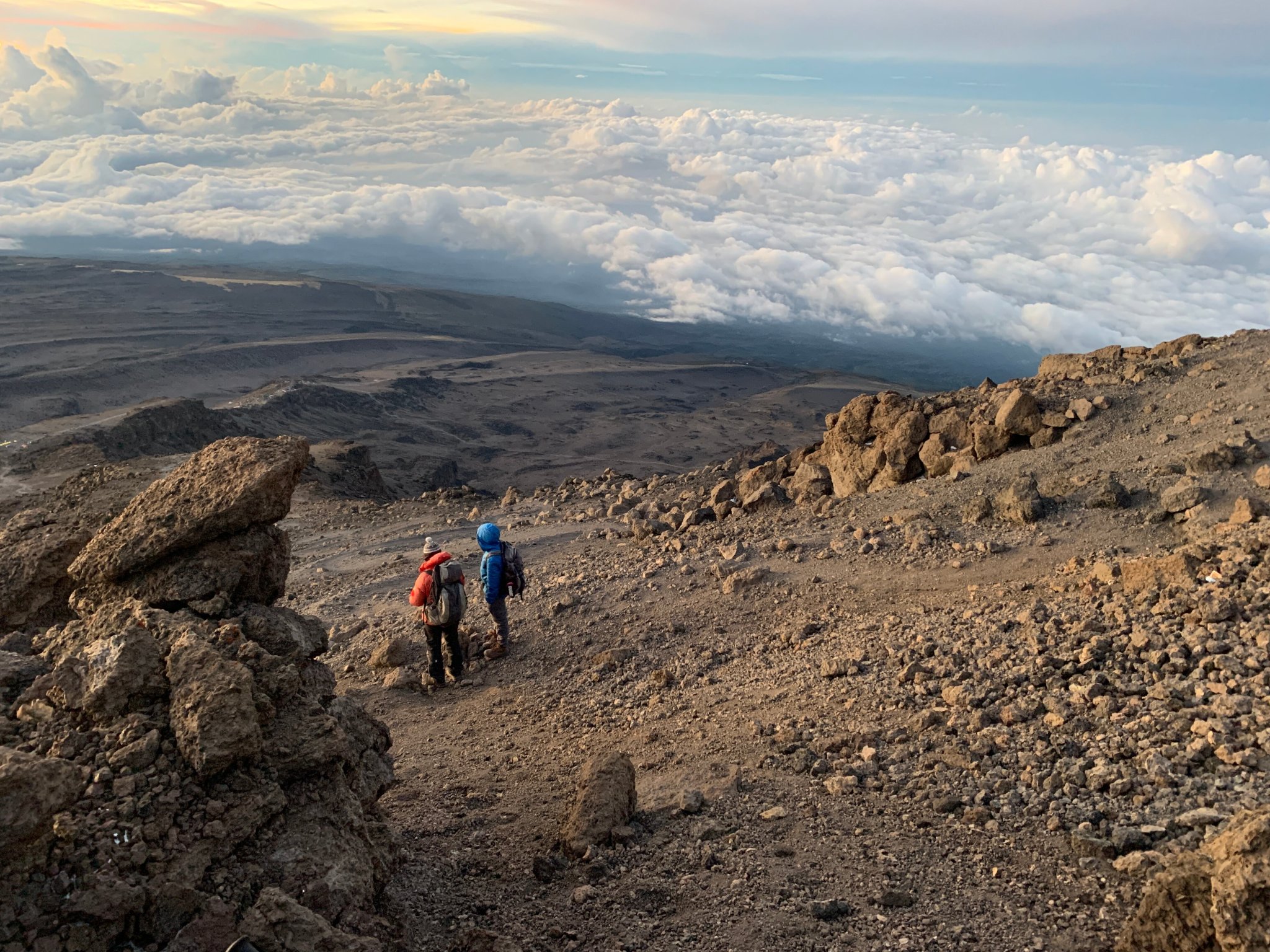
The Kilimanjaro gear list has the rest of the mountain kit, and the African safari packing list covers a standard savannah trip. Children need proper sun protection on safari too, often more than adults; flexible kids’ UV400 sunglasses with a strap survive the back seat, and our safari gear for kids guide covers the rest.
Safari Sunglasses FAQ
What are the best sunglasses for safari?
UV400 sunglasses with a Category 3 brown, amber or grey lens in a close fitting wraparound frame. Choose polarised for glare off water and pans, or non polarised if you use phone and camera screens constantly. A retainer strap and hard case finish the setup.
Are polarised sunglasses good for safari?
Yes, for most people. They cut glare off rivers, lakes, pans and pale grass and reduce eye strain over long drives. The drawback is that they can darken phone and camera screens at some angles.
Do I need sunglasses for gorilla trekking?
Not on the trek itself. Bwindi and Volcanoes National Park are shaded forest, and dark lenses make muddy footing harder to see. Pack them for the drive and for any game drives on the same trip.
What lens colour is best for spotting wildlife?
Brown, amber or copper. Warm tints raise contrast against dry grass and bush, which makes it easier to pick out an animal in shade. Grey keeps colours truer and suits very bright days and boat trips.
Can I wear contact lenses on safari?
Yes, but dust on dry season game drives can irritate them. Bring daily disposables, rewetting drops, backup glasses and wraparound sunglasses that shield your eyes from wind and grit.
Can I use binoculars with sunglasses on?
You can, but the view gets dim and you may lose part of the image. Binoculars with long eye relief and twist down eyecups help. Most people push sunglasses up or let them hang on a strap while looking.