The best socks for safari are lightweight merino wool or merino blend hiking socks with light cushioning, in a crew height that sits above your shoe collar. They stay comfortable through hot game drives and cool dawns, resist odour for several days of wear and dry overnight in camp. For gorilla trekking in Bwindi or Rwanda, switch to taller, more cushioned socks you can tuck your trousers into against safari ants.
Socks are the cheapest part of a safari wardrobe and one of the easiest to get wrong. A cotton pair that is fine at home turns soggy on a muddy forest slope, and an ankle sock leaves a strip of bare skin that tsetse flies find in minutes. This guide sorts out material, cushioning, height, blisters, insect treatment, how many pairs to bring and how to wash them on the road. For the rest of your outfit, see what to wear on safari and the full safari gear and clothing guide.
Merino, Synthetic or Cotton Socks for a Safari Trip
Material decides most of how a sock behaves on a safari trip, so start there. Merino wool is the fibre most guides, outfitters and seasoned travellers settle on. It moves sweat away from the skin, stays warm when damp and holds back odour far longer than synthetics, which matters when you are rewearing a pair for two or three days between laundry runs. Fine merino does not itch the way old wool socks did.
Pure merino wears through faster, though. That is why the best hiking socks are blends, usually a majority of merino with nylon for strength and a little elastane so the sock keeps its shape. Brands such as Darn Tough, Smartwool and Icebreaker all work this way. The Darn Tough Light Hiker Micro Crew is a widely recommended lightweight hiking sock that suits warm game drive days, and Smartwool light cushion hiking crews are a softer alternative.
Synthetic hiking socks built from polyester or Coolmax yarns dry faster than wool and last well. Their weakness is smell. After a hot day in a vehicle they need washing, not airing. If wool irritates your skin, Coolmax synthetic hiking crews are the sensible swap, and you simply pack a pair or two more.
Cotton is the one to leave at home for anything active. It soaks up sweat, stays wet, loses its shape and rubs. On a vehicle safari a cotton sock will not ruin your day; on a three hour walk through wet Bwindi undergrowth it can give you blisters by lunch. Bamboo and mohair blends, sold by a few specialist safari brands, sit somewhere between cotton and merino and are pleasant in heat, though they are harder to find in hiking weights.
Cushioning and Fit for Long Safari Days and Treks
Hiking socks come in roughly four weights: ultralight, light, medium and heavy. The difference is how much looped padding sits under the heel, ball and toes. For a game drive safari where you sit most of the day, a light cushion is plenty and keeps your feet cool. For a walking safari or a gorilla trek, a light to medium cushion absorbs the downhill pounding without turning your boot into a sauna.
Heavy socks feel luxurious in the shop and cause trouble on the trail. They take up room inside the boot, squeeze the foot, trap sweat and leave you colder once that sweat chills. Fit your boots first, with the sock you intend to wear, rather than using a thick sock to fill a loose boot.
Fit matters as much as thickness. A good hiking sock is snug with no slack fabric to bunch under the toes, has a flat toe seam, a heel pocket that sits on your heel rather than above it, and a cuff that grips without leaving a deep groove in your calf. Buy by shoe size and try your safari socks on long walks at home. Women with narrower feet often get a better heel fit from women’s merino hiking crews, while men can pick from men’s cushioned merino hiking socks.
Sock Height on Safari: Ankle, Crew or Over the Calf
Height is where a safari sock differs most from a gym sock. The rule is simple: the sock must rise above the collar of your shoe or boot, or the shoe edge rubs bare skin. Beyond that, the right height depends on the trip.
| Trip | Sock height | Cushion |
|---|---|---|
| Game drives | Crew | Light |
| Walking safari | Crew or tall | Light to medium |
| Gorilla trek | Over the calf | Medium |
| Chimp tracking | Over the calf | Light to medium |
| Kilimanjaro | Crew or tall | Medium to heavy |
| Camp evenings | Crew | Any |
Ankle and quarter socks are fine with trainers in camp, but they leave your lower leg open to tsetse flies, mosquitoes and grass seeds. A crew sock, which ends a few inches above the ankle bone, is the all round safari height and works with trail shoes and mid boots alike. If you prefer something shorter for hot lodge days, lightweight merino quarter socks do the job with sandals swapped out for low shoes.
Taller socks earn their place anywhere you walk through vegetation. On guided bush walks in Zambia, Zimbabwe, Botswana or Uganda’s Lake Mburo, grass seeds and burrs work their way into short socks within the first hour. Over the calf socks, paired with full length trousers, stop that and give a little protection from thorns. Our guide to the best shoes for safari covers which footwear goes with each height.
Gorilla Trekking Socks and the Safari Ant Problem
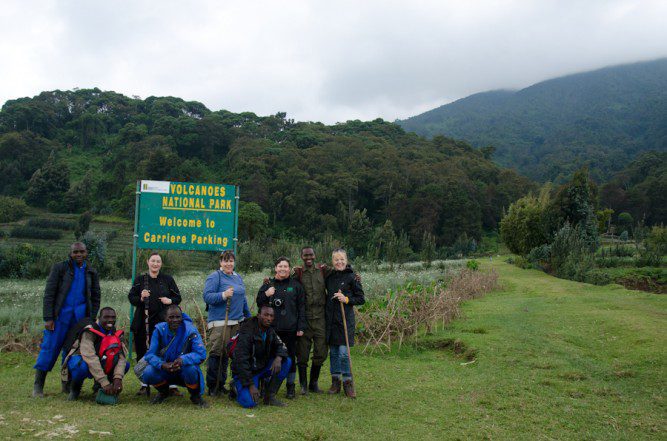
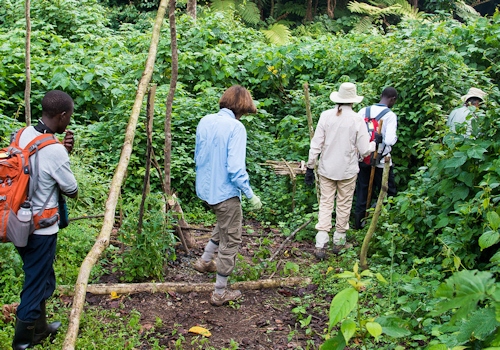
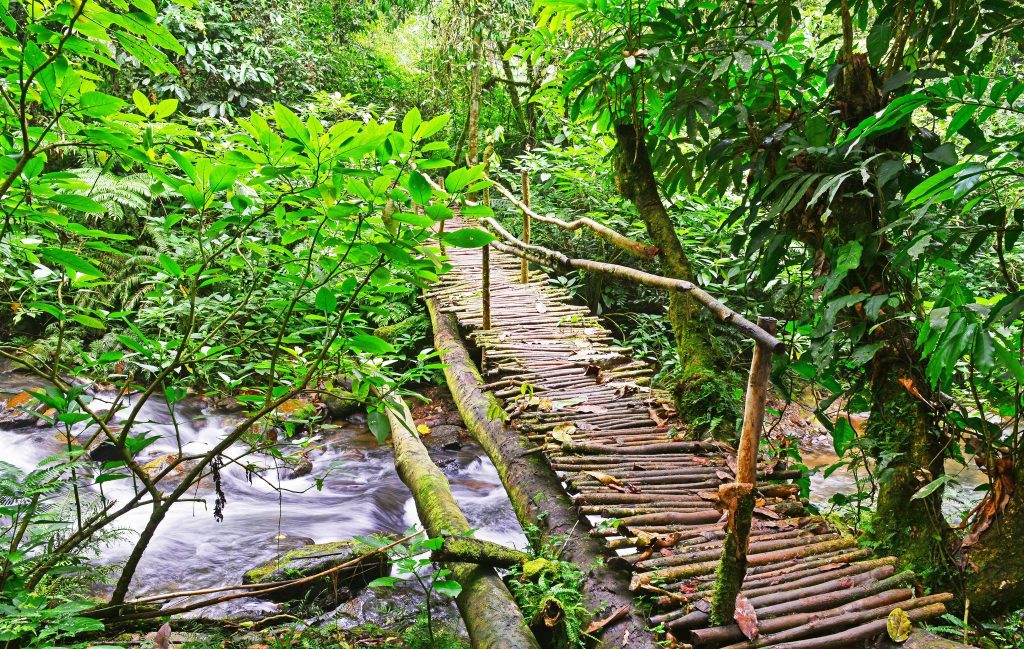
Gorilla trekking asks more of your socks than any other safari activity. A trek in Bwindi Impenetrable National Park usually takes one to seven hours of walking on steep, muddy paths between about 1,160 and 2,607 metres, and you may cross streams, push through nettles and slither down clay banks. Rwanda’s Volcanoes National Park adds bamboo, wet grass and higher altitude. Feet get wet. Socks get muddy. You walk on regardless.
Then there are safari ants, the driver ants that cross forest trails in columns. Stand in one and they swarm up your boots looking for a gap, and their bite is sharp enough to have trekkers hopping and pulling off trousers in the bush. Rangers and porters have one answer: tuck your trouser cuffs into long socks so there is no opening at the ankle. That is why a pair of tall socks is on every serious gorilla packing list, and why short socks are the one item guides most often see trekkers regret.
Choose over the calf merino socks with medium cushioning for this. The height gives the cuff something to grip, the cushion softens hours of steep descent, and merino stays warm when the forest is dripping. Cushioned merino crew socks work if they reach well up your calf, but true knee length socks hold a tucked cuff more securely. Make sure the elastic grips firmly enough that the socks do not slide down after an hour, or the trousers come untucked.
Socks alone are not a perfect barrier. In the wet months, or on routes through dense undergrowth, many trekkers add gorilla trekking gaiters over the sock and trouser join; waterproof knee high hiking gaiters keep mud out of your boots and ants off your legs. The sock still matters underneath. Pair it with properly broken in boots from our gorilla trekking boots guide, and pack a dry pair in your daypack for the drive back to the lodge.
Stopping Blisters on Walking Safaris and Treks: Liners and Fit
Blisters come from heat, moisture and friction together. A walking safari or trek in the tropics supplies all three. Socks are your best tool against them, alongside boots that are already broken in before you fly.
The first step is a sock that fits and does not bunch. The second, for people prone to blisters, is a liner sock: a very thin synthetic or merino sock worn under the hiking sock. The friction then happens between the two layers rather than against your skin, and the liner pulls sweat off the foot. Thin hiking liner socks weigh almost nothing and rinse clean in a basin. Toe socks such as Injinji toe sock liners separate each toe and help people who blister between the toes. Try any liner system on a long walk at home; on a hot vehicle safari, two layers can be too warm, so liners are best kept for trekking days.
A few habits help on the trail. Change into dry socks at lunch on a long trek. Stop at the first hot spot rather than the first blister, and cover it with tape or a blister plaster from your travel first aid kit. Keep toenails short, since long nails bruise on the steep descents that end most gorilla treks. Pull socks smooth after you stop to let grit out.
Insect Treated Socks and Colours for Tsetse Country
Ankles are the favourite target of mosquitoes at dusk, and the lower leg is where tsetse flies land in the woodlands of Tanzania, Zambia and parts of Uganda. Your socks can help with both.
Permethrin treated socks are factory treated with an insect repellent that is bonded to the fibres. Insect Shield, the best known treatment, is EPA registered and states that its repellency lasts up to 70 washes, against ants, mosquitoes, ticks and flies. That makes treated socks a practical buy for evening wear in malaria areas, bush walks and tsetse country. You can also treat your own socks with a permethrin spray, though home treatment wears off after far fewer washes. Our guide to the best insect repellent for Africa explains how permethrin on clothing works with a skin repellent.
Colour matters too. Tsetse flies are drawn to dark blue and black, so navy and black socks are a poor choice in tsetse areas. Bright white socks show red dust and mud within minutes. Khaki, olive, grey and brown hide the dirt and attract fewer flies. Trip reports from Tanzania’s western parks repeat this point often enough to take it seriously. The same logic applies to the rest of your clothes; our page on what not to wear on safari covers it in full.
How Many Pairs of Socks to Pack for a Safari
The answer depends on trip length, activities and laundry. Most safari packing lists that work in practice land on fewer socks than people expect, because merino can be worn more than once and most lodges offer laundry.
On bush flights in Kenya, Tanzania and Botswana, soft bags are usually limited to 15 kg or so, including hand luggage. Socks are light, but a dozen pairs of thick ones take up real space in a safari duffel bag. Packing fewer, better socks is the easier route. For long flights to Entebbe, Kigali, Nairobi or Kilimanjaro, travel compression socks help many people with swollen ankles; check with your doctor if you have a history of circulation problems.
Washing Socks at Safari Camps and Lodges
Most safari lodges and tented camps include laundry, or charge a small fee per item, and return clothes the same or next day. There is a catch. A number of camps in East Africa ask guests to wash their own underwear, for cultural reasons, and some apply the same rule to socks. Expect to wash at least some socks yourself.
That is easy with merino. Wash socks inside out in a basin with a little soap or travel laundry detergent sheets, rinse well, then roll them in a towel and squeeze to get most of the water out. Hang them in the shade on a portable braided travel clothesline. In dry savannah camps they are ready by morning. In Bwindi, where the forest air is damp and nights are cool, socks can take a full day or more to dry, so wash them the moment you get back from a trek or give muddy pairs to the lodge laundry.
Skip fabric softener and bleach, which coat wool fibres and weaken them, and never dry socks on a heater or in strong direct heat; wool goes brittle. If your trekking socks are caked in Bwindi clay, rinse the mud off before washing, or the grit works into the knit and wears it out. Several lodges near the trekking trailheads will also clean muddy boots for you overnight.
Kilimanjaro Trekking Socks and Other Safari Trips
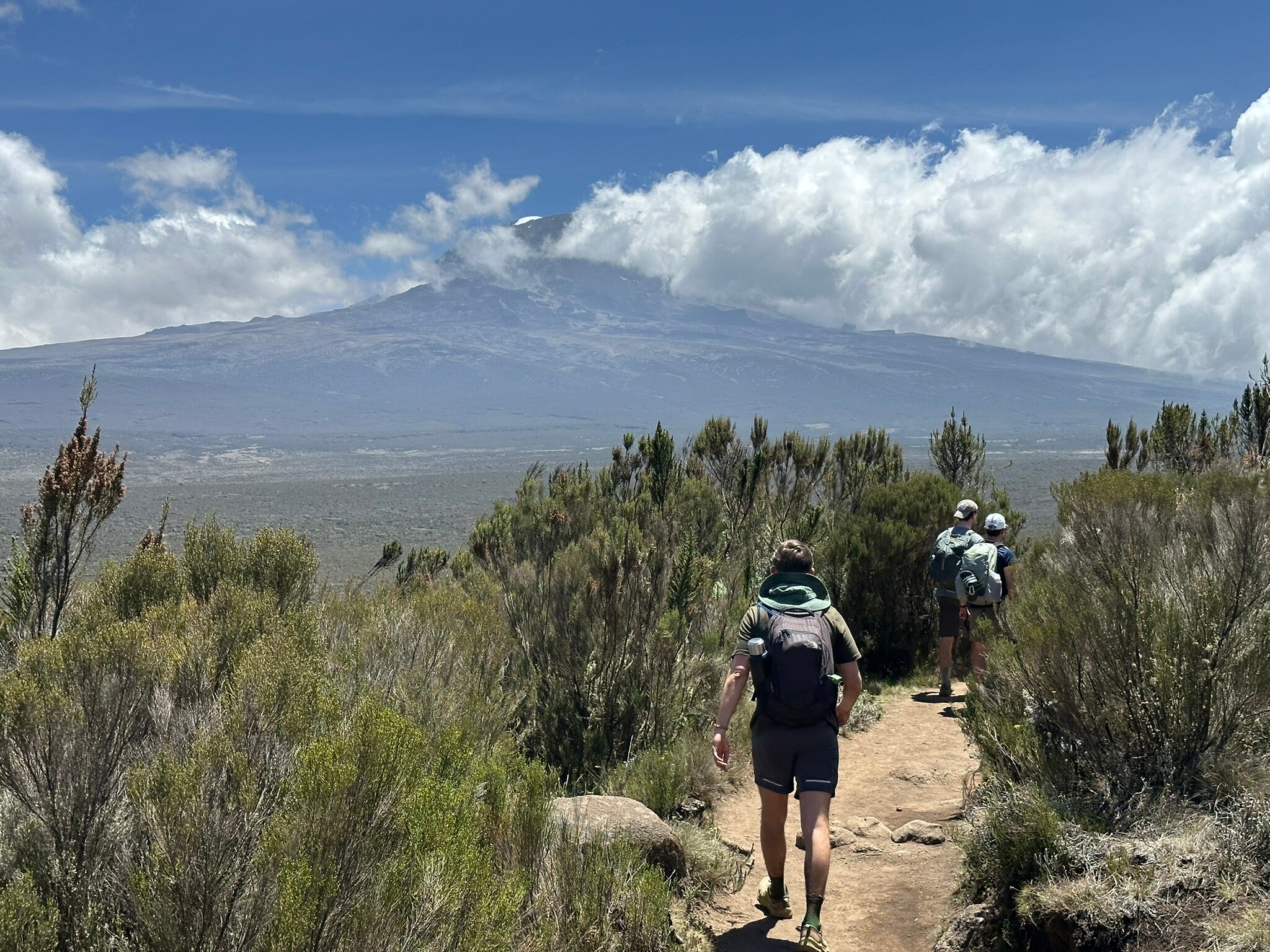
Climbing Kilimanjaro is the one African trip where warmth beats breathability. The lower slopes are warm and humid, much like a forest trek, but summit night starts around midnight and temperatures near the top can fall well below freezing. Bring medium cushioned merino crews for the lower days and a pair of cushioned merino hiking socks in a heavier weight for the summit, kept dry in your duffel until that night. Check that your boots still fit with the thicker sock. The Kilimanjaro gear list and our guide to the best hiking boots for Kilimanjaro cover the rest of the mountain kit.
Many travellers join the dots between trips: a Masai Mara safari or a Serengeti game drive, a few days with the gorillas in Bwindi, and sometimes Kilimanjaro on the same itinerary. Our guide to gorilla trekking in Uganda and Rwanda shows how the forest days fit around a savannah safari. One sock wardrobe covers it all if you choose well: light merino crews for the vehicle, tall cushioned pairs for the forest, a heavy pair for the summit and a treated pair for evenings. Children need the same heights in smaller sizes; see safari gear for kids. For the full list of what goes in the bag, use our African safari packing list and the gorilla trekking packing list, and read how hard a gorilla trek is to judge how much cushioning your feet will want.
Safari Socks FAQ
What are the best socks for safari?
Lightweight merino wool or merino blend hiking socks in a crew height, with light cushioning. They handle heat and cool mornings, resist odour over several wears and dry quickly. Add tall cushioned pairs for gorilla trekking and a heavier pair for Kilimanjaro.
Do I need long socks for gorilla trekking?
Yes. Long socks let you tuck your trousers in, which stops safari ants climbing your legs and keeps mud and nettles off the skin. Over the calf merino socks with medium cushioning are the best fit, with gaiters on top in the rainy months.
Are cotton socks okay on safari?
For sitting in a vehicle, cotton is tolerable. For walking safaris, gorilla treks or Kilimanjaro, avoid it. Cotton holds sweat and water, rubs when wet and is a common cause of blisters on long, muddy walks.
Should I wear liner socks for gorilla trekking?
Wear liners if you are prone to blisters. A thin liner under a cushioned hiking sock moves friction away from your skin. Test the combination on a long walk at home, since some boots feel tight with two layers.
What colour socks should I wear on safari?
Khaki, olive, grey or brown. Dark blue and black attract tsetse flies, and white socks turn red with dust or mud within an hour of a game drive or trek.
How many pairs of socks do I need for a gorilla trek?
Two per trekking day: one pair on your feet and one dry spare in a zip bag in your daypack. If you are doing two treks, or a trek plus the four hour gorilla habituation experience, bring four tall pairs so a wet set can dry while you wear the other.
Can children wear the same socks on safari?
Yes, in smaller sizes. Children aged 15 and over can join a gorilla trek in Uganda and need the same tall socks as adults, while chimpanzee tracking in Uganda is open from age 12.