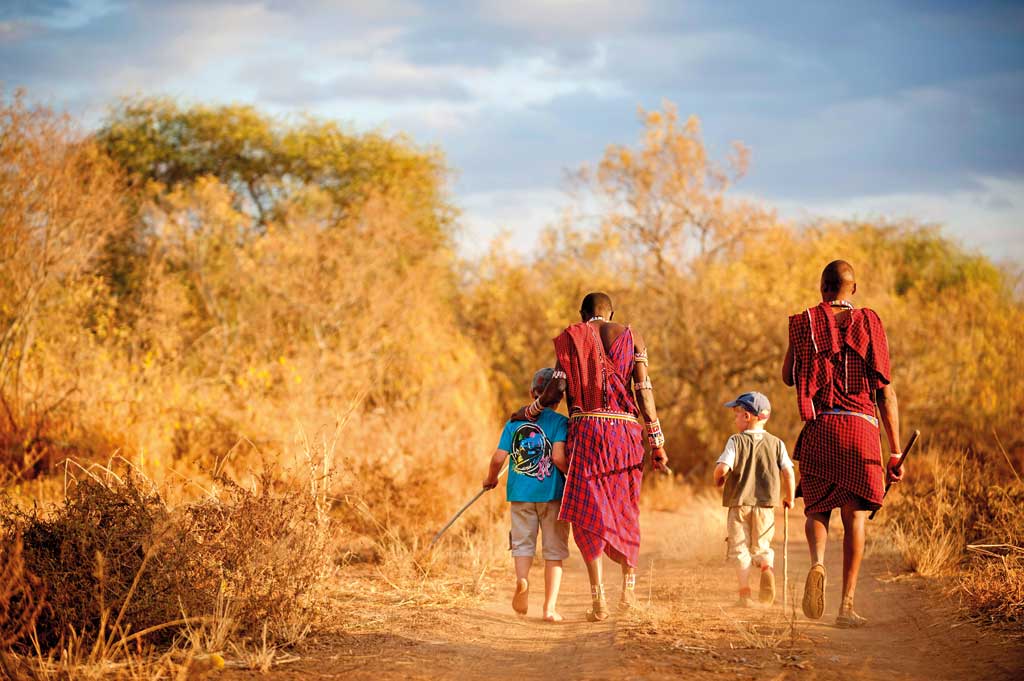
On safari, kids wear what adults wear with a few more spares: light long sleeved tops and zip off trousers in khaki, olive or sand, a fleece for the cold dawn drive, a sun hat with a chin strap and closed shoes. Leave navy, black and anything camouflage at home. Three or four outfits per child is enough, because camps do laundry, and a real pair of binoculars matters more than any new clothes.
Age changes the details. A toddler needs shade and a carrier, an eight year old needs their own binoculars and a daypack, and a teenager heading into Bwindi needs adult trekking kit, since gorilla trekking opens at 15 and chimpanzee tracking in Uganda at 12. This guide walks through clothes and kids safari gear age by age, with the bush flight limits in mind. To choose the country and the camps first, start with the family safari in Africa guide.
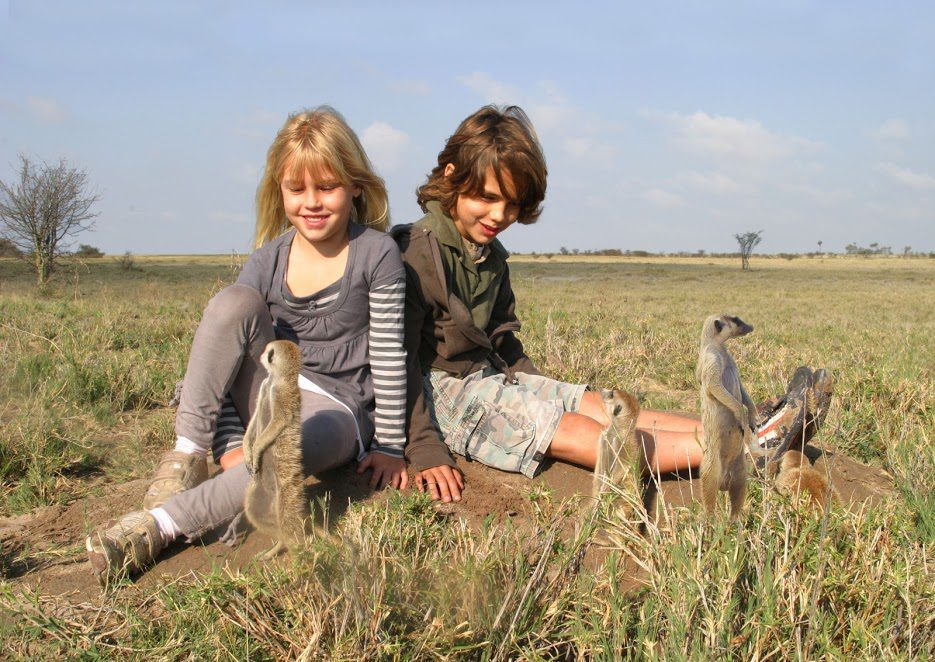
What Kids Wear on Safari, Age by Age
The youngest child sets the pace of a family safari: how long drives last, which activities are open and how much you carry. The oldest decides whether trekking kit goes on the list at all. So pack from both ends.
| Age | Key gear | Skip |
|---|---|---|
| Under 2 | Carrier, shade | Pram |
| 4 to 8 | Binoculars, hat | Toy kits |
| 9 to 14 | Headlamp, camera | Drone |
| 15 and up | Trek boots | Hard case |
Is there a best age? Many families find six or seven is when a child can sit through a three hour drive and remember it afterwards. Lodges set their own minimum ages for shared drives, walks and canoe trips, and walking safaris usually start somewhere in the early to mid teens. Mixed ages are normal, and the teenager’s boots double as walking shoes for the rest of the trip.
For toddlers, carry rather than push. Camp paths are sand, gravel and steps, and a pram is dead weight on a light aircraft. A soft wrap for babies or a framed toddler hiking carrier backpack with a sun shade works around camp, and a net over it at dusk keeps mosquitoes off without more repellent. Cots and high chairs are usually supplied; ask before packing your own. Car seats are worth raising in writing with your operator, since few safari vehicles have the anchor points a modern seat expects. Nappies, wipes and formula are hard to find in the bush, so bring enough for the whole safari section.
Safari Colours for Kids: Neutral Shades, Fun Prints and What to Avoid
Colour rules for a kids safari outfit are the adult rules. Khaki, olive, sand, tan, brown and soft greens hide red dust and stay quiet on a walk. Lighter, greyish blues are fine too.
Three things stay home. Dark blue and black draw tsetse flies in parts of Tanzania, Uganda, Kenya and Zambia, and their bite hurts, so the navy school hoodie is the first casualty. Bright white is brown after one drive. Bright red and pink matter mostly on walks, where guides want everyone to blend in. And camouflage is not a style question: Uganda bans military style clothing for everyone, children included, so a camouflage T shirt or cap can be confiscated at the border. Our guide to what not to wear on safari covers every item on the avoid list.
Fun prints are fine in camp. A lion or elephant T shirt in a neutral colour makes a child feel part of the trip, and letting kids choose one or two pieces themselves helps them buy into the early starts. Save bright or glittery outfits for home.
Specialist outfitters such as The Safari Store and Tag Safari sell children’s field shirts with insect and sun treatments, and mainstream outdoor brands cover the rest. The animal print rompers and explorer sets from big US stores are for parties and zoo days rather than an open vehicle.
Layers for Cold Morning Game Drives With Children
Cold catches more families out than heat. A dawn game drive safari leaves camp around six in an open vehicle moving at speed, and the parks of East Africa sit high: the Masai Mara and the Serengeti around 1,500 metres and more, the Ngorongoro Crater rim above 2,200 metres, Bwindi from about 1,160 to 2,600 metres. Several parents’ trip reports mention children wrapped in the lodge’s blankets on the first morning because nobody packed for it.
Build it in layers a child can manage alone. A long sleeved top, then a kids’ full zip fleece jacket, then a beanie and thin gloves. Full zip matters: it comes off over a hat without tears. In southern Africa between June and August, when dawn can sit near freezing in Botswana or Kruger, add a kids’ packable puffer jacket that squashes into its own pocket. A buff or bandana keeps a neck warm at dawn and covers a nose on dusty roads later.
Rain gear depends on the month. East Africa’s long rains run roughly March to May, with short rains around November, and Bwindi and Nyungwe can be wet in any month. A kids’ packable waterproof rain jacket earns its space then. In the dry months it still works as a windproof shell over the fleece, so it is rarely dead weight.
Jeans or leggings for cold evenings round off the warm side of the bag.
Kids Safari Clothes for Hot Afternoons and the Pool
By late morning the layers come off and the sun takes over. Long sleeves still do more work than T shirts: a light, quick drying shirt keeps sun off arms in an open roofed vehicle and mosquitoes off at dusk. Look for kids’ UPF 50 long sleeve sun shirts in neutral colours; Columbia and Patagonia make youth versions with roll up sleeve tabs. Two or three is plenty, plus two or three T shirts.
For legs, kids’ convertible zip off hiking trousers handle the whole morning in one garment: long at dawn, shorts by eleven. Children tend to love the zips. One pair of shorts covers camp afternoons.
Swimwear is not optional. Many lodges and tented camps have a pool, children use it every afternoon in the midday break, and the water is often colder than they expect. A kids’ UPF 50 rash guard swimsuit saves a lot of sunscreen on shoulders, and goggles go in if your child uses them at home. Pack pyjamas that cover arms and legs for mosquito hours.
Leave favourite clothes at home. Camp laundry is often washed by hand and dried in strong sun, and a treasured top can come back faded.
Safari Shoes and Socks for Children
Children sit for most of a game drive, so heavy boots are unnecessary in the vehicle. Closed toes still matter on night paths, nature walks and anywhere thorns, ants or the odd scorpion live. One pair of kids’ waterproof hiking shoes from Merrell, Columbia or Salomon covers walks, rain and muddy forest trails. Buy them early, wear them in at home for a few weeks, and put them on for the flight.
The second pair is for camp. Closed toe sport sandals of the kind Teva and similar brands make protect toes better than flip flops on gravel and dry in minutes. One family who travelled Kenya and Tanzania with three children aged six to ten reported that the kids wore closed toe sandals for almost the whole trip.
Socks matter more on a walk than a drive. Three or four pairs of wool blend or synthetic hiking socks are enough; cotton stays wet and rubs. Tucking trousers into socks at dusk keeps mosquitoes off ankles.
Hats, Sunscreen and Bug Protection for Kids on Safari
Young skin burns faster than adult skin, and the wind on an open vehicle hides how much sun a child is getting.
Hats and sunglasses. A kids’ wide brim sun hat with a neck flap and chin strap stays on at speed; without a strap, a brim is gone at the first bump, which is why some camps prefer a snug cap to a loose hat. Sunday Afternoons makes good strapped ones. Add flexible kids’ UV400 sunglasses in a wraparound shape that keeps dust out. Our safari hats guide covers the adult side.
Sunscreen. A broad spectrum SPF 50 kids’ mineral sunscreen in stick form goes on in a bumping vehicle without sticky hands, and a kids’ SPF lip balm stops dry wind cracking lips. For babies under six months, the FDA and the American Academy of Pediatrics advise shade and clothing first, with sunscreen only after talking to your paediatrician.
Insect repellent. Most East African safari parks are malaria areas, so bite prevention matters from dusk. The CDC advises that an adult puts repellent on their own hands first and then on a child’s face, keeps it off children’s hands, and avoids oil of lemon eucalyptus or PMD under age three. Many parents pick a 20 percent picaridin lotion because it is gentle on skin and clothes; DEET products are also registered for children when the label is followed. Treating children’s clothes with permethrin clothing spray at home cuts how much goes on skin. Never spray permethrin on skin. The comparison sits in our best insect repellent for Africa guide.
Medicines. Antimalarials, children’s doses and vaccinations belong with a doctor or travel clinic, ideally a month or more before you fly; this page does not give medical advice. Carry each child’s usual medicines in original labelled packaging in hand luggage, and check the rules for each country on your route, since some restrict certain over the counter medicines. A small family kit with children’s pain relief, plasters, antiseptic cream, rehydration sachets in a flavour they like and an anti diarrhoea remedy your doctor approves covers most problems; see the travel first aid kit for safari.
Binoculars for Children on a Safari Game Drive
If you buy one piece of safari gear for kids properly, make it binoculars. Vehicles stay on tracks in most parks, so animals are often far off, and a child who can see the lion’s face stays interested. Shared binoculars cause more back seat arguments than anything else on a family safari. One per child solves it.
Skip the toy sets. Plastic lenses give a dark, blurred image, and children give up on them within a day.
Compact 8×21 binoculars for kids from established optics brands such as Nikon, Bushnell or Celestron suit ages five to ten. Teenagers can use the adult 8×32 or 8×42 class covered in our best binoculars for safari guide, and the cameras and binoculars page explains how optics and cameras share space in the vehicle.
Kids Safari Gear for Long Drives and the Long Haul Flight
A morning drive can run three or four hours with nowhere to buy anything. Children cope far better with their own small bag. A kids’ hiking daypack of around 10 litres from Osprey or Deuter holds binoculars, a fleece, snacks, a notebook and a leak proof insulated kids’ water bottle, refilled from the lodge’s filtered water each morning. Different coloured bottles for siblings end one argument before it starts. Families with a private vehicle sometimes find daypacks less needed, since everything can ride on the seat.
Evenings bring the torch. Camps are dark, paths are walked with an escort after nightfall, and a child with a kids’ headlamp with a red light mode is less nervous in the tent and more likely to spot a bushbaby’s eyes. Red light keeps night vision and does not dazzle the guide; our best headlamps for safari page compares the adult range.
For the quiet stretches, give children a job. A printed animal checklist turns a drive into bingo, a sketchbook fills the midday rest, and an illustrated East African animals field guide for kids lets them look up the antelope the guide just named. Older children who want their own photos get more from a sturdy waterproof, shockproof kids’ camera than from a borrowed phone, and serious teen photographers can read our best camera for safari guide.
Camp afternoons are long, so a small ball, a frisbee and a pack of family travel card games earn their few grams. Tablets help on the long haul flight and road transfers more than on drives, where the guide’s commentary is half the point. Download films before you go, since lodge wifi is slow or absent, and pack volume limited kids’ headphones. Charging is covered in our guide to portable chargers and solar panels for safari and sockets in the Uganda plug adapter guide.
For the plane itself, each child’s small backpack can hold a drawing pad, a journal, cards, one favourite soft toy, snacks, a change of clothes and the fleece. Cabins are cold and connections are long.
Trekking Gear for Teenagers: Gorillas at 15, Chimps at 12
The minimum age for mountain gorilla trekking is 15 in both Uganda and Rwanda, counted on the day of the trek, and rangers can ask for passports. Chimpanzee tracking in Kibale and elsewhere in Uganda opens at 12 on the Uganda Wildlife Authority tariff. Both rules protect the apes from human illness and are checked at the briefing.
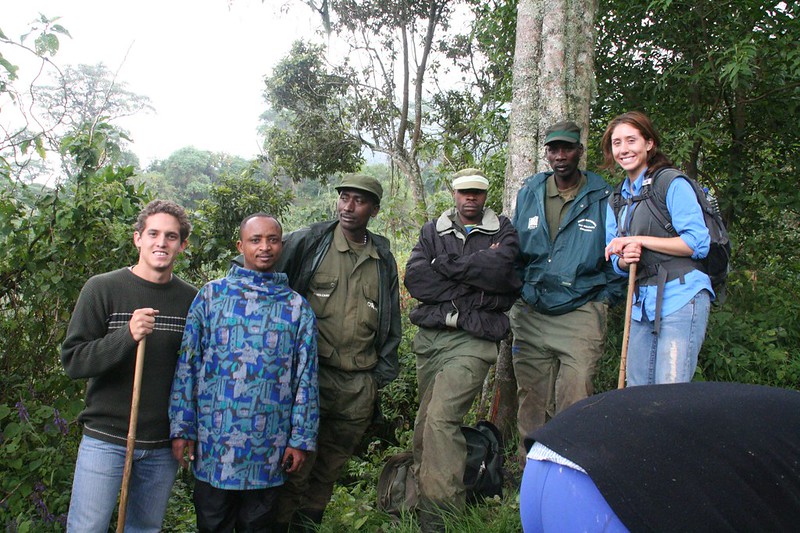
A teenager on a gorilla trekking safari in Bwindi walks the same steep, muddy forest as the adults, for anything from an hour to most of a day. That means waterproof trekking boots with real grip, gaiters against mud and safari ants, gloves for grabbing vines and stinging nettles (cheap youth size gardening gloves fit smaller hands), long trousers tucked into socks and a proper rain jacket, plus a trekking daypack. The what to wear for gorilla trekking guide and the gorilla trekking packing list have the full set, and boots, gaiters and jackets can be hired near the park; see renting gorilla trekking gear.
A porter is as useful for a teen as for an adult. With the group, keep about 10 metres from the gorillas in Uganda and 7 metres in Rwanda; teenagers are often better at it than their parents.
Younger siblings cannot join a gorilla group, so one parent usually treks while the other stays behind. Around Bwindi there is a guided nature walk on the forest edge or a Batwa cultural experience to fill the morning. The gorilla and chimp safari itinerary shows how families with older children fit both apes into one trip.
Packing Kids’ Safari Clothes for a 15 kg Bush Flight
Light aircraft into the Mara, the Serengeti and many Ugandan airstrips commonly cap checked luggage at about 15 kg per person including hand luggage, in soft bags without wheels or frames. Ask whether children get the same allowance, because rules vary by airline. Give each child their own soft bag so it can be weighed and stowed; the safari duffel bag guide covers sizes. Colour coded packing cubes, one colour per child, end the morning hunt for socks in a dark tent.
Laundry keeps the list short. Most camps wash and return clothes the same or next day, though many in Kenya and Tanzania do not wash underwear for cultural reasons and leave powder in the bathroom instead. Plastic carrier bags are banned in Kenya, Rwanda and Tanzania, so use a fabric bag for dirty clothes. The adult version of this list is the African safari packing list, and parents can kit themselves out with the safari clothes for women and safari clothes for men guides.
What to Wear on Safari With Kids: FAQ
What should kids wear on a safari game drive?
Neutral long sleeves and zip off trousers, a fleece or light jacket for the cold start, a wide brim hat with a chin strap and closed shoes. Layers come off as the morning warms. Avoid navy and black in tsetse areas, bright white, and any camouflage.
What colours should children avoid on safari?
Dark blue and black, which attract tsetse flies; bright white, which shows dust; and bright red or pink on walks. Uganda bans camouflage for children and adults alike. Khaki, olive, sand, brown and light greyish blue are all fine.
How many outfits does a child need for a safari?
Three or four, because almost every camp does laundry daily. For a week to ten days that means about three long sleeved tops, two or three T shirts, two pairs of zip off trousers and one pair of shorts, plus a fleece, rain jacket and swimsuit.
How old do children have to be for gorilla and chimp trekking?
Gorilla trekking has a minimum age of 15 in Uganda and Rwanda. Chimpanzee tracking in Uganda opens at 12. Younger children can do nature walks and community visits while a parent treks.
Do kids need their own binoculars on safari?
Yes, if possible. Animals are often far from the track and sharing one pair causes arguments at every sighting. A compact 6x or 8x pair with 21 to 25 mm lenses suits children under ten. Toy binoculars give a blurred image.
Is insect repellent safe for children on safari?
Repellents registered for children are widely used; follow the label for age. The CDC advises adults to apply repellent to a child’s face from their own hands, keep it off children’s hands and avoid oil of lemon eucalyptus or PMD under three. Permethrin treated clothing reduces how much goes on skin. Ask a doctor about malaria tablets.
How much does kids safari gear cost?
Much less than adult kit if you buy carefully. Real compact children’s binoculars from known brands usually run about US$30 to US$100, kids’ waterproof hiking shoes about US$40 to US$90, and sun shirts, hats and fleeces often US$15 to US$50 each. Many families buy only binoculars, shoes and a fleece new.
What should a child wear to a safari themed party?
A khaki or olive shirt, shorts, a bush hat and a pair of real compact binoculars look the part and get used again on a real trip. Explorer costume sets with plastic binoculars and pith helmets are fine for a party but do not work on a game drive.
Can my teenager rent gorilla trekking gear instead of buying it?
Some lodges and community groups near Bwindi rent boots, gaiters and rain jackets, though sizes and quality vary. Boots that already fit are the one item worth bringing from home.
Planning a Family Safari With Children
Clothes are the easy part once the trip suits your children’s ages. Family safaris are safe when everyone follows the camp rules: stay seated in the vehicle, never walk alone after dark, wait for the escort with the torch, and stay close at unfenced camps where elephants and buffalo wander through. If malaria worries you with very young children, South Africa’s Madikwe, Pilanesberg and Eastern Cape reserves are malaria free Big Five areas; see the South Africa safari page.
The family safari in Africa guide matches countries to ages, the Kenya family safari guide covers camps and pacing on the classic Mara route, and the main guide to what to wear on safari covers the whole family’s wardrobe. Every gear guide on the site sits in the safari gear and clothing section.