The best travel backpack for Africa is a soft, frameless carry on of about 30 to 40 litres that fits the strictest long haul cabin size, weighs little empty, opens like a suitcase, locks, and holds a laptop, camera and medicine. It rides on the flight into Entebbe, Kigali, Nairobi, Kilimanjaro or Johannesburg, then counts toward the 15 kg soft bag limit on safari light aircraft. Pair it with a soft safari duffel for clothes.
This guide is about that one bag: the cabin bag that crosses the ocean with you and holds everything you cannot afford to lose. The pack you carry on a forest trek is a different, smaller thing, covered in the gorilla trekking daypack guide. The two can be the same bag for light packers, and the sections below show when that works and when it does not.
Carry On Backpack Size for a Long Haul Safari Trip to Africa
Size a carry on travel backpack for an Africa safari to the smallest cabin it will meet, not the biggest. Most travellers from North America connect through Amsterdam, Doha, Dubai, Istanbul, Addis Ababa or Nairobi, and each airline sets its own box. A pack that is legal on a US domestic leg can be too deep for a Gulf carrier.
In practice, 30 to 40 litres covers almost everyone. At 30 litres you carry a laptop, camera body with two lenses, medicine, documents, a fleece and a change of clothes. At 40 litres you can add a second outfit and still close the zips without bulging, which matters because a stuffed pack grows past the stated dimensions and gets pulled aside at the gate. Bigger than 45 litres starts to look like checked luggage to airline staff, and it weighs too much for a 15 kg bush flight once full.
Depth is the number that catches people out. Many airlines cap carry on depth at 23 to 25 cm, and a soft pack with a full front pocket easily measures more. Choose a bag with compression straps, or keep the front pocket for flat things like a passport wallet and a paperback.
Empty weight matters more on an Africa trip than on a city break. A framed travel pack can weigh 1.5 kg before anything goes in it, while a simple panel loader is often under a kilogram. On a fly in safari, every gram of bag is a gram less of camera kit.
Cabin Bag Rules on Flights to Entebbe, Kigali, Nairobi, Kilimanjaro and Johannesburg
The long haul legs into East and Southern Africa run long. Kenya Airways flies nonstop from New York JFK to Nairobi in roughly 13 and a half to 15 hours, Ethiopian Airlines covers Washington Dulles to Addis Ababa in about 13 hours, and Delta’s Atlanta to Johannesburg flight runs about 15 to 17 hours depending on direction. Entebbe, Kigali and Kilimanjaro have no nonstop service from the United States, so a connection adds one more cabin, one more set of rules and one more chance for checked bags to miss the onward flight.
| Airline | Cabin bag | Weight | Extra item |
|---|---|---|---|
| KLM economy | 55x35x25 cm | 12 kg total | 40x30x15 cm |
| Qatar economy | 50x37x25 cm | 7 kg | One from US |
| Kenya bush air | Soft only | 15 kg all in | Counts too |
| Mack Air | Soft only | 20 kg all in | Counts too |
Those two international examples show the spread. KLM, which flies Amsterdam to Kilimanjaro, Nairobi, Entebbe and Kigali, lets economy passengers bring a 55 by 35 by 25 cm bag plus a small 40 by 30 by 15 cm item, with 12 kg across both. Qatar Airways, a common route via Doha, sets 7 kg and 50 by 37 by 25 cm for the cabin bag, and on flights leaving the United States allows one bag plus one personal item. A 35 litre backpack can pass both, as long as it is not stuffed.
Rules change and basic fares often strip the cabin bag out entirely, so read the fare conditions on your own ticket before buying a pack to fit it. The getting to Bwindi guide covers the onward legs from Entebbe and Kigali for a Uganda gorilla trip.
Travel Backpack, Wheeled Carry On or Duffel for Safari Bush Flights
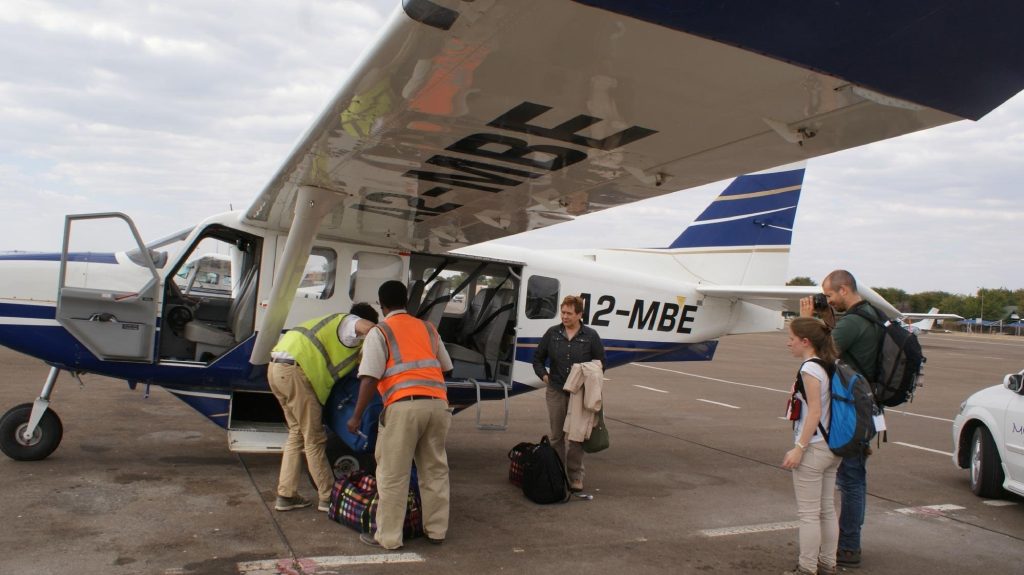
Three bag types compete for the cabin slot, and the safari itinerary decides between them. The light aircraft that fly between airstrips in Kenya, Tanzania, Uganda and Botswana load bags by hand into small pods, and airlines such as AirKenya, AeroLink and Mack Air ask for soft bags with no rigid frame.
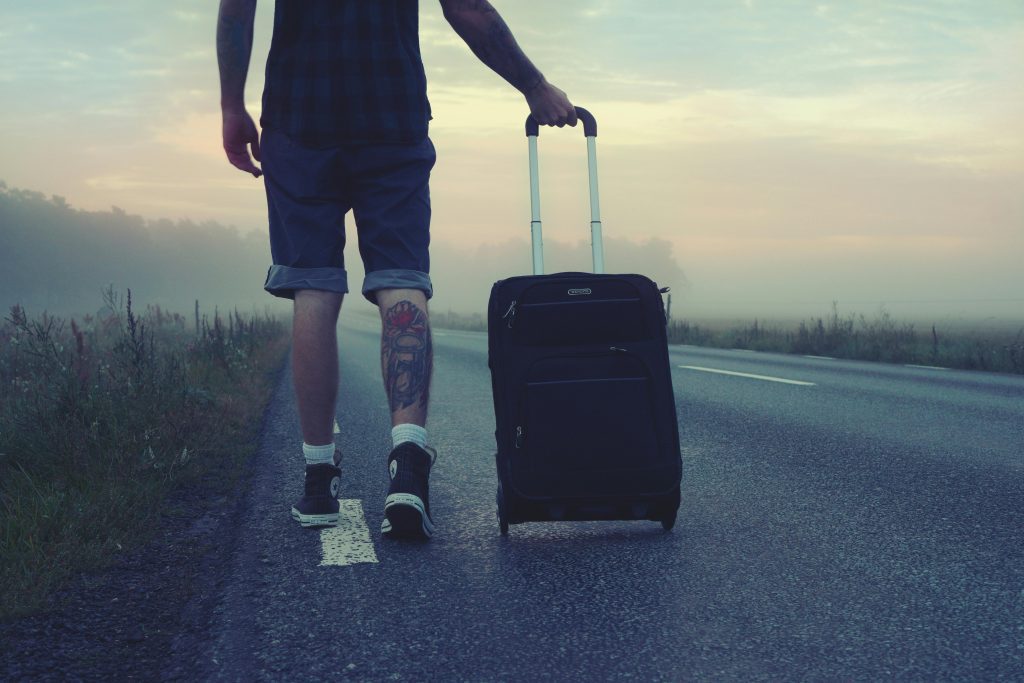
Most Uganda and Rwanda gorilla trips run by road, and there a convertible wheeled carry on backpack is fine. The moment a Masai Mara, Serengeti or Okavango flight joins the plan, switch to a frameless pack. Several travellers report that the soft backpack was the one bag they never had to think about, while a friend’s wheeled cabin case was taped up and sent on a later plane.
Staying Under the 15 kg Limit on Safari Light Aircraft
On a fly in safari, the travel backpack is not extra. AirKenya, Safarilink, Coastal Aviation and AeroLink allow 15 kg per person in soft bags, and that figure includes hand luggage. AirKenya and AeroLink let up to 5 kg of it ride in the cabin. Mack Air in Botswana allows 20 kg, also including hand luggage. The full airline breakdown sits in the safari duffel bag guide.
Do the subtraction at home. Weigh the empty backpack, the camera, lenses, binoculars and laptop together, then take that from 15. Trip reports from photographers often show the electronics alone reaching 4 or 5 kg, leaving 10 kg for the duffel, clothes, toiletries and the bag itself. A digital luggage scale ends the guessing, and it is worth weighing again before each internal flight since souvenirs add up.
Some airstrip staff weigh what you wear and carry, not just the bags. Plan for that. Heavy optics can travel round your neck on the long haul flight, but at the airstrip the scale may still count them.
Photographers who cannot fit under the limit usually book an extra seat through their operator rather than hope excess weight flies the same day. Over limit bags can follow on a later flight when the plane is full.
Anti Theft Travel Backpack Features for African Airports and City Transfers
Most theft on an Africa safari trip is opportunistic and happens in transit: a hand in an unzipped pocket at a busy terminal, a phone lifted from a café table in a city, or a bag left on a seat during a long layover. In the bush itself, camp staff and guides handle luggage with care. Anti theft features earn their keep in Nairobi, Johannesburg, Dar es Salaam and the big connecting hubs.
Keep cash and cards split. A hidden travel wallet under your clothes holds the reserve, while the backpack carries a day’s money. Anyone who has run back down a jet bridge for a forgotten pouch knows the value of one fixed home for passport, tickets and medicine.
For a broader set of anti theft travel backpacks with lockable zips, compare the zip garages and the material behind the main panel rather than the marketing names.
Laptop and Camera Space in a Safari Travel Backpack
The cabin bag is the only place a camera should travel on a wildlife safari. Pods on light aircraft get hot, dusty and crowded, and bags are stacked by hand. Lenses ride on your lap or under the seat.
A safari travel backpack with a separate laptop sleeve, ideally against the back panel and opening from the side or top, lets you pass security without unpacking everything. Check it fits your machine; sleeves range from 13 to 17 inches. Many photographers on Africa trips end up carrying two bags: one for camera bodies and long lenses, one for laptop, drives and chargers. That works on KLM’s two item allowance and fails on a 7 kg Gulf carrier rule, so read the ticket first.
For a single bag setup, a padded camera insert turns any travel pack into a camera bag, and lifts out at the lodge so the pack can carry a fleece and water instead. A dedicated weatherproof camera backpack suits anyone carrying a 100 to 400 mm zoom or longer. The safari lens guide covers lighter lens choices that keep the whole kit under the bush flight limit.
Spare lithium batteries and battery packs must travel in the cabin, not in checked luggage, on almost every airline. A small electronics organiser pouch keeps cables, camera batteries and the plug adapter in one place. Our battery pack and solar charger guide lists the capacity limits, and the Uganda plug adapter guide covers the Type G sockets you will meet in East Africa.
Shoulder Strap Comfort for Long Safari Transfers and Airport Walks
An Africa trip asks a lot of shoulders. There are long walks between gates at Doha or Amsterdam, a queue at immigration, a walk across the apron to a turboprop, and often a road transfer of several hours before the first lodge. On a Uganda gorilla safari, the drive from Entebbe to Bwindi alone takes most of a day.
Look for padded shoulder straps with a sternum strap, and a simple hip belt that tucks away when not needed. A torso length that suits you matters more than brand: try the pack on with weight inside, since an empty bag tells you nothing. Travel packs from Osprey and Cotopaxi come in different back lengths or women’s fits, and the difference shows after an hour on your back.
Ventilation helps too. East African airports can be warm at midday and a solid foam back panel gets sweaty. A mesh or channelled back keeps you cooler through the transfer.
On the road, the pack sits at your feet or on the seat beside you in the vehicle. A grab handle on the top and side makes lifting it into and out of a safari vehicle easy.
Best Travel Backpacks for an Africa Safari Trip by Type
No single pack suits every safari traveller. These are the types that work on the long haul flight and in the bush, with well known makers in each. We have not tested them ourselves; notes draw on maker specifications and the consensus of reviewers and travellers.
Clamshell travel pack, 40 litres. The Osprey Farpoint 40 (Fairview 40 for women) appears on nearly every travel list for its stowable straps, laptop sleeve and full suitcase opening. It is the safest single pick for a first Africa trip, as long as you check the depth against your airline.
Durable organiser pack, 35 to 42 litres. The Cotopaxi Allpa 35 uses a heavy, wipeable fabric that shrugs off red dust, with mesh compartments that keep small items findable in a dim tent.
Expandable photographer friendly pack. The Peak Design Travel Backpack compresses to about 35 litres for strict cabins and opens to 45, and takes the brand’s camera cubes. For a smaller everyday option, the Peak Design Everyday backpack is a common choice among safari photographers.
Light personal item. The Osprey Daylite Plus at about 20 litres fits under a seat as a personal item and doubles as the game drive bag. Several safari regulars use it as their only cabin bag, holding prescriptions, a change of clothes and a camera.
Generic carry on packs. If brand matters less than price, search for a 40 litre carry on travel backpack with a laptop compartment, then check the stated dimensions, empty weight and zip quality before buying.
For the wet season or a Bwindi trip, add a backpack rain cover. Few travel packs are fully waterproof, and an afternoon storm can soak a bag on an open vehicle or an airstrip.
Packing the Carry On for an African Safari Trip
Pack the cabin bag as if the checked duffel will not arrive for two days, because on multi leg routes into Entebbe, Kigali and Kilimanjaro that happens often enough to plan for. Lost bags rarely catch up with you in a remote camp.
Compression packing cubes keep a clothes change small and let you lift it out at a hotel without unpacking the whole bag. A packable 20 litre daypack folds into the bottom and becomes the game drive bag once you reach camp.
Plastic carrier bags are banned in Kenya, Tanzania and Rwanda, and the bans apply to visitors’ luggage. Use fabric pouches for shoes and laundry. Clear zip bags for liquids are usually tolerated, but keep them few.
Where the Travel Backpack Fits in Your Safari Luggage
A full safari kit is three bags at most. The soft duffel of 40 to 60 litres holds clothes and goes in the hold or the light aircraft pod. The travel backpack covered here crosses the ocean in the cabin. And a small daypack rides on game drives and forest treks, or the travel backpack does that job itself if it is small enough. The safari duffel bag guide handles the first, and the gorilla trekking daypack guide handles the third, including rain covers and porters.
Many travellers store a suitcase with smart clothes at a Nairobi, Arusha or Kampala hotel and fly into the bush with just the duffel and the backpack. On a combined trip, such as gorillas in Bwindi with the Masai Mara or Serengeti, that split keeps the light aircraft legs under 15 kg. Our African safari packing list covers what goes inside all three, the Bwindi gorilla trekking guide explains the forest side of the trip, and the safari gear hub links every gear guide on the site. When the route is still taking shape, Plan Your Safari walks through the order of countries and flights.
Travel Backpack for Africa FAQ
What is the best travel backpack for Africa?
A soft, frameless 30 to 40 litre carry on with a laptop sleeve, lockable zips and a clamshell opening. The Osprey Farpoint or Fairview 40, Cotopaxi Allpa 35 and Peak Design Travel Backpack are the packs most often recommended, and the Osprey Daylite Plus suits light packers as a personal item.
What size backpack is allowed as a carry on to Africa?
It depends on the airline. KLM allows 55 by 35 by 25 cm plus a small 40 by 30 by 15 cm item, 12 kg in total. Qatar Airways allows 50 by 37 by 25 cm and 7 kg in economy. A 35 litre pack that is not overstuffed fits both.
Does my carry on backpack count toward the 15 kg safari flight limit?
Yes. On AirKenya, Safarilink, Coastal Aviation and AeroLink the 15 kg allowance includes hand luggage, so the backpack, camera and duffel are weighed together. Mack Air in Botswana allows 20 kg, also including hand luggage.
Can I take a wheeled carry on on a safari?
On a road safari, yes. On a fly in safari, light aircraft crews ask for soft bags without wheels or frames and can refuse a wheeled case. Leave it at a city hotel and fly into the bush with a backpack and a soft duffel.
Can my travel backpack double as a gorilla trekking daypack?
If it is around 30 litres, light and has a rain cover, yes. A 40 litre travel pack is heavy and awkward on a steep, muddy forest trail, so most trekkers fold a small daypack inside it and use that in the forest. Porters at the trailhead carry either.
What should I keep in my carry on in case my checked bag is delayed?
Medicine, documents, a full change of clothes, a warm layer, a rain jacket, camera gear and chargers. On safari, a delayed bag may not reach a remote camp for days, so pack the cabin bag to cover the first two nights.
How much does a good travel backpack for a safari cost?
Prices change with sales and versions. As a rough guide, simple 20 litre packs often sell for under about US$100, mainstream 35 to 40 litre travel packs from the big outdoor brands typically run about US$180 to US$300, and premium camera backpacks can cost more than US$400.
Is an anti theft backpack worth it for Africa?
For city stays and long layovers, lockable zips and a back facing passport pocket are worth having. Full slash proof packs add weight and cost, so they suit travellers spending several days in Nairobi, Johannesburg or Dar es Salaam more than those flying straight into camp.