The best boots for Kilimanjaro are waterproof, mid or high cut hiking boots with a breathable membrane, a deep lugged sole, a fairly stiff midsole and room for a thick sock, broken in for weeks before you fly. Salomon Quest, Lowa Renegade, La Sportiva, Scarpa, Asolo, Merrell and KEEN models suit almost every Kilimanjaro climb. No mountaineering boots or crampons are needed on the standard routes, because one trekking boot has to cope with rainforest mud, moorland, alpine desert and frozen scree below Uhuru Peak.
Fit decides more than brand. A boot that keeps your feet dry on day one, warm on summit night and stable on the long descent is the right one, whoever made it. This guide covers what each stage of the mountain asks of a boot, the features to check, how to size for the walk down, named models by foot shape and budget, and the socks, gaiters and camp shoes that complete the system. Routes and acclimatisation are in our Mount Kilimanjaro trekking guide; park fees, crew pay and gear hire are in the cost to hike Kilimanjaro. Our Kilimanjaro gear list covers the sleeping bag and layers.
What Kilimanjaro Trekking Asks of Your Boots, Zone by Zone
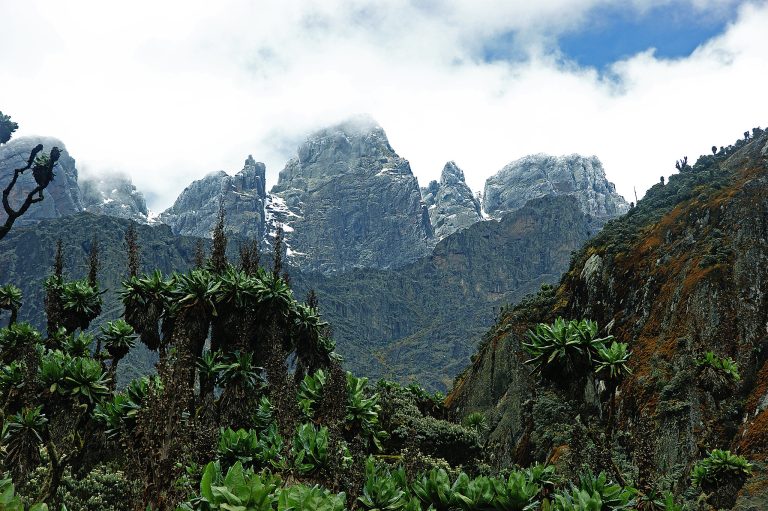
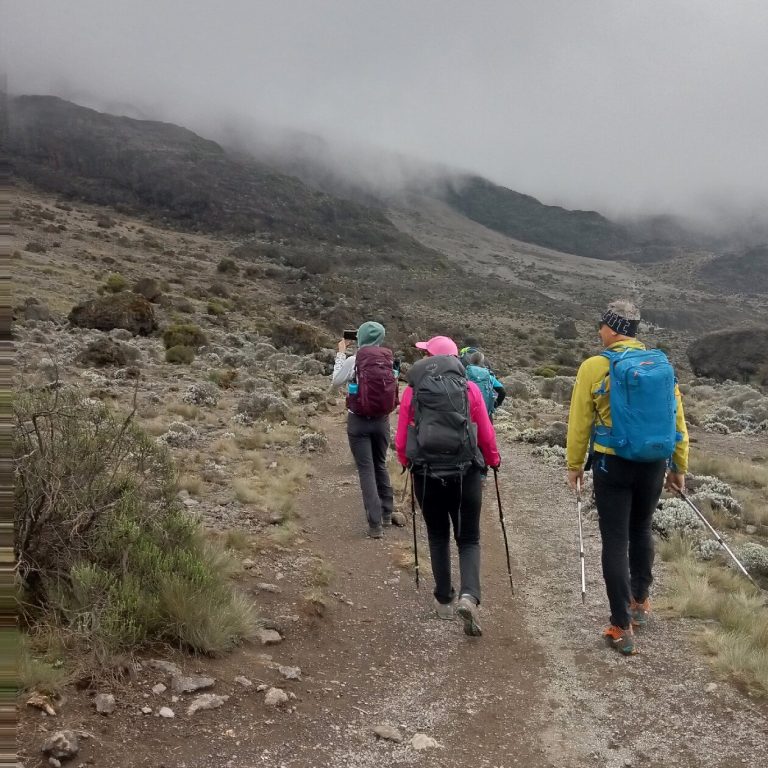
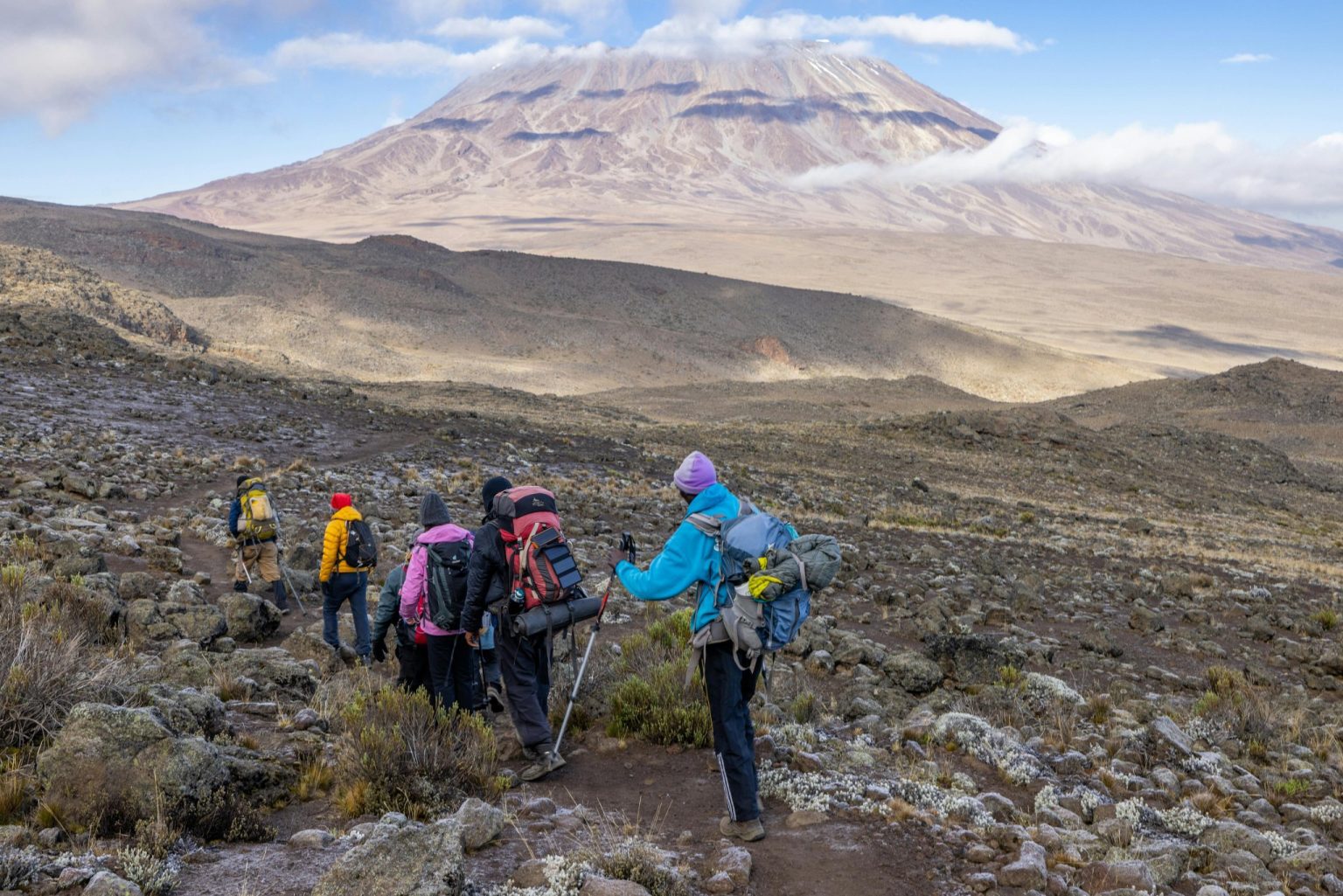
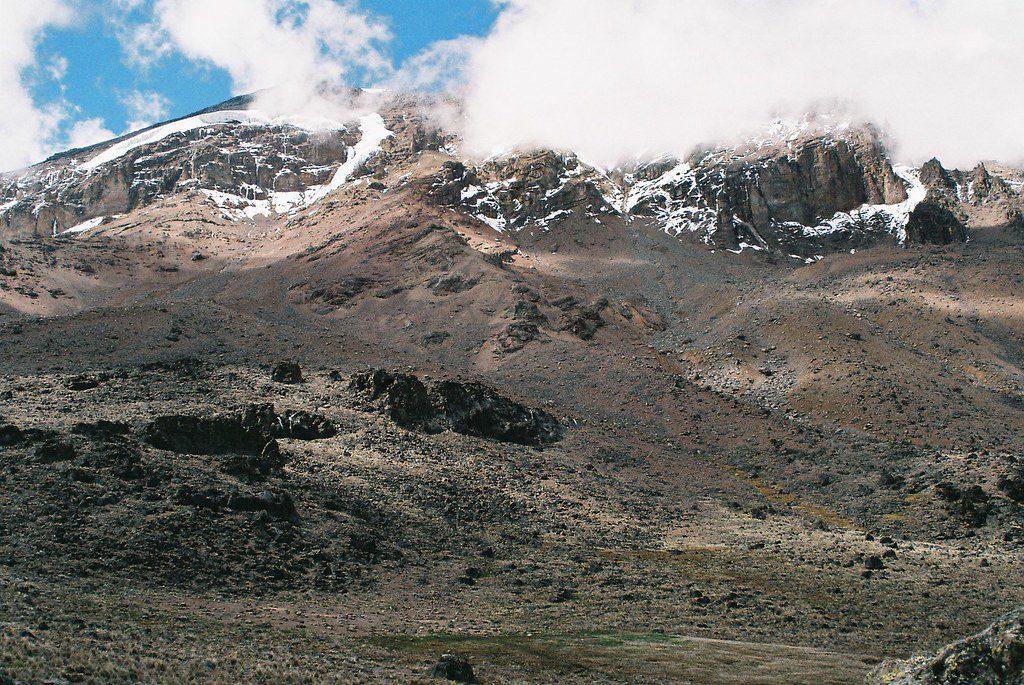
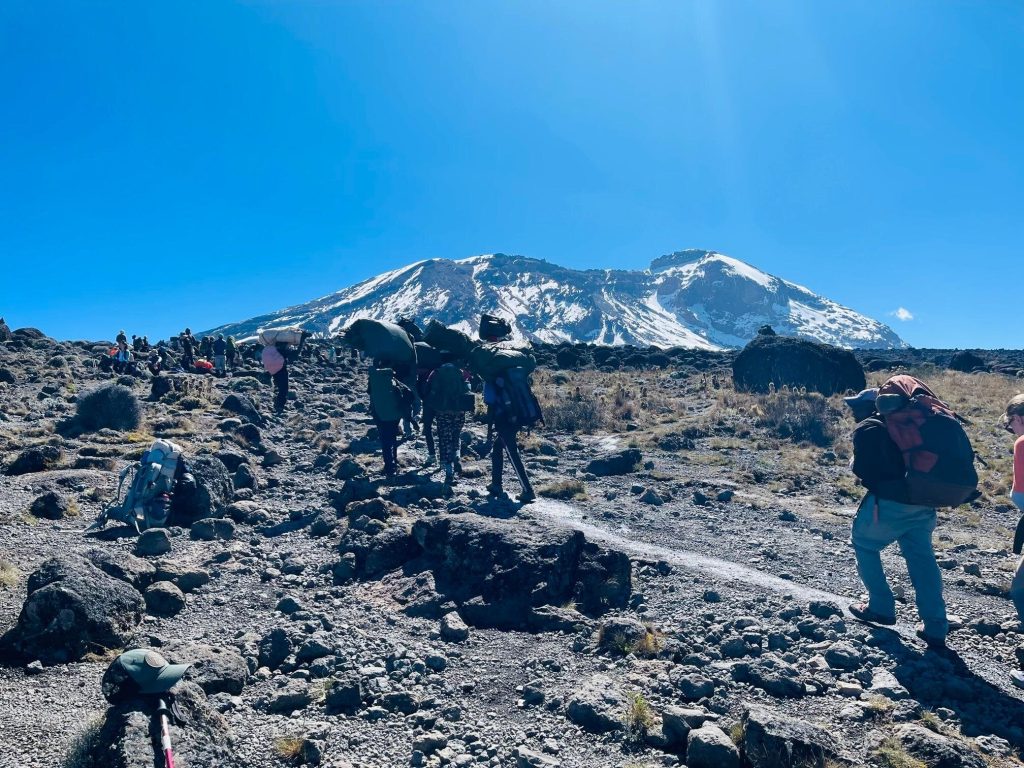
A Kilimanjaro trek crosses five climate zones in six to nine days, and each one tests a different part of the boot. Picture them in order. A boot chosen only for the summit will be wrong for the forest, and the reverse is just as true.
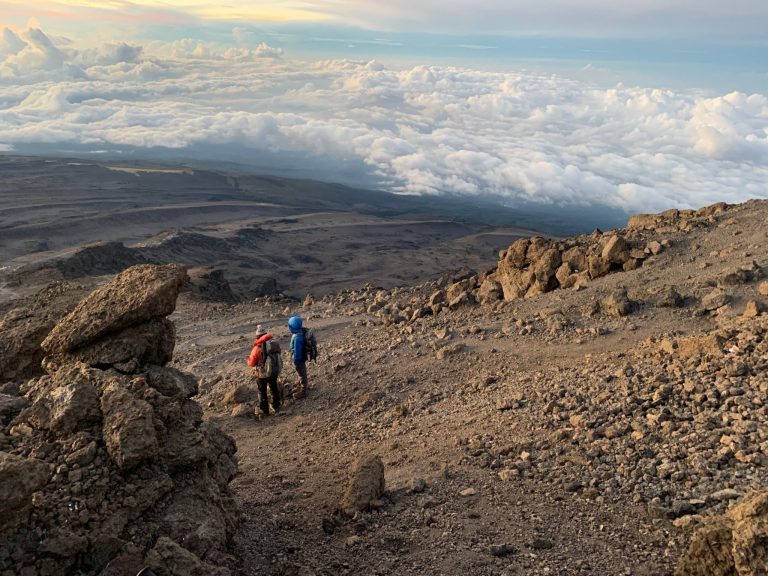
Trip reports return to that last point again and again. The climb gets the attention, yet the walk down is where most foot damage happens: tired legs, a steep gradient and a boot that lets the foot slide forward add up to black toenails by the gate.
Weather adds a layer on top. In the long rains of April and May, and the short rains around November, the forest and lower moorland stay wet for days, so the membrane matters more. In the dry months from late June to October and from late December to February, dust and grit are the bigger nuisance, and a breathable boot with a padded scree collar feels better.
Boot Features for Climbing Kilimanjaro: Membrane, Height, Sole and Weight
Six features separate a good Kilimanjaro hiking boot from one that merely looks the part. Get these right and the brand matters far less.
Warmth comes up in almost every question before a climb, and the boot is only part of it. A boot laced too tight, or a foot squeezed by two thick socks, gets cold faster than a roomier boot with one good sock, because blood cannot circulate. That is why fit sits ahead of brands in this guide.
Fit and Sizing for the Kilimanjaro Descent
Fit is where most Kilimanjaro climbing foot problems start, and online reviews cannot judge it for you. Feet swell at altitude and over several long days. The boot that feels snug in a shop at noon can feel tight on day five.
Lacing finishes the job. Before the descent, tie a heel lock, sometimes called a runner’s loop, using the top eyelets so the ankle is held back in the heel cup. Tighten the upper laces a little more than on the climb and leave the forefoot laces relaxed. Trim toenails short a day or two before summit night, too. Several climbers report that this one habit made more difference to their toes than any boot.
Orthotic users should fit boots with their own insoles in place. A supportive aftermarket footbed, such as supportive hiking insoles with a deep heel cup from makers such as Superfeet, can also tighten a boot that is slightly too roomy.
Leather or Synthetic Hiking Boots for the Kilimanjaro Trek
Both work on a Kilimanjaro trek. The choice is about trade offs rather than right and wrong.
| Feature | Full leather | Synthetic or suede |
|---|---|---|
| Warmth | Warmer | Cooler |
| Weight | Heavier | Lighter |
| Break in | Weeks | Days |
| Durability | Years | Fewer seasons |
| Drying | Slow | Faster |
Full grain leather boots hold heat on summit night, resist scree scuffs and can last many years with care, but they need a proper break in and feel heavy in the forest. Look at full grain leather Gore-Tex trekking boots from Scarpa, Zamberlan, Meindl or Asolo if you run cold or plan more mountain trips.
Synthetic and nubuck or suede hybrids are lighter, comfortable sooner and dry faster after a wet first day. They suit most first time climbers and people who will also wear the boots on a safari or gorilla trek. Search lightweight nubuck waterproof mid boots for this group.
Best Hiking Boots for Kilimanjaro by Foot Shape
No boot is built for Kilimanjaro alone. The models below are widely stocked, meet the features above, and turn up again and again on climbing kit lists from Kilimanjaro operators and outfitters. Treat them as a shortlist to try on, grouped by the kind of foot and climber they suit.
If two boots feel equally good, choose the one with the firmer heel. On scree, a heel that stays put matters more than a little extra cushioning.
Kilimanjaro Hiking Boot Picks From Budget to Expedition Grade
Kilimanjaro climbing operators and gear retailers keep naming the same twenty or so boots. Grouped by how much boot you are buying, rather than by price tag, they fall into three tiers. Specifications change between model years, so check the maker’s current page for weight and materials before you order.
| Boot | Tier | Best for |
|---|---|---|
| Hi Tec Altitude | Budget | Occasional hikers |
| Merrell Moab Speed 2 Mid | Budget | Light, fast feet |
| KEEN Targhee IV Mid | Budget | Wide feet |
| Salomon X Ultra Mid | Mid | Agile hikers |
| Salomon Quest 4 GTX | Mid | Most climbers |
| Lowa Renegade EVO | Mid | Comfort, wide fits |
| Oboz Bridger Mid | Mid | Wide, supportive |
| AKU Trekker Lite III | Mid | Light leather |
| La Sportiva Aequilibrium Trek | Premium | Narrow feet |
| Asolo TPS 520 or Fugitive | Premium | Cold, heavy use |
| Meindl Vakuum | Premium | Classic leather |
| Zamberlan Vioz Plus | Premium | Long life |
Budget tier. These are the lightest and softest boots on the list, and they suit fit hikers with strong ankles. The Hi Tec Altitude line is a leather boot often suggested as a cheap and cheerful option; search Hi Tec Altitude waterproof boots. One outdoor retailer’s testers took the Merrell Moab Speed 2 Mid all the way up Kilimanjaro, which shows how far a light boot can go if your feet are used to it.
Mid tier. Most climbers end up here. The Salomon X Ultra Mid GTX feels closer to a trail shoe with a collar, while the Quest, Renegade, Bridger and AKU Trekker Lite give more structure for scree and a loaded daypack. Salewa’s mid trekking boots belong in this group too, and they run light.
Premium and expedition grade. Stiffer, warmer, usually leather, and slower to break in. The La Sportiva Aequilibrium Trek GTX and Nucleo High II GTX suit slim feet. Asolo’s TPS 520 GV Evo is a long running leather favourite with outfitters, and the Asolo Fugitive GTX, with the Stynger as its women’s version, is a lighter step down; the Falcon Evo and Power Matic sit nearby in the range. The Meindl Vakuum GTX, Zamberlan Vioz Plus GTX, Mammut Trovat Guide High, Danner Mountain 600 Evo and Scarpa Kenesis Pro GTX complete the list. Nobody needs a premium boot for Kilimanjaro. Buy one if you run cold, carry a heavy pack or plan more big treks.
Men’s and Women’s Hiking Boots for a Kilimanjaro Climb
A Kilimanjaro hiking boot for women is not a smaller men’s boot. Most makers build women’s models on a separate last with a narrower heel, a lower instep and a slimmer ankle collar, so the heel lock holds better on the descent. The Asolo Stynger, the women’s Salomon Quest and Lowa Renegade, and the women’s KEEN Targhee are all built this way. Anyone with a wide forefoot and a narrow heel, a common mix, may find a men’s boot fits better in the toe and needs a heel lock to stop slipping. Try both.
Men with wide or high volume feet have the opposite problem. A standard width boot sized up to clear the toes ends up too long, and the foot slides on the way down. Look for wide versions instead; Lowa, KEEN, Merrell and Oboz all sell them in many markets. Search men’s waterproof mid hiking boots in wide width to narrow the field.
Mountaineering Boots, Crampons and Trail Runners on a Kilimanjaro Climb
On the Machame, Lemosho, Marangu, Rongai, Northern Circuit and Umbwe routes, the Kilimanjaro hike is a walk, not a technical climb. Double mountaineering boots and crampons stay at home. They are heavy, stiff, slow to break in and miserable in the rainforest. The exception is the specialist Western Breach route and the occasional season of snow on the crater rim, where an operator may ask you to carry light traction.
For that rare snow, a pair of slip on microspikes weighs little and fits over a normal hiking boot. Ask your operator whether conditions call for them before you buy.
Trail runners are a different question, and they are the most common mistake people ask about on climbing forums. Experienced long distance hikers do sometimes wear them for the lower days, then switch to boots for summit night and the scree descent. Mesh trail shoes let scree in, soak through in the forest and offer little warmth at minus 15C. For most people, especially first time climbers, carrying two pairs adds weight and decisions without much gain. A boot that already does everything is simpler.
Breaking In Boots Before a Kilimanjaro Climbing Trip
Every kit list, every guide and every trip report agrees on this: never arrive with new boots. A boot needs time to mould to your foot, and your foot needs time to toughen at the pressure points.
Start at least four to six weeks out for synthetic boots and longer for full leather. Wear them around the house first, then on short walks, then on two or three long days of four or five hours with real climbs and, above all, long downhill stretches. A boot is broken in when the insole carries the shape of your foot and nothing rubs after a full day. Use the socks you will wear on the mountain. If a hot spot appears, deal with it now, when you can still swap insoles, change lacing or return the boots.
Your training walks double as a test of the rest of the kit. Our trekking fitness guide has ideas for hill sessions that suit both Kilimanjaro and a gorilla trek. Carry your boots in your hand luggage on the flight to Kilimanjaro International Airport, or wear them. A lost checked bag can be replaced in Moshi or Arusha with rented sleeping bags and jackets, but a broken in pair of boots cannot be replaced at all.
Rental boots do exist in Moshi and some operators keep a stock, so a forgotten pair need not end the climb. Treat it as an emergency fallback, not a plan. Our Kilimanjaro cost guide puts boots on the never rent list for the same reason: a week of descent in boots that do not fit costs toenails.
Socks, Gaiters, Insoles and Camp Shoes for the Kilimanjaro Hike
The boot is half the system. The rest is cheap, light and easy to get right.
Waterproof socks come up on some kit lists as a backup for wet forest days. They are warm but sweaty, so most climbers keep them for the rainy months or skip them in a membrane boot. Warm feet on summit night also depend on what is above the ankle. Merino base layers and insulated trekking trousers keep the legs warm, which keeps blood flowing to the toes. Our guide on what to wear on Kilimanjaro covers the full summit night outfit. Our safari pants guide covers lighter trousers for the lower slopes and the safari afterwards.
What Kilimanjaro Climbers Wish They Knew About Boots and Feet
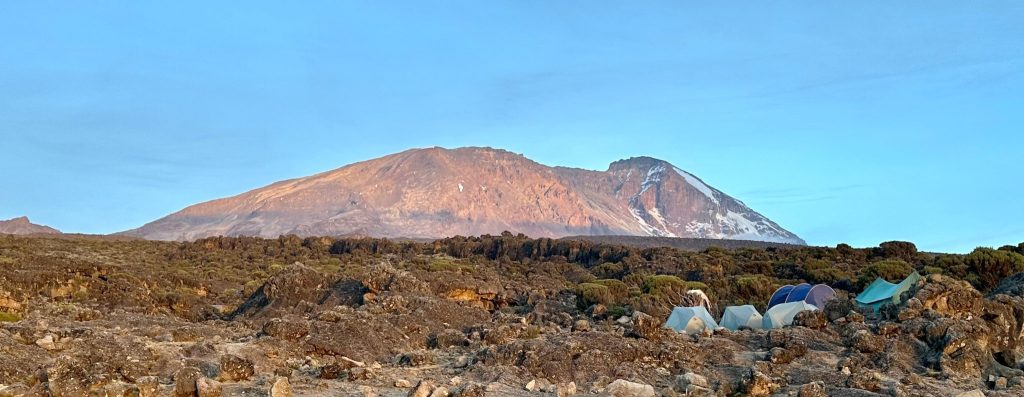
Ask people who have finished a Kilimanjaro climb what they would change, and the same lessons come back. Ten of them concern the feet.
None of these cost much. Most are habits, and they decide whether the walk to the gate is a pleasure or a hobble.
Using the Same Boots for Gorilla Trekking and Safari
Plenty of climbers fly on to a Serengeti safari or a gorilla trek in Bwindi, and they ask whether one pair can do it all. Mostly, yes. A waterproof mid boot with deep lugs is exactly what the steep, muddy slopes of a Bwindi gorilla trekking safari demand, and our gorilla trekking boots guide covers what the forest needs in more detail.
On a vehicle safari, boots are rarely needed at all. Light shoes do the job in the Land Cruiser, and the boots go back in the soft safari duffel. On the mountain, wear the boots rather than packing them: operators commonly cap the duffel a porter carries for you at about 15 kg, inside the 20 kg company load that the Kilimanjaro Responsible Trekking Organization, formerly the Kilimanjaro Porters Assistance Project, sets as each porter’s ceiling. Light aircraft transfers to Bwindi or the Serengeti use a similar soft bag limit of around 15 kg including hand luggage. Combined itineraries are laid out in Tanzania safari and gorilla trekking and the Kilimanjaro climb and safari page, and the full kit for each part is in the African safari packing list and the gorilla trekking packing list.
Caring for Kilimanjaro Boots on the Mountain and After
Each evening, loosen the laces fully, pull out the insoles if they are damp and let both air in the tent porch. Keep the boots inside the tent on cold nights, inside a bag, so they are not frozen stiff for the summit start. A frozen boot is hard to get on at midnight, and it steals heat from your feet for the first hour.
Back home, wash off the volcanic dust and dried mud with a soft brush and water, dry them away from direct heat, and refresh the outer water repellency with a waterproofing treatment for membrane boots. Leather boots also like a conditioner made for lined leather, such as the Nikwax range one outfitter suggests for its Asolo boots. Look after them and the same pair will see you through the next trek.
Kilimanjaro Boots FAQ
What are the best boots for Kilimanjaro?
Waterproof, mid height hiking boots with a breathable membrane, a lugged sole and room for a thick sock. The Salomon Quest, Lowa Renegade, KEEN Targhee, Merrell Moab Mid and Scarpa or La Sportiva trekking boots are popular choices, but the right one is whichever fits your foot after a proper try on and break in.
What shoes do you need for Kilimanjaro?
Two pairs: broken in waterproof hiking boots for the trail and summit night, and light trainers or closed sandals for camp. Add four or five pairs of merino socks, one thick summit pair, liner socks if you blister easily, and gaiters for scree and mud.
How much should I spend on boots for a Kilimanjaro climb?
Good waterproof mid boots from the major brands commonly sell for roughly US$130 to US$300, and heavier full leather trekking boots often cost more. Prices change with sales and models, so check current listings. Spending more buys durability and support, but fit matters far more than price.
Can I hike Kilimanjaro in trail runners?
Some experienced hikers do for the lower days, but most guides advise boots for the whole trek. Summit night is cold and the scree descent is hard on ankles and toes, and a boot handles both better.
How long does it take to break in hiking boots before a Kilimanjaro trek?
Allow at least four to six weeks for synthetic boots and longer for full leather, including two or three long hill days with steep descents in the socks you will wear on the mountain.
Do I need insulated boots for summit night?
Usually not. Before dawn, temperatures at the crater rim often fall to about minus 7C to minus 20C once wind is counted, yet an uninsulated three season boot with a thick merino sock, gaiters and loose lacing keeps most climbers warm. People with poor circulation may prefer light insulation or chemical toe warmers.
Can I rent hiking boots in Moshi or Arusha?
Some rental shops and operators keep boots, but sizes and condition vary and they will not be broken in to your feet. Bring your own and keep rental for the bulky items: a sleeping bag, down jacket and poles together cost roughly US$45 to US$80 to hire for the climb.
How do I stop losing toenails on the Kilimanjaro descent?
Leave a finger’s width of room in front of the toes, cut nails short before summit night, tie a heel lock with the top eyelets and tighten the upper laces for the walk down. Trekking poles take more load off the toes on the steep sections.
Do you need a pee bottle for Kilimanjaro?
It is optional but popular. Altitude and the amount you drink mean several trips out of the tent each night, and a marked, leak proof bottle saves pulling boots on in the cold at 3am. Women can use a funnel device with it. The Kilimanjaro gear list covers it with the rest of the night kit.
What is the fatality rate of Kilimanjaro?
Deaths are rare against the number of climbers each year, and most are linked to altitude illness or existing health conditions rather than falls or equipment. No regularly published official figure is easy to check, so treat numbers quoted online with caution. A longer itinerary, a slow pace, a guide trained in altitude illness and a willingness to turn back lower the risk more than any piece of gear.