A 7 day Kenya safari is normally six nights on a loop from Nairobi: two in Amboseli for elephants under Kilimanjaro, one at Lake Nakuru or Lake Naivasha, and three in or beside the Masai Mara for big cats and, from about July to October, the migration. Most people book this one week Kenya safari as a private or shared road trip with a licensed operator, and many fly the Mara leg to save the roughest drive.
Seven days is where Kenya stops feeling hurried. A 3 day Kenya safari is the Mara alone, and a 5 day Kenya safari moves you almost daily. The extra days buy a second Amboseli dawn and a third Mara night.

How a 7 Day Kenya Safari Fits Together
Every standard 7 day Kenya safari is a loop that stays within a day’s drive of Nairobi. Amboseli lies south on the Tanzanian border. Lake Nakuru sits northwest on the floor of the Great Rift Valley. The Masai Mara is further west again, the Kenyan end of the Serengeti ecosystem. Our guide to the best African safari countries sets Kenya beside its neighbours.
Order matters more than the names. Good operators put Amboseli first and the Mara last, so the strongest game viewing falls at the end and the last morning can be a flight out.
Why three nights in the Mara? The reserve covers roughly 1,510 square kilometres, and one wet day can wipe out half of a two night stay. Two Amboseli nights give two chances at Kilimanjaro, which hides in cloud for much of most days. The lake night simply cuts the longest transfer in half.
Day by Day: The Classic 7 Day Kenya Safari Route
This is the shape most reputable operators quote. Treat it as a sample route to measure other quotes against, not a package sold here.
Day four ends outside the Mara gate on purpose. The reserve ticket is a twelve hour pass from 6am to 6pm, whatever time you arrive, so driving in at four in the afternoon would mean paying a full day for two hours. Entering fresh on day five avoids it.
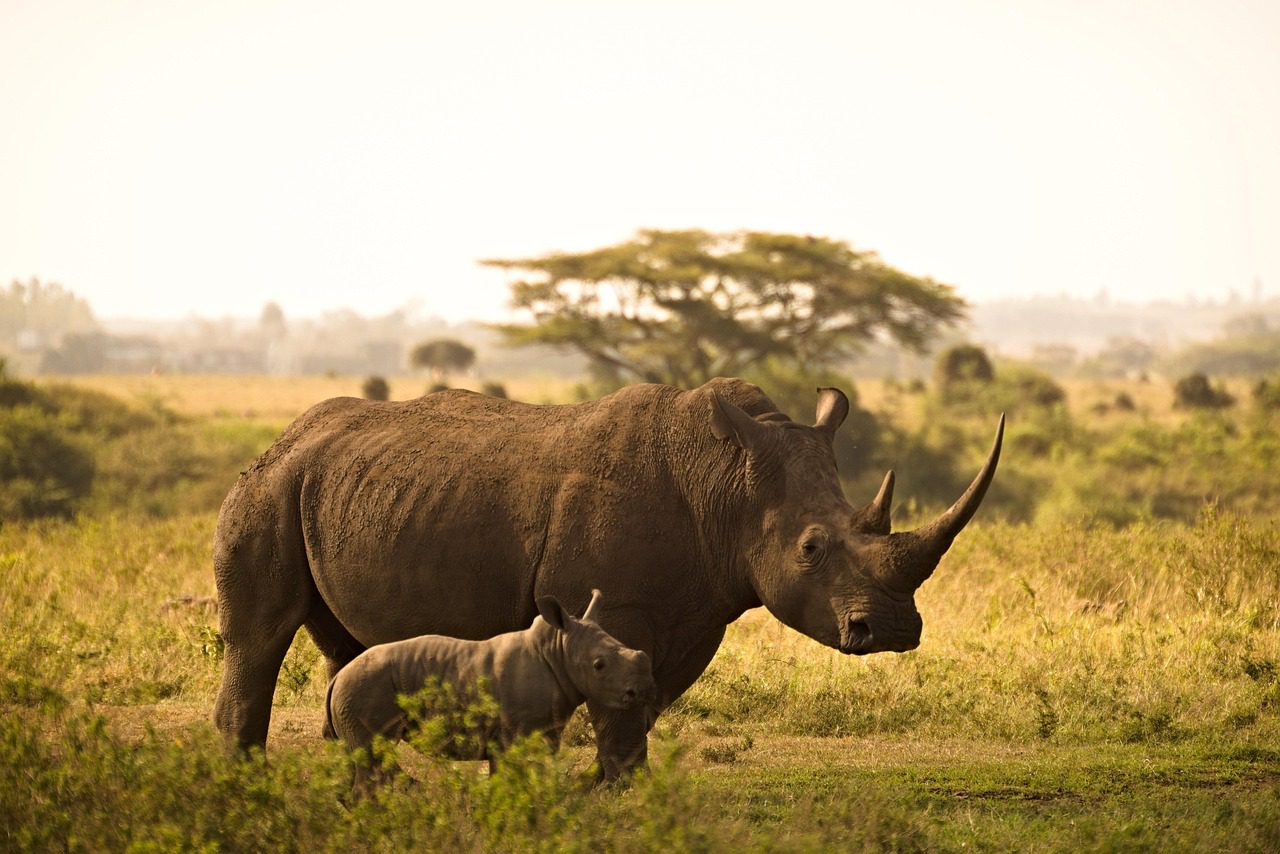
Nakuru has changed. Rising water flooded the old main gate, and vehicles now use the Lanet and Nderit entrances. Flamingo numbers fell as the lake rose and freshened, so rhinos are the reason to stop here today, and our Amboseli safari guide covers the park at the other end of the week.
Most long haul flights land in the evening, so book a Nairobi night before day one; trip reports often mention sleeping through the first drive after an overnight flight. A spare Nairobi morning fits the Giraffe Centre, the Sheldrick elephant orphanage or the Karen Blixen Museum.
Road Hours and Flight Options on a One Week Kenya Safari
Time on the road is the hidden price of a Kenya road safari. These are the hours drivers report for the classic loop; rain can add an hour.
| Leg | Hours | Road |
|---|---|---|
| Nairobi to Amboseli | 4 to 5 | Mostly tarmac |
| Amboseli to Nakuru | 6 to 7 | Via Nairobi |
| Nakuru to the Mara | 5 to 6 | Rough last part |
| Mara to Nairobi | 5 to 6 | Rough first part |
The worst stretch runs past Narok toward Sekenani Gate, still corrugated after years of promised tarmac. Anyone with a bad back should say so before booking.
Three fixes come up in almost every planning thread. Fly out of the Mara on day seven: a light aircraft reaches Wilson Airport in about 45 minutes, or up to an hour and a quarter with stops. Take the Madaraka Express morning train to Emali on day one, about an hour and a half, with your vehicle waiting. Or swap Nakuru for Lake Naivasha, nearer Nairobi.
Flights have a catch. Most Mara services allow about 15 kg per person in a soft bag, cameras included, so pack in a soft safari duffel bag and leave the hard suitcase at your Nairobi hotel.
Five Other Ways to Plan 7 Days on Safari in Kenya
Operators quote several other 7 day Kenya safari shapes, each suited to a different kind of traveller.
Some published plans run Tsavo East straight to the Mara, a seven to eight hour day at best. If the Mara matters, take the classic loop; if elephants and space matter more, finish at the coast.
A week cannot comfortably hold a fourth park either. Fitting Naivasha, Nakuru, Amboseli and the Mara into seven days means a transfer every day, and people who have done it say they saw more tarmac than lions. Our best safari in Kenya guide compares the parks.
Wildlife to Expect on a 7 Day Kenya Safari, Park by Park
Each park on a one week Kenya wildlife safari does a different job. This is what is commonly seen; wild animals keep no schedule.
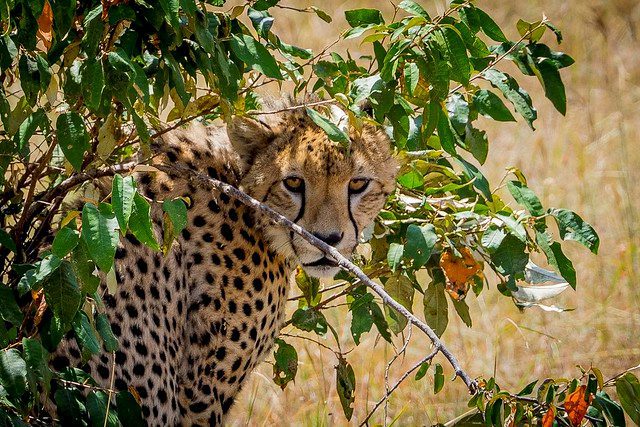
Most people see four of the Big Five on the classic loop, with leopard the usual gap.
Camps and Lodges for a One Week Kenya Safari Tour
Camps move the price more than anything else on a one week Kenya safari tour, and a cheap camp an hour from the action costs you the best morning light.
Mixing tiers works: a simple lodge on the lake stop, the money spent on the Mara camp. Our budget Kenya safari and luxury Kenya safari guides set out the two ends of the range.
“Or similar” on a quote can hide a big downgrade, so ask for each camp by name and check whether it sits inside the park or outside the gate. Our Masai Mara safari guide compares reserve and conservancy camps, and the safari lodges section holds our lodge guides.

Masai Mara Game Drive Days on a Seven Day Trip
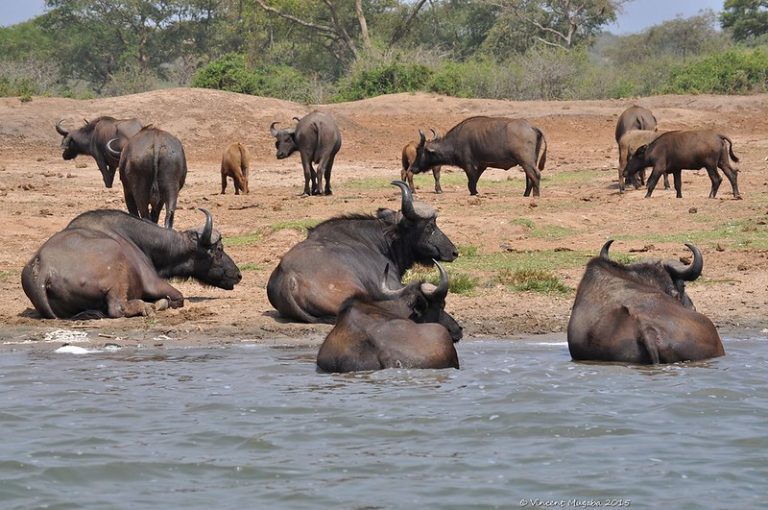
Days five and six are the core of a 7 day Masai Mara safari. A full day game drive with a packed lunch reaches the Mara River, where hippos and crocodiles live all year and the herds cross in season; from most budget camps a half day drive cannot get there and back. Day six can run slower, out at about 6.15am and again around 4pm, unless the guide parks at a crossing point for hours.
Extras slot in here. A dawn hot air balloon safari drifts for about an hour and lands for a bush breakfast,; operators set a minimum age for children. For a Maasai village visit, ask whether it is community run and where the fee goes.
Crowding is the honest downside. In August, trip reports describe twenty or more vehicles around one cheetah. A conservancy night or two, where vehicle numbers are capped, helps; our Masai Mara safari cost guide shows what that adds.
Mara mornings in an open roof vehicle feel close to freezing, so bring a fleece. Our guide to what to wear on safari covers clothing, and good safari binoculars matter more in the Mara than a longer lens. A beanbag on the window frame steadies a long lens better than a tripod.
Best Months for a 7 Day Kenya Safari
A Kenya safari runs in every month. What changes is rain, crowds, the herds and price.
| Months | Weather | Mara herds | Crowds |
|---|---|---|---|
| Jan to Feb | Dry, warm | Serengeti | Moderate |
| Mar | Rains start | Serengeti | Low |
| Apr to May | Long rains | Serengeti | Lowest |
| Jun | Dry, green | Moving north | Rising |
| Jul to Oct | Dry, cool | In the Mara | Highest |
| Nov | Short rains | Going south | Low |
| Dec | Mixed | Serengeti | High late |
January and February suit this loop well. Dry roads, good cat viewing, and a clearer Kilimanjaro than later in the year. March brings the first storms and cloud that can hide the mountain for days.
April and May are the long rains: black cotton mud, some camps closed, the lowest rates and plenty of space. June is underrated: dry, green and quiet before the herds arrive.
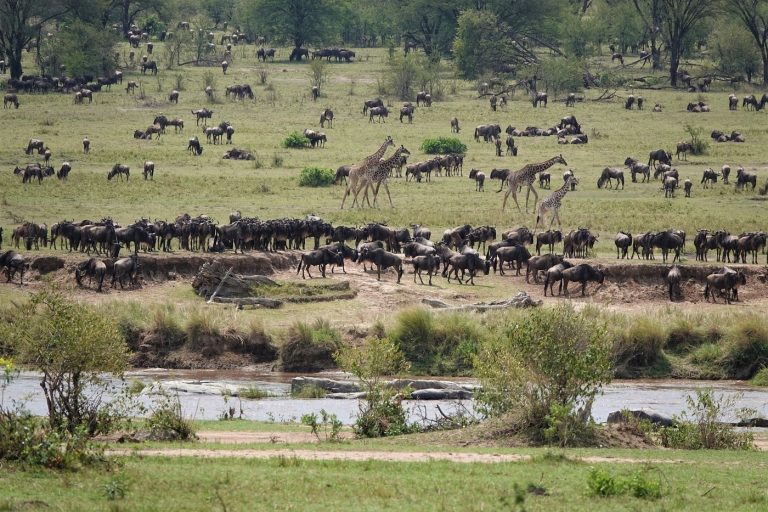
July to October is migration season, when the wildebeest, roughly 1.37 million of them at the last aerial count, are usually in the Mara and river crossings can happen. The herds follow rain, not a calendar, so read our great wildebeest migration guide, and our Masai Mara migration safari page if crossings are the main goal. November brings short afternoon showers and lower camp rates; December stays calm until the Christmas rush.
Private, Shared or Fly In: How Your Kenya Safari Runs
One route can run three ways. A private road safari gives you your own vehicle and driver guide, so you set the pace and stay at a sighting as long as you like; families of four or five often pay little more per head than in a group. A shared group safari fills the vehicle with up to six or seven others on fixed dates, which is the cheapest way to travel solo. A fly in safari trades road days for light aircraft, with game drives run by each camp in its own vehicles.
A pop up roof minivan copes in the dry months; a 4×4 Land Cruiser rides the rough Mara road better and is the safer pick in April, May and November. Travellers promised a Land Cruiser are sometimes sent a van, so get the model in writing, with a window seat for everyone.
With children, long road days are hard on the under tens, and some camps set minimum ages. Our Kenya family safari guide covers pacing and camp rules.
Health and paperwork take a few weeks, so start early. See a travel clinic at least six weeks out about malaria tablets and whether you need a yellow fever certificate for your route, and apply for entry online before you fly. Kenya’s part of the joint visa has been listed as unavailable, so most travellers now take a Kenyan eTA; our East Africa Tourist Visa guide explains where things stand.
What a 7 Day Kenya Safari Quote Should Include
Two quotes for a 7 day Kenya safari package can look alike and cover different things. Check each for these lines.
Our Kenya safari cost guide explains how each line moves the total.
Adding Gorillas, the Coast or Tanzania to a Week in Kenya
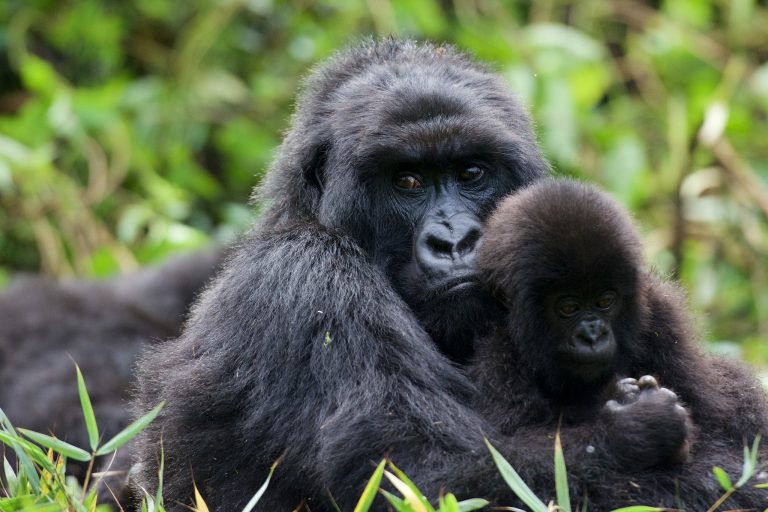
Mountain gorillas. From Nairobi it is a short flight to Entebbe or Kigali. From Entebbe, a scheduled flight of just over an hour reaches Kihihi or Kisoro, then a one to two hour transfer to Bwindi; from Kigali, Volcanoes National Park in Rwanda is a two to three hour drive. Three or four extra days covers one trek; July to October suits both. Book the permit first. See gorilla trekking in Bwindi, gorilla trekking in Rwanda, our gorilla and Masai Mara safari plan and the gorilla safari companies list. Check government travel advice before booking: at the latest check the US rated Kenya and Rwanda Level 3 and Uganda Level 4, and our safe countries in Africa guide sets that beside UK and Canadian advice.
The coast. Diani, Watamu and Lamu are about an hour by air from Nairobi. For a bush and beach plan, our 10 day Kenya safari builds in the coast and the north.
Tanzania. A separate week over the border, such as our 7 day Tanzania safari, beats squeezing two countries into seven days. The African safari packing list covers what to bring for either.
7 Day Kenya Safari FAQ
How much does a 7 day Kenya safari cost?
Our Kenya safari cost guide puts shared budget road trips at about US$120 to US$190 per person a day with park fees, and mid range lodge road trips at about US$200 to US$320 a day. Over a week that means shared budget loops commonly advertised from about US$1,000 to US$1,800 per person, and private mid range trips for two around US$2,200 to US$3,500 per person, less per head for four to six. Fly in trips with conservancy camps often start near US$5,000 per person. All rise from July to December when the Mara fee doubles. International flights, tips, drinks and extras sit outside these figures: a balloon flight adds about US$450 to US$500, each one way light aircraft leg about US$224 to US$320, and guides are usually tipped US$10 to US$20 per guest a day plus US$5 to US$10 for the camp staff box.
What are the park fees on this route, and what else must I pay before I fly?
The Masai Mara charges non resident adults US$100 a day from January to June and US$200 from July to December on a twelve hour ticket; children nine to seventeen pay US$50 and younger children enter free. Amboseli and Lake Nakuru charge US$90 per non resident adult and US$45 per child for 24 hours, Meru US$70 and Hell’s Gate US$50. The KWS schedule was challenged in court soon after it launched, so confirm the rate for your dates. Three Mara days and three KWS days come to roughly US$570 per adult in the low band and US$870 in the high band. The Kenya eTA costs US$30 at standard processing.
Is 7 days enough for a Kenya safari?
For a first trip, yes: enough for elephants, rhinos, lions and usually cheetah. It is not enough for four parks or the north as well; with ten days, add Samburu or Laikipia.
Is a 7 day Kenya safari private or shared, and which is better?
Either. Private suits families, photographers and anyone who wants to set the pace; shared suits solo travellers on a tight budget who are happy with fixed dates. Ask the operator to state it in writing, with the passenger limit.
Should I drop Lake Nakuru or Amboseli to save driving?
Drop the lake stop and give its night to the Mara or Amboseli. Nakuru’s flamingos have thinned and its main draw is now rhino. Amboseli is the better keep for elephants and the Kilimanjaro view.
Will I see the wildebeest migration on a one week safari?
Yes, if you travel while the herds are in the Mara, usually from about July to October. Keep three Mara nights and choose a camp within easy reach of the river. Crossings are unpredictable and guides can wait hours for nothing, so count one as a bonus.
Do I need insurance or vaccinations for Kenya?
Travel insurance with evacuation cover is wise for any safari. Kenya has also gazetted a requirement for visitors to hold health insurance meeting set minimum cover, uploaded with the eTA, but its enforcement was challenged in the High Court, so check the eTA portal for the current position. For vaccinations and malaria tablets, see a travel clinic at least six weeks ahead.
Can I add gorilla trekking to a 7 day Kenya safari?
Yes, with three or four extra days via Entebbe or Kigali. A Uganda gorilla permit costs US$800 for foreign non residents, with a US$600 rate in April, May and November, and a Rwanda permit costs US$1,500, or US$1,050 on the offer from November to May. The minimum trekking age is fifteen. See our gorilla permit guide.
When should I book a 7 day Kenya safari?
For July to October and Christmas, many travellers book six to twelve months ahead because the best placed Mara camps fill first. For other months, two to four months is usually enough.