A 10 day Kenya safari means nine nights: three or four in the Masai Mara plus one more region, either the dry north around Samburu and Laikipia, the south through Amboseli and Tsavo, or a few days on the coast. Most travellers book it as a private road trip from Nairobi with a licensed operator, flying one or two of the longest legs. Ten days is the length that turns Kenya from one reserve into a varied circuit.
Shorter trips trade variety for time. The 3 day Kenya safari is the Mara alone, the 5 day Kenya safari adds a lake and Amboseli at a brisk pace, and a 7 day Kenya safari covers Amboseli, one lake and the Mara with little slack. Three more days open a second ecosystem and leave room for a rest morning.
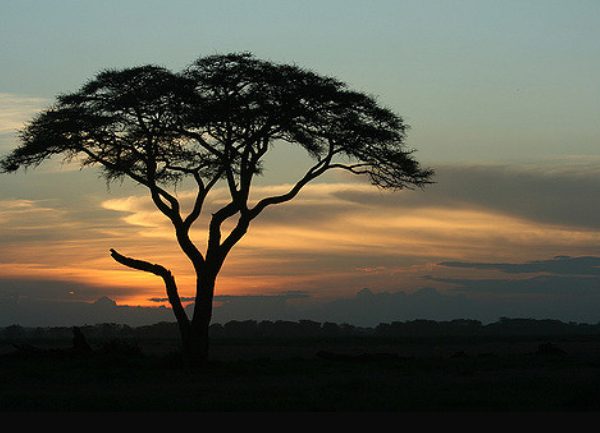
Planning a 10 Day Kenya Safari: Routes and Night Splits
Planning a 10 day Kenya safari starts with one question: what goes with the Mara? Almost every itinerary keeps the reserve as its anchor, with three or four nights, then heads one of three ways.
North. Samburu and the Laikipia plateau bring hot, dry country, species found nowhere else on a standard circuit and Kenya’s best rhino conservancies, linked to the Mara through the Rift Valley lakes. That is the route laid out day by day below. South. Amboseli and the two Tsavo parks give elephants under Kilimanjaro and big red earth wilderness, on the road to the coast. Coast. Two or three nights at Diani, Watamu or Lamu turn the trip into bush and beach.
The usual mistake is trying all three. Planning threads return to it again and again: the Mara, Amboseli and Samburu in ten days means roughly one day in three spent in the vehicle, since no direct road links the north with the south. Pick a direction, or fly.
Two nights per stop is the ideal. One night stops still earn a place as stepping stones on long transfers, which is how Ol Pejeta, Nakuru and Naivasha are used in the plan below.
Day by Day: A 10 Day Kenya Safari Through the North and the Mara
This loop is a sample route to measure quotes against, not a package sold here.
Two choices hold this plan together. Day six ends outside the Mara gate because the reserve ticket is a twelve hour pass from 6am to 6pm, so entering on the morning of day seven avoids paying for an hour’s drive. Day nine ends at Naivasha, which splits the rough Mara road in half before a long flight home.
Ol Pejeta’s ticket allows a single entry. If your camp sits outside the conservancy and you want an evening drive, a second fee applies, so stay inside. At Lake Nakuru, rising water flooded the old main gate and vehicles now use the Lanet and Nderit entrances; flamingos have thinned, and rhinos are now the main draw.
Day by Day: A 10 Day Kenya Safari and Beach Route
The second classic shape of a 10 day Kenya safari swaps the north for the south and ends on the Indian Ocean. It follows the road from the Mara through the Rift Valley to Amboseli and Tsavo West, then drops to the coast, so the trip moves from cool highland mornings to warm sand in nine nights. Like the northern loop, treat it as a sample route.
This route asks more of you in the vehicle than the northern loop, with two days of six hours or more. Flying the Mara leg, or the whole bush section, is how most travellers soften it, which is the fly in version described further down. If you would rather spend longer on the coast, cut Tsavo West and give Diani a third night.
The beach end. Diani suits most safari travellers: a long white beach south of Mombasa, a short flight back to Nairobi and the most choice of hotels. Popular days out include a dhow trip from Shimoni to Kisite Mpunguti Marine National Park for snorkelling, often with dolphins on the way, a visit to the colobus monkey rescue centre in Diani itself, and scuba trips to the outer reef. Kitesurfers time Diani for the windy months, so ask a local school which ones suit your dates. Watamu, further north, has a marine park of its own and the Gede ruins. Lamu is the slow option, an island town of narrow lanes and dhows listed by UNESCO as a World Heritage site, best seen on foot with a local guide; getting there takes a flight, and it rewards three nights more than two.
Reef snorkelling is best at low tide, and tides shift by about an hour each day, so check the tables before booking a boat. Tide times decide more about a beach day than the forecast does.
Road Legs, Distances and Where to Fly on a 10 Day Safari
Drive times are where a Kenya road safari brochure goes quiet. These are the figures operators and drivers give for the northern loop; rain or roadworks can add an hour.
| Leg | Distance | Hours |
|---|---|---|
| Nairobi to Samburu | About 320 km | 5 to 6 |
| Samburu to Ol Pejeta | About 180 km | 3 |
| Ol Pejeta to Nakuru | About 180 km | 4 |
| Nakuru to the Mara | About 250 km | 5 to 6 |
| Mara to Naivasha | About 240 km | 5 |
| Naivasha to Nairobi | About 90 km | 2 to 2.5 |
No leg here passes six hours, which is the reason for the order. Change it and the numbers jump. Samburu to the Mara directly takes nine to eleven hours through Nairobi, the day travellers most often say they regret, and the Mara to Amboseli takes most of a day by road.
Flying fixes those legs. Light aircraft from Wilson Airport reach Samburu’s airstrips in about an hour and the Mara in about 45 minutes, a little longer with stops, and Samburu to the Mara by air usually connects through Nanyuki or Wilson. The bag limit is usually about 15 kg per person in a soft bag, so pack in a soft safari duffel bag.
For the coast, the Madaraka Express links Nairobi with Mombasa in about five and a half to six hours, with a morning service stopping at Emali for Amboseli and Voi for Tsavo. A flight from Ukunda, the airstrip for Diani, back to Nairobi takes about an hour and a quarter.
Four More 10 Day Kenya Safari Routes
Each of these 10 day Kenya safari variants turns up across operator quotes, and each suits a different traveller.
On the gorilla route, book the permit first and build the rest around it. Our gorilla and Masai Mara safari page lays that combination out in full, and the guide to the best safari in Kenya compares the parks if you are still deciding. Our guide to the best African safari countries goes wider than Kenya.
Safari Parks and Wildlife on a 10 Day Kenya Itinerary
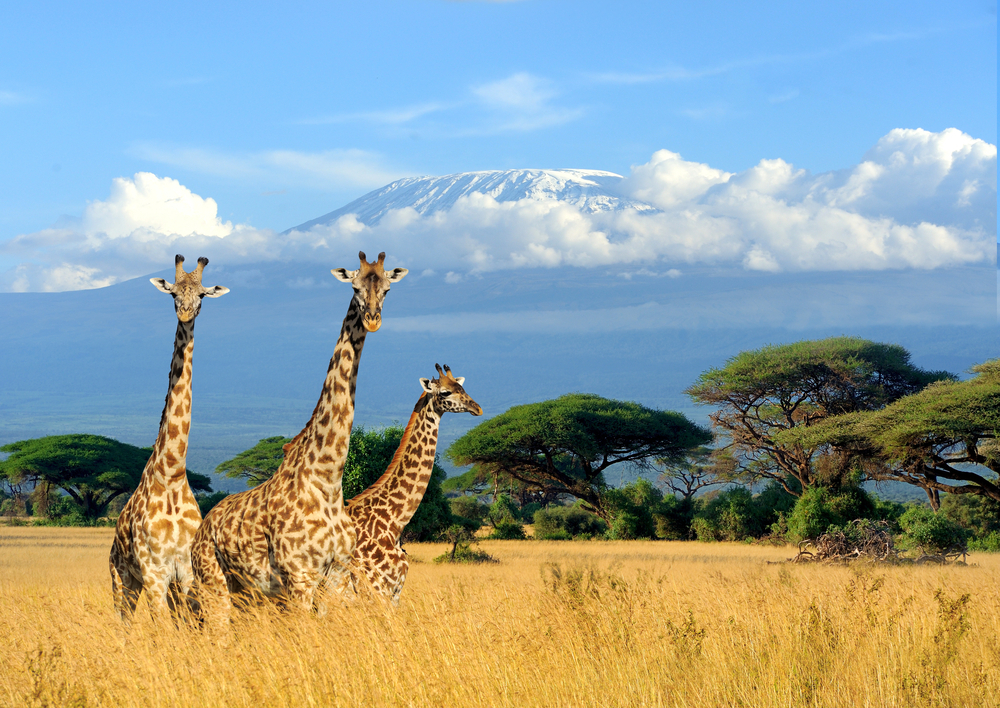
Ten days lets you choose parks for what they add to a Kenya safari tour, not for what is nearest. This is what each is known for; sightings are never guaranteed.
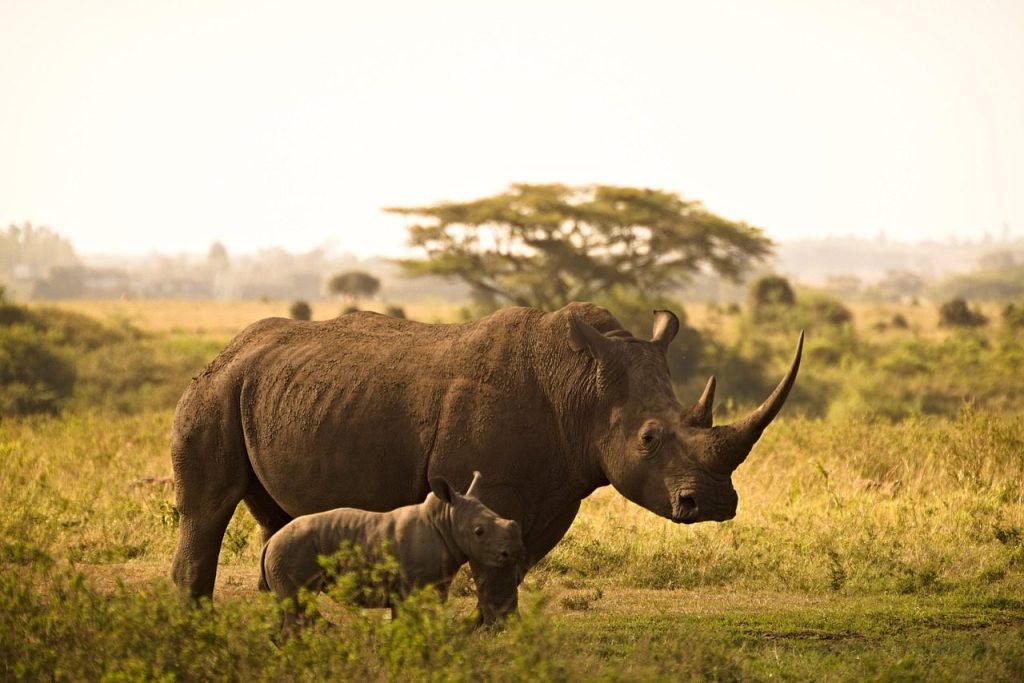
Over ten days on the northern loop most people see four of the Big Five, and rhino is close to certain at Ol Pejeta and Nakuru. Leopard stays the wild card.
A Day on a 10 Day Kenya Safari: Game Drive Hours and Park Rules
Ten days of game drives follow a rhythm set by the animals and the park gates, and it helps to know it before you judge an itinerary.
A full day drive changes the pattern. You leave at dawn with packed breakfast and lunch and stay out until late afternoon, which is the way to reach the Mara River crossing points or the far corners of a big park. Most ten day routes include one or two of these, usually in the Mara.
The rules differ by land type. Inside the national parks and the Masai Mara National Reserve you stay in the vehicle and on the tracks, with no night drives; Amboseli’s Observation Hill and a few marked picnic sites are the exceptions where you may step out. Private conservancies and Ol Pejeta allow night drives, guided walks and off track driving to a sighting, which is much of the case for spending your Mara nights in a conservancy camp. Ol Pejeta also runs rhino tracking on foot and shows visitors its tracker dog unit, both booked through the conservancy.
Guides read their guests. By day four, a good one knows whether you would rather wait an hour with a sleeping leopard or keep moving for variety, so ask for the same guide throughout and say plainly what you want to see.
Camps and Lodges for a 10 Day Kenya Safari Tour
Over nine nights, camps make up the largest part of the price, and you can mix tiers: a simple lodge on one night transfer stops, the money spent where you stay longest. That is how many travellers build a 10 day Kenya safari package.
A useful split is a conservancy camp for the Mara nights and middle range lodges elsewhere. Conservancies cap vehicles at sightings and allow night drives; trip reports describe twenty or more vehicles around one cheetah in the main reserve at peak. Ask for every camp by name in writing, since “or similar” can hide a downgrade. Our budget Kenya safari and luxury Kenya safari guides cover both ends, and the safari lodges section holds our lodge guides.
Best Time for a 10 Day Kenya Safari, Month by Month
Kenya works as a safari destination all year, but the month decides which route makes sense.
| Months | Weather | Suits |
|---|---|---|
| Jan to Feb | Dry, hot north | Any route |
| Mar | Rains begin | North, coast |
| Apr to May | Long rains | Value, mud |
| Jun | Dry, green | Any route |
| Jul to Oct | Dry, cool | Mara migration |
| Nov | Short rains | Value, green |
| Dec | Mixed | Coast, north |
January and February are dry across the country, with good cat viewing in the Mara and clearer Kilimanjaro mornings, though Samburu is at its hottest. March brings the first storms in the south.
April and May are the long rains. Black cotton soil in the Mara and Amboseli turns to deep mud and several camps close, a season for value hunters with a Land Cruiser. June is a quiet favourite: dry, green and uncrowded.
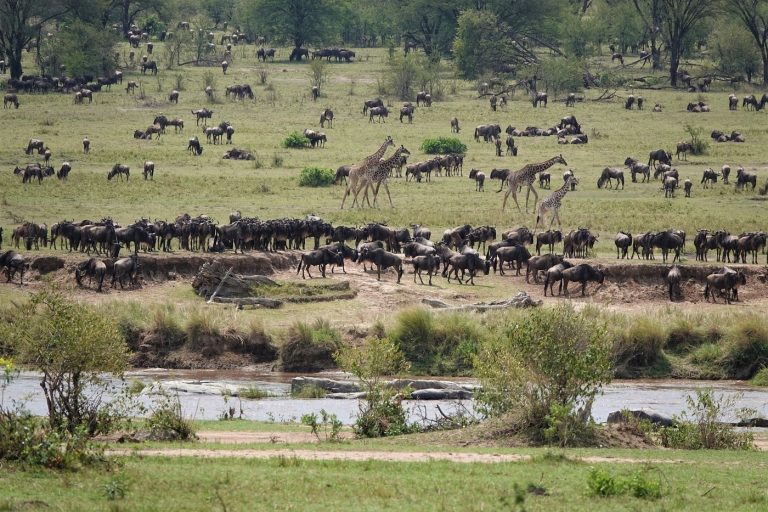
July to October is migration season, when the wildebeest, about 1.37 million at the last aerial count, are usually in the Mara, and the long dry season for the whole circuit. Book four Mara nights if crossings are the goal, read our great wildebeest migration guide and the Masai Mara migration safari page, and accept that crossings are never promised. November brings short afternoon rains and lower camp rates; December suits the coast and the north before the Christmas rush.
Private Safari, Group Tour and Vehicle Choices for Ten Days
A private safari gives you your own vehicle and driver guide, sets the pace around you and lets the guide build on what you have already seen; for four to six people it often costs little more per head than a group trip. A group safari on fixed dates shares the vehicle with up to six or seven others and suits solo travellers on a budget, at the cost of control over timing.
On the northern loop a 4×4 Land Cruiser is worth insisting on. Roads to Samburu and around Laikipia are rough, and in April, May and November a pop up roof minivan can struggle. Some travellers promised a Land Cruiser are sent a van, so get the model in writing, with a window seat for everyone and the same guide throughout.
Ten days of 6am starts wears people down, and many skip one morning drive midway. Families should read our Kenya family safari guide on pacing with children. For clothing, see what to wear on safari and the African safari packing list, and pack safari binoculars for Samburu’s shy northern species.
Start the paperwork a month or two out. A travel clinic visit at least six weeks ahead covers malaria tablets and whether your route needs a yellow fever certificate. Kenya’s part of the East Africa Tourist Visa has been listed as unavailable, so most travellers now apply for a Kenyan eTA before flying.
Your passport needs at least six months left after you arrive and a couple of blank pages. For the bag itself, neutral khaki and olive layers work best; dark blue and black draw tsetse flies in Tsavo and parts of the Mara. Bring a warm layer for dawn drives, a wide brimmed hat, a scarf against road dust, a dust proof bag for the camera, a spare battery pack and a plug converter for Kenya’s three pin sockets. Leave room in a soft bag if any leg is flown.
What to Check in a 10 Day Kenya Safari Quote
Run every 10 day Kenya safari quote through these checks before comparing totals.
Our Kenya safari cost guide explains how each line moves the price, and the Masai Mara safari cost guide covers the reserve in detail.
Extending a 10 Day Kenya Safari With Gorillas or Tanzania
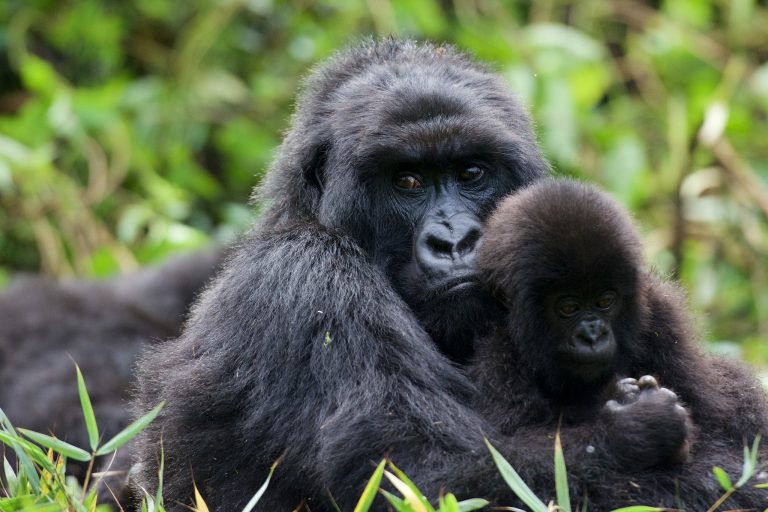
Gorillas. Nairobi has short flights to Entebbe and Kigali. From Entebbe, a scheduled flight of just over an hour reaches Kihihi or Kisoro, then a one to two hour transfer to Bwindi; from Kigali, Volcanoes National Park is a two to three hour drive. Our guides to gorilla trekking in Bwindi and gorilla trekking in Rwanda explain the trek, the gorilla safari companies list covers Uganda operators, and the East Africa Tourist Visa guide explains how the joint visa and Kenya’s eTA fit together. For a longer Uganda leg, see our 10 day Uganda safari. Check government advice first: at the latest check the US rated Kenya and Rwanda Level 3 and Uganda Level 4, set beside UK and Canadian advice in our safe countries in Africa guide. Our guide to gorillas in Kenya explains why every gorilla trip from Nairobi crosses a border.
Tanzania. The Serengeti and Ngorongoro Crater lie over the border from the Mara and Amboseli. A separate trip such as our 10 day Tanzania safari makes more sense than squeezing both into ten days.
Some operators still sell a ten day Kenya and Tanzania safari, usually Lake Nakuru and the Mara followed by the Serengeti, Ngorongoro and Tarangire, ending in Arusha. The road crossing from the Mara is at Isebania and Sirari, and from Nairobi or Amboseli at Namanga; allow about an hour at the post, longer when queues build. Expect to change vehicle and usually guide at the border, since Kenyan safari vehicles do not normally operate inside Tanzania’s parks. You will need a Tanzanian visa and Tanzania’s inbound travel insurance on top of the Kenyan eTA; the costs are in the FAQ. The trade is two border days and only two or three nights in each country. January and February suit it best, when the herds calve in the southern Serengeti, and our Serengeti safari guide and Tanzania safari hub cover that side.
10 Day Kenya Safari FAQ
How much does a 10 day Kenya safari cost?
Our Kenya safari cost guide puts shared budget road trips at about US$120 to US$190 per person a day with park fees and mid range lodge road trips at about US$200 to US$320 a day, so ten days on a shared budget trip commonly runs about US$1,200 to US$2,200 per person. Private mid range trips for two usually fall around US$3,300 to US$5,000 per person, less per head for four to six, and luxury or fly in bush and beach trips often run from about US$7,000 to well over US$12,000. All rise from July to December when the Mara fee doubles. International flights, tips, drinks and extras sit outside these ranges: a balloon flight adds about US$450 to US$500, each one way light aircraft leg about US$224 to US$320, and guides are usually tipped US$10 to US$20 per guest a day.
What park fees apply on a ten day route?
The Masai Mara charges non resident adults US$100 a day from January to June and US$200 from July to December, on a twelve hour ticket. Amboseli and Lake Nakuru charge US$90, Tsavo East and West US$80, Meru and the Aberdares US$70 and Hell’s Gate US$50 per non resident adult for 24 hours under the current KWS schedule, which was challenged in court, so confirm the rate for your dates. Ol Pejeta lists US$110 per non resident adult for a single entry. Samburu’s fee is set by Samburu County and changes on its own timetable, so ask your operator for the current figure. The Kenya eTA costs US$30 at standard processing.
Is 10 days enough for a Kenya safari?
Yes. Ten days covers the Mara plus one other region in comfort, with a rest morning or two. It is not enough for the north, the south and the coast together unless you fly most legs.
Should I choose Samburu or Amboseli?
Samburu for northern species, leopard and fewer vehicles; Amboseli for elephants under Kilimanjaro. Both hold big elephant herds. If you plan to finish at the coast, Amboseli sits on the way.
How many nights should I spend in the Masai Mara on a 10 day safari?
Three at least, four from July to October if crossings matter.
Is it better to drive or fly on a 10 day Kenya safari?
Drive the short legs and fly the long ones. The northern loop works by road because no leg passes six hours. Fly when a route links the north and the south, or the Mara and the coast, since those road days run nine hours or more.
Do I need insurance or vaccinations for Kenya?
Travel insurance with evacuation cover is wise on any safari. Kenya has also gazetted a requirement for visitors to hold health insurance meeting set minimum cover, uploaded with the eTA, but its enforcement was challenged in the High Court, so check the eTA portal for the current position. For malaria tablets and yellow fever, see a travel clinic at least six weeks ahead.
How far ahead should I book?
For July to October and Christmas, many travellers book nine to twelve months ahead, since the best Mara and Samburu camps fill first. For other months, three to six months is usually enough.
Can I add gorilla trekking, and what does the permit cost?
Yes, with three extra nights or by swapping the north for Uganda or Rwanda. A Uganda gorilla permit costs US$800 for foreign non residents, with a US$600 rate in April, May and November, and a Rwanda permit costs US$1,500, or US$1,050 on the offer from November to May. The minimum trekking age is fifteen. See our gorilla permit guide.
Can I combine Kenya and Tanzania on a 10 day safari?
Yes, by road through Isebania or Namanga with a change of vehicle at the border, though it leaves only two or three nights in each country. The Tanzanian tourist visa is US$50 for most nationalities and US$100 for US citizens, and the mandatory inbound travel insurance for mainland Tanzania and Zanzibar is US$44 per person, on top of the Kenyan eTA.
Do I need a visa for a 10 day Kenya safari?
Most visitors apply online for a Kenyan eTA before they fly; it is not something to sort at the airport. The joint East Africa Tourist Visa has been listed as unavailable for Kenya, and sources disagree on whether that has changed, so check the official portal before relying on it. Our East Africa visa guide tracks the position.
Is Kenya safe for a 10 day safari?
Safari areas host large numbers of visitors without trouble, and most risk sits in cities and some border regions rather than in the parks. At the latest check the US advisory for Kenya was Level 3, which asks travellers to reconsider travel and names areas to avoid. Read the current advice for your route, keep valuables out of sight in Nairobi and let the operator handle road transfers.
What should I pack for ten days on a Kenya safari?
Neutral layers for hot afternoons and cold dawns, a fleece, a hat, sunscreen, repellent, binoculars, a scarf for dust and a spare battery pack. Skip dark blue and black, which draw tsetse flies. Most camps do laundry, so a week of clothes covers ten days, and a soft bag is required on light aircraft.
Which beach suits the end of a Kenya safari: Diani, Watamu or Lamu?
Diani for the easiest flight back to Nairobi, the widest choice of hotels and dhow trips to Kisite Mpunguti. Watamu for a quieter beach and its marine park. Lamu for an old island town with no cars, better with three nights than two.