A 5 day Kenya safari covers three parks or two at an easier pace: the classic loop from Nairobi spends a night in Amboseli for elephants below Kilimanjaro, a night at Lake Nakuru for rhinos and two nights in the Masai Mara for big cats, then returns to the capital on day five. Most travellers book it as a private road safari in a 4×4 with a licensed Nairobi operator, and it suits a first visit when leave is short.
Five days is enough, with one honest catch. Three parks in four nights means two long road days, so this guide gives the drive times leg by leg, six other ways to plan the week, the camps for each night, the months that work and what a fair package covers. Every price sits in the FAQ.
The Classic 5 Day Kenya Safari Route at a Glance
Picture a lopsided figure of eight. The 5 day Kenya safari heads south from Nairobi to Amboseli, doubles back past the capital and climbs into the Rift Valley to Nakuru, drops west through Narok to the Mara, then runs home. That is four nights, three different beds and roughly a thousand kilometres of road.
| Leg | Distance | Drive time |
|---|---|---|
| Nairobi to Amboseli | About 240 km | 4 to 5 hrs |
| Amboseli to Nakuru | 330 to 380 km | 6 to 7 hrs |
| Nakuru to Mara | About 250 km | 5 to 6 hrs |
| Mara to Nairobi | About 270 km | 5 to 6 hrs |
Study that table before you pay a deposit. Days two and three each spend most of the daylight in the vehicle, and people who have done this exact loop report the same two things: few animals between parks, and Nairobi traffic that can add an hour to the Amboseli to Nakuru leg. If that sounds like too much, the alternatives further down drop a park or trade a road day for a flight.
Day 1: Nairobi to Amboseli Elephant Safari
The Amboseli safari starts with a pickup from your Nairobi hotel or the airport at around 7am. Your driver guide takes the Mombasa highway south, turns off at Emali and runs toward the Tanzanian border, reaching the Kimana or Iremito gate by about lunchtime. Land in Kenya the day before if you can. A late international flight on day one otherwise eats the first game drive, and most operators will say the same.
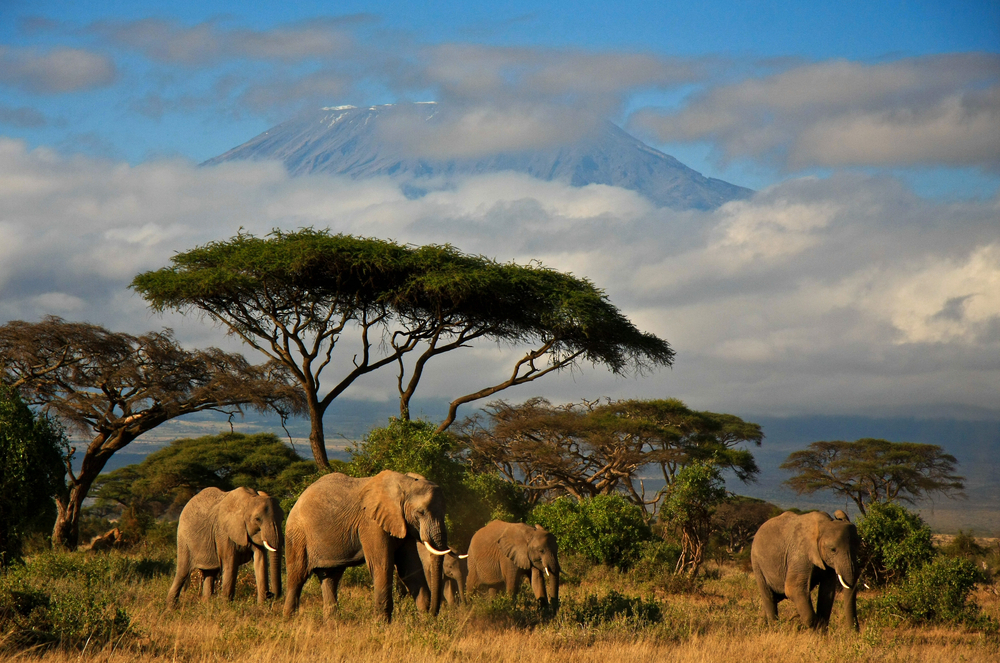
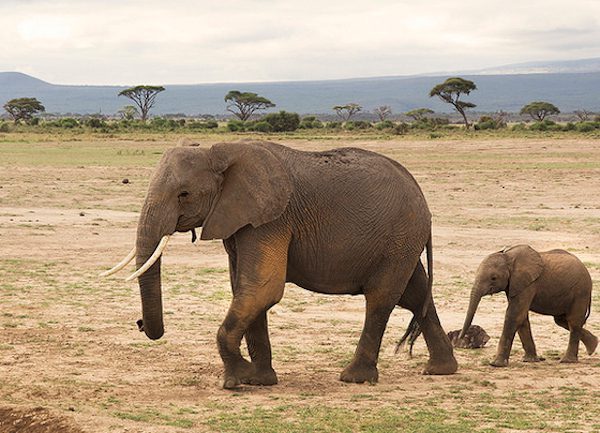
Lunch is at the lodge. At about 3.30 or 4pm the afternoon drive sets out, timed for when family herds of elephants walk off the dry plains and back into the swamps fed by Kilimanjaro’s springs. They cross open ground in long lines, so they are easy to follow and photograph. Buffalo, wildebeest, zebra and hippos in the swamps are routine, and lions turn up often enough. Before the gates close at dusk, ask to stop at Observation Hill for a view over the whole park.
Dust is the detail nobody warns you about. Amboseli in the dry months is powdery, and a buff or scarf plus a camera cover earn their space in the daypack. Our separate Amboseli safari guide covers longer stays here.
Day 2: Amboseli Sunrise Game Drive and the Rift Valley Road to Nakuru
Set the alarm. Kilimanjaro stands across the border in Tanzania and hides in cloud for much of the day, so the first hour after sunrise on this Amboseli game drive is your best chance of the snow cap above the elephants. Plenty of people who slept in left without seeing the mountain at all.
After breakfast comes the hardest stretch of the whole Kenya safari tour: back up the highway, around Nairobi and up the escarpment of the Great Rift Valley to Nakuru, six to seven hours with a lunch stop. Most drivers pull in at the escarpment viewpoint for fifteen or twenty minutes, where the valley floor runs out toward Mount Longonot. You reach the Nakuru lodge late in the afternoon, normally too late for a proper drive. Treat it as a travel day and rest.
A neck pillow, downloaded music or podcasts and a few snacks make the day easier. Road stops are at curio shops with toilets, and some travellers carry tissues for the rest.

Day 3: Lake Nakuru Rhino Safari, Then On to the Masai Mara
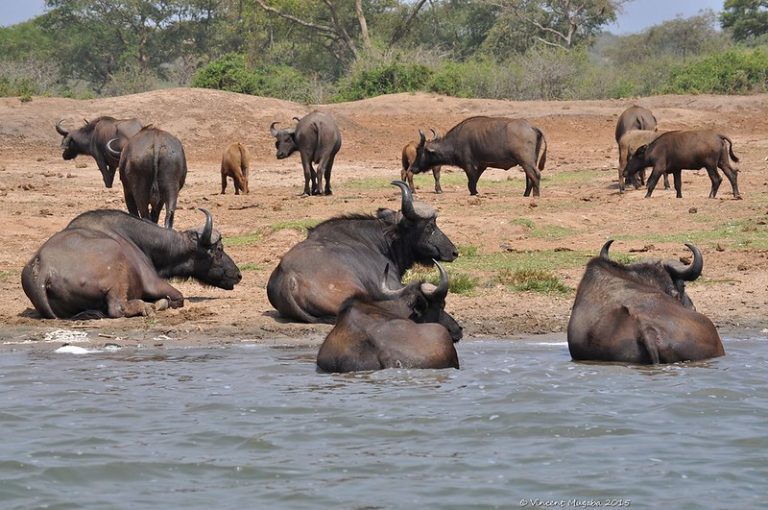
The Lake Nakuru game drive goes out early. A fence rings this compact park, which is why it works so well on a short trip: black and white rhinos are found on most mornings, along with Rothschild’s giraffe, buffalo, waterbuck and olive baboons. Lions and leopards live here too, though they are harder to predict. Drive up to Baboon Cliff for the long view down the lake.
Flamingos are less dependable than the brochures suggest. Nakuru’s water level has risen a long way over the last fifteen years, flooding the old main gate and diluting the lake, and the birds have moved between Nakuru and other Rift Valley lakes since. Some months the shore is pink. Some months it is not. Come for the rhinos and count any flamingos as a bonus.
By late morning you are on the road again, south through Narok, the last proper town before the reserve. Beyond Narok the tarmac gives out on the final stretch to the gates, a road that has been rough for years: dusty when dry, slow after rain, and tiring for anyone with a bad back. You reach camp in mid afternoon, in time for an evening Masai Mara game drive.
One rule shapes this afternoon. The reserve ticket covers a 12 hour window from 6am to 6pm, so driving in at 3pm still uses a full day’s fee. Some operators skip the evening drive and enter fresh on day four; others think a short first look is worth it. Ask which your quote assumes, and avoid plans that leave and re enter the reserve twice in a day.
Day 4: A Full Day Masai Mara Game Drive Safari
This is the day the trip is built around. The full day Masai Mara safari leaves camp at first light with a packed breakfast and lunch, which lets your guide work far across the reserve without coming back. Lions are the easiest of the big cats to find, cheetahs hunt the open plains in the east, and leopards keep to the wooded watercourses. Topi, Maasai giraffe, elephants, zebra and gazelle fill the gaps between sightings. Order the picnic the night before.
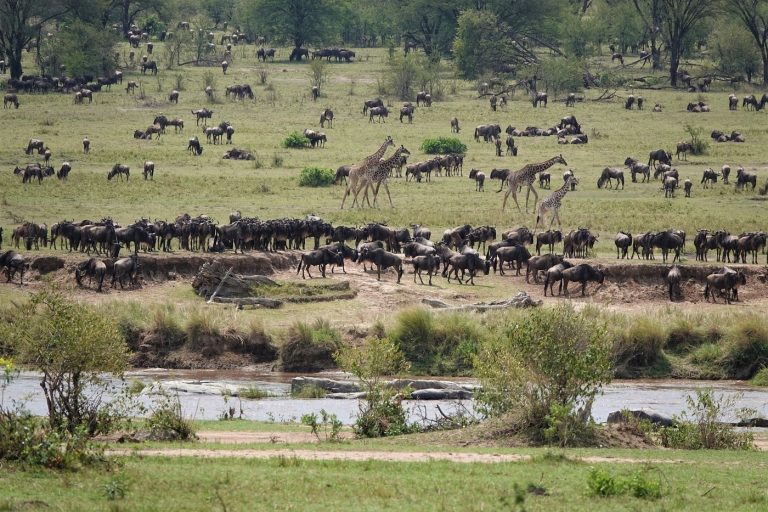
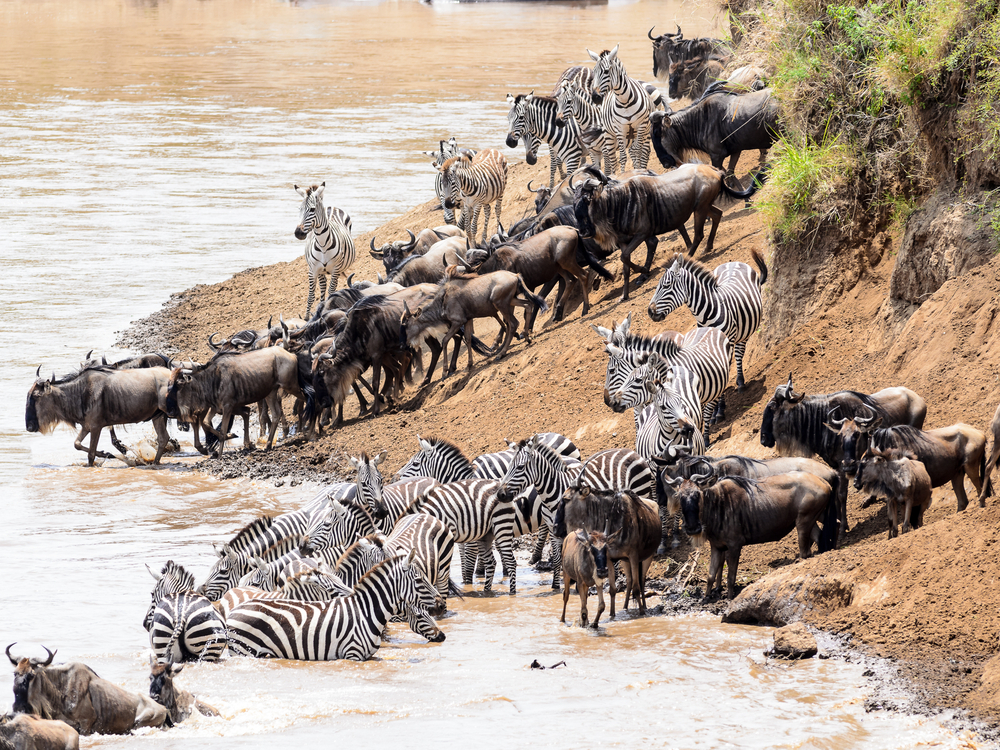
Most guides aim to reach the Mara River around midday. Hippos and Nile crocodiles live there year round, and from roughly July to October the wildebeest migration arrives from the Serengeti and crosses back and forth. A crossing may take five minutes or never happen; herds sometimes mass on the bank for hours and turn away. Treat one as luck rather than a promise, and if crossings are the point of your trip, read our Masai Mara migration safari guide. The Masai Mara safari guide explains the reserve, the Mara Triangle and the conservancies.
Mara mornings are colder than people expect, above all with the roof hatch open at speed. A fleece and a windproof layer go in the daypack with sunscreen for midday. Prefer two shorter outings? Many camps run a dawn drive from about 6.15 to 9am, a rest through the heat, and an afternoon drive from about 3.30 to 6.30pm.
Day four is also the slot for extras. A dawn hot air balloon safari lifts off near the river and ends with a bush breakfast, and a Maasai village visit takes about an hour. Ask whether the village is community run and how the fee is shared, since some visits feel staged. Dress modestly there and ask before taking photographs of people.
Day 5: Sunrise Game Drive and the Trip Back to Nairobi
The last morning opens with a short sunrise drive, often one of the best of the trip, with predators still moving and the light low and warm. Then breakfast, checkout at about 8.30, out of the reserve by around 10, and the road home through Narok. Most vehicles reach Nairobi in the early or middle of the afternoon.
Do not book an international flight for the same afternoon unless you fly out of the Mara. Local protests have closed the Narok road at times and held tourist vehicles for hours, so ask your operator about current conditions. A late night departure, or one more night in Nairobi, is the safer plan.
Six Other Ways to Plan a 5 Day Kenya Safari Itinerary
The Amboseli, Nakuru and Mara loop is what most operators sell first. It is far from the only good use of five days, and plenty of trip reports conclude that one park fewer would have made a better holiday. These six Kenya safari itineraries all start and finish in Nairobi.
Two more shapes appear on operator lists. A Mount Kenya trek can be paired with a conservancy day around Nanyuki, and birders run a Rift Valley lakes circuit north to Lake Baringo and Lake Bogoria. Both suit special interests more than a first safari.
Want less driving still? Our 3 day Kenya safari page covers a Mara only trip, while the 7 day Kenya safari runs the same three parks at an easier pace and the 10 day Kenya safari adds Samburu and the coast. The best safari in Kenya guide compares the parks for first timers, and across the border a 5 day Tanzania safari follows the same herds on the Serengeti side.
Private or Group Safari Tour: Vehicles, Guides and Group Size
Most visitors take a private safari: one vehicle and one driver guide for your party alone. You set the pace, linger at a leopard, skip the curio stop and change the plan when a guide hears about a sighting. Per person, it gets cheaper as the group grows, because the vehicle costs the same with two people in it or six.
A group safari tour joins strangers on fixed departures, usually in a pop up roof minivan with budget camps outside the Mara gates. It is the cheapest way to see the parks. The trade is a set route, a guide who has to please everyone and, on full trips, a middle seat. Solo travellers and tight budgets do well with it in January to March or June, when fewer trips are full.
Kenya runs two vehicle types. Pop up roof minivans are fine on dry roads and cost less. Land Cruisers with a lifting roof sit higher, ride more steadily and cope with mud, which matters on a three park loop in the rains. Whichever you choose, ask in writing for a window seat for every guest. Good vehicles carry a cool box, drinking water, a first aid kit, a radio for sightings and often a pair of binoculars and a field guide; ask if yours does.
Self drive is not a real option here. Private cars are barred from Narok County’s side of the reserve, and a guide who knows the tracks spots far more than a first timer at the wheel.
Lodges and Camps for Each Night of a 5 Day Kenya Safari Tour
Operators price the same route very differently, and most of the gap is the beds. These are well known places at each stop, by tier. A good quote names them rather than writing “or similar”.
Spend where you stay longest. Two nights in a good Mara camp do more for the trip than an upgrade at Nakuru, where you mostly sleep. Camps inside the reserve save driving each morning; camps outside the gate cost less but start every drive with a queue at the barrier. Some luxury trips split the Mara nights between two camps, such as a lodge in the south and a river camp near the crossings, which shows you two corners of the reserve.
Best Months for a 5 Day Kenya Safari
| Months | Roads | Mara | Kilimanjaro |
|---|---|---|---|
| Jan to Feb | Dry | Cats, calves | Often clear |
| Mar to May | Mud likely | Quiet, green | Cloudy |
| Jun | Drying | Herds near | Fair |
| Jul to Oct | Dry, dusty | Migration | Fair |
| Nov to Dec | Showers | Residents | Mixed |
January and February suit this 5 day safari best: dry tracks, short grass for spotting cats and the clearest mountain mornings in Amboseli. Pack serious sun protection. March to May is the long rains, when black cotton soil in Amboseli and the Mara turns to deep mud and a minivan can sit stuck for hours; on a three park road trip in these months, insist on a Land Cruiser or switch to the flight version. The reward is green parks, young animals and very few vehicles.
June is dry and still quiet. July to October brings the migration and the crowds, so book camps months ahead and expect company at big sightings. November and December bring short afternoon showers and low numbers until the Christmas holidays. Our great wildebeest migration page tracks the herds month by month.
What a 5 Day Kenya Safari Package Should Include and Leave Out
Two quotes for the same route can sit far apart, and the reason hides in the detail. Line every quote up against these rows.
Choose an operator licensed by Kenya’s Tourism Regulatory Authority and ideally a KATO member, and ask for the contract to say all park fees are included. Some budget offers leave the fees out of the headline price. Our Kenya safari cost and Masai Mara safari cost guides explain how quotes are built, the budget Kenya safari and luxury Kenya safari pages cover the two ends of the market, and families should check age rules in the Kenya family safari guide.
Nairobi Days Before and After Your Safari Trip
An arrival night in Nairobi protects the first game drive, and a spare morning there is easy to fill. The Sheldrick elephant orphanage opens to visitors for a late morning hour when the orphans are fed, and it needs booking ahead. The Giraffe Centre in Langata, about twenty kilometres from the centre, lets you feed endangered Rothschild’s giraffe from a raised platform. Nairobi National Park sits on the city’s edge with lions, rhinos and the skyline behind them, and the Karen Blixen Museum fills an hour nearby.
Karen and Westlands are the usual bases, close to these sights and to Wilson Airport. Use hotel transfers or app taxis after dark, keep cash and phones out of sight, and leave the city centre to daylight hours. Kenya expects an approved eTA before you board, so apply on the official portal well before travel.
Adding Gorilla Trekking or the Coast to a 5 Day Kenya Safari
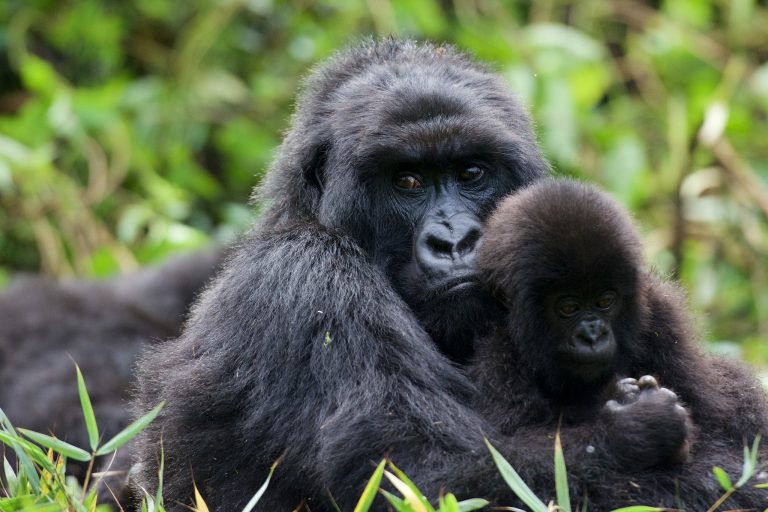
Five days in Kenya slot neatly in front of a gorilla trek. Fly from Nairobi to Entebbe for gorilla trekking in Bwindi, or to Kigali for Volcanoes National Park, and add three or four days. Secure the Uganda gorilla permit first, since it is the item most likely to sell out, then build the Kenya dates around it. Our gorillas and Masai Mara safari page has 8 to 12 day routes, and the guide to Kenya and gorilla trekking combinations explains why the gorillas are over the border. The East Africa Tourist Visa covers Uganda and Rwanda, but Kenya’s part of it is uncertain at the latest check, so most travellers take a Kenyan eTA for the Kenya leg. Travellers still weighing Kenya against other countries can start with our guide to the best African safari countries.
For the coast, end the safari in Nairobi and take a short domestic flight or the Madaraka Express train to Mombasa, then go on to Diani or Watamu. Diani has a long white sand beach, reef snorkelling and kitesurfing. Pack light for any flight, and see what to wear on safari, a proper safari duffel bag and our African safari packing list.
5 Day Kenya Safari FAQ
How much does a 5 day Kenya safari cost?
Shared road packages with park fees run about US$120 to US$320 per person a day, so roughly US$600 to US$1,600 for five days depending on camps and season. Private mid range trips in a 4×4 usually cost more per head for two people and less for four to six. One Nairobi operator’s published rates for a private five day Mara trip at Mara Serena and Governors’ Camp run from about US$2,000 to US$4,570 per person, by season and group size. Prices rise from July to December, when the Mara fee doubles. Our Kenya safari cost guide has the full breakdown.
What park fees are included in a 5 day Kenya safari?
The Masai Mara charges non resident adults US$100 per day from January to June and US$200 from July to December, on a 12 hour ticket; children nine to seventeen pay US$50 and younger children enter free. Amboseli and Lake Nakuru charge non resident adults US$90 per 24 hours and Hell’s Gate US$50 under the Kenya Wildlife Service schedule, which was challenged in court after it launched, so confirm the rate for your dates on the KWS website. On the classic route that is two Mara days plus one day each in Amboseli and Nakuru.
Is 5 days enough for a Kenya safari?
Yes, for a strong first look, if you accept two long road days or drop to two parks. Five days with three nights in the Mara gives more game viewing than five days across three parks. With seven to ten days the loop relaxes, and you can add Samburu, Tsavo or the coast.
Is Amboseli, Nakuru and the Mara in five days too much driving?
For many people, yes. Expect about a thousand kilometres and two days where the drive takes most of the daylight. If long drives bother you, choose the Mara and Nakuru version or fly one leg.
Can I see the migration on a 5 day Kenya safari?
Yes, between about July and October, when the herds are usually in the Mara. A river crossing needs patience and luck, so ask for a full day drive near the river and consider the Mara only version.
Will I see the Big Five in five days?
Lions, elephants and buffalo are very likely. Rhinos are the reason for the Nakuru stop and turn up there on most visits. Leopards are the hardest and are seen on some trips, not all. Nobody can promise a sighting.
What extras and tips should I budget for?
A dawn balloon flight over the Mara costs about US$450 to US$500 per person, and a Maasai village visit about US$20 to US$40. Many travellers tip the driver guide about US$10 to US$20 a day and put US$5 to US$10 a night in the camp staff box. Add the Kenya eTA at US$30, insurance and drinks. Kenya has also gazetted a health insurance requirement linked to the eTA, but its enforcement was challenged in the High Court, so check the eTA portal before travel.
Can I drive myself on a 5 day Kenya safari?
Not on the classic route. Private cars are barred from Narok County’s side of the Masai Mara, though the Mara Triangle admits private 4x4s. Self drive works in parks such as Nairobi and Lake Nakuru, but most first timers see far more with a driver guide.
Is a 5 day Kenya safari suitable for children or older travellers?
Yes, with the right route. Long road days are hard on young children and on bad backs, so the Mara, Nakuru and Naivasha version or a fly in trip suits them better. A private vehicle lets you stop when needed, and some camps and activities set minimum ages.
What should I pack for five days on safari in Kenya?
Neutral layers in khaki or green, since dark blue and black attract tsetse flies, a warm fleece for dawn drives, a wide brimmed hat, sunscreen, a buff for dust, insect repellent, binoculars and spare camera batteries. Use a soft bag if any leg is by air. Our guides to safari hats and safari binoculars help with the kit.