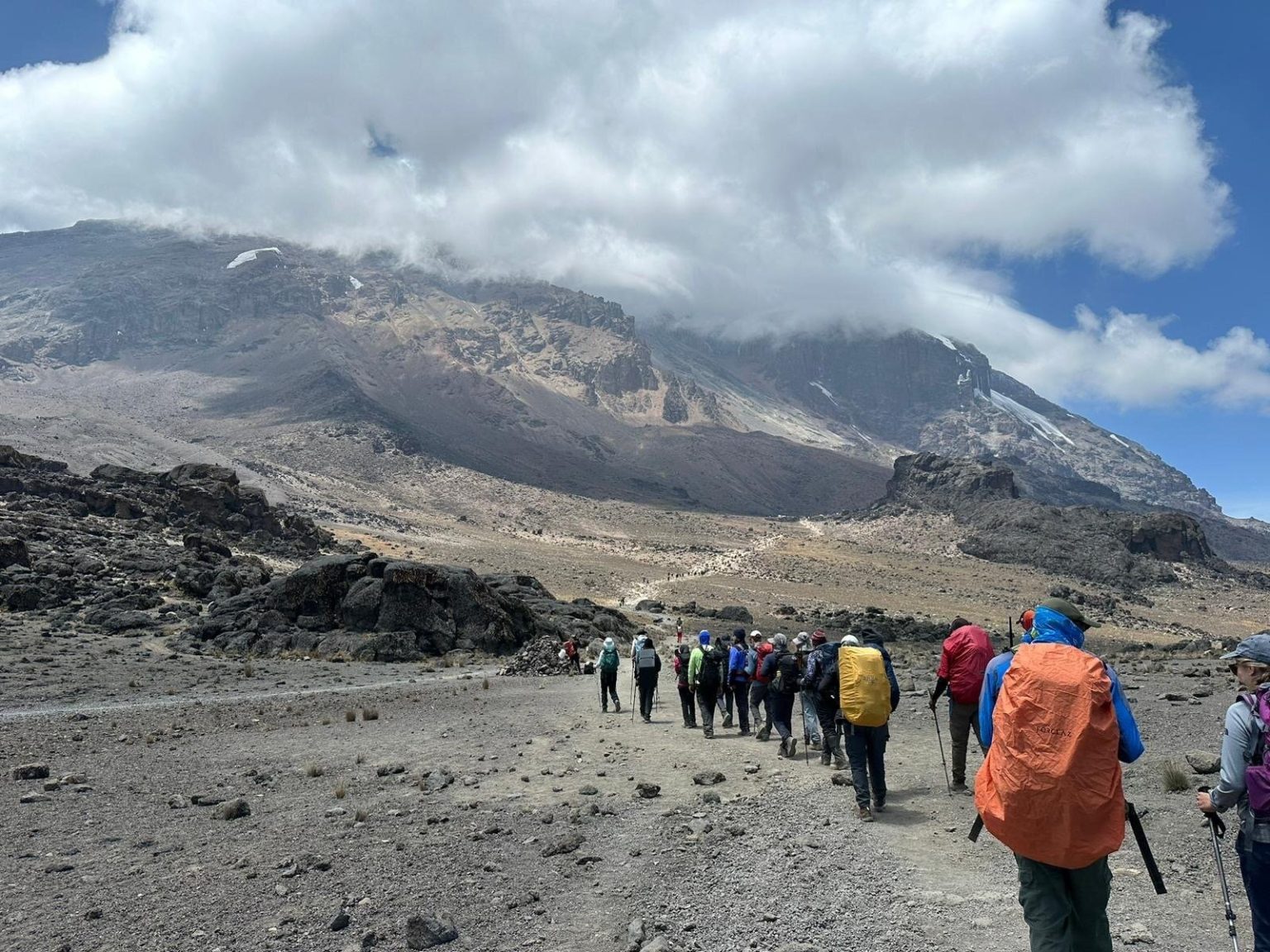
The best trekking poles for hiking are adjustable aluminium or carbon poles with lever locks, cork or foam grips and swappable rubber tips, such as the Black Diamond Trail Back, Leki Makalu FX Carbon or MSR DynaLock Ascent Carbon. For a gorilla trek in Uganda or Rwanda you may not need any, because rangers hand out free wooden walking sticks at the briefing. Your own pair pays off on Nkuringo’s steep descents, the habituation day, volcano hikes and Kilimanjaro.
That second point saves plenty of travellers money. This guide covers when a pair is worth packing for an East African trip, which features matter on wet clay and volcanic scree, the named models hikers and reviewers rate at each level, how to size and use poles, and how to fly with them on small aircraft. For the full kit picture, start with the gorilla trekking packing list, and for what you can borrow on the day, see renting gorilla trekking gear.
Do You Need Trekking Poles for Gorilla Trekking? The Free Walking Stick Explained
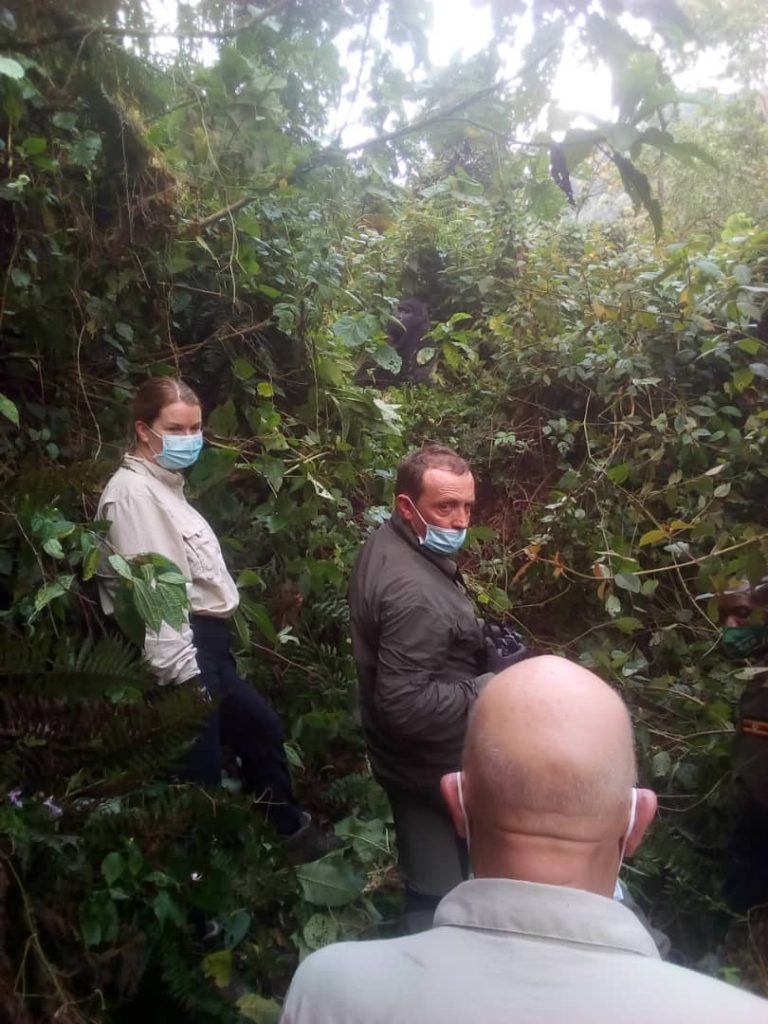
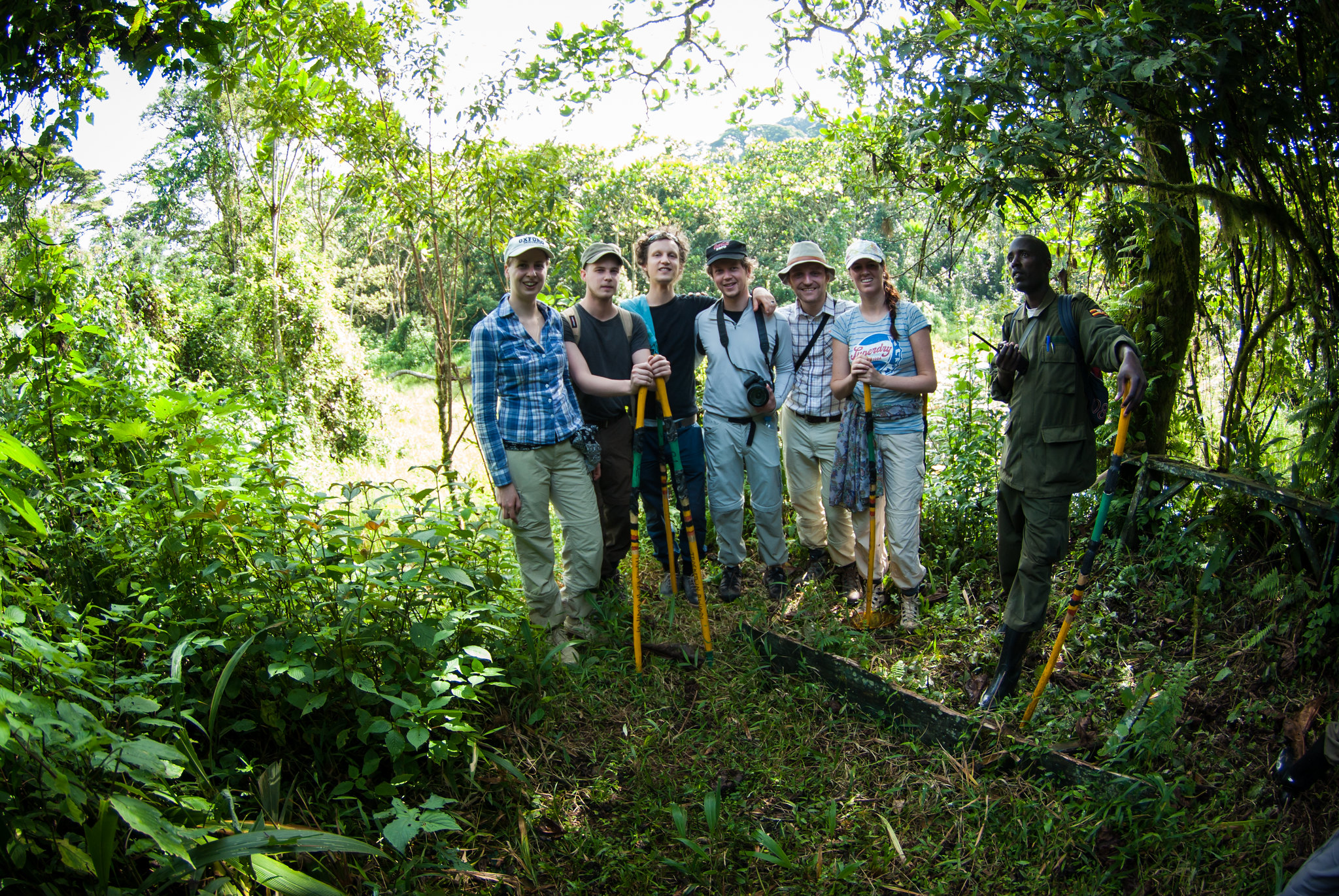
Start with what costs nothing. At the briefing point in all four Bwindi sectors (Buhoma, Ruhija, Rushaga and Nkuringo), at Mgahinga, and at Kinigi for gorilla trekking in Rwanda, rangers or porters hand each trekker a wooden walking stick. Uganda Wildlife Authority staff and local carvers supply them. They are roughly shoulder height, often painted, and you give them back at the end.
On a gorilla trek the stick does its job well. Trails are soft red clay, leaf litter and roots, and a thick wooden shaft with a blunt end plants firmly in that ground. A thin metal pole tip can sink straight into the mud, a point several forum threads make about Bwindi in particular. One stick also leaves a hand free to grab a vine or take the arm of a porter on a slippery bank.
So who should still pack their own? Three groups, mainly.
The gorilla trekking difficulty and fitness guide explains why trek length is impossible to predict: the gorillas set it, not the trail. A trek can be over in under an hour or run past six. That unpredictability is the real reason a few people prefer to carry gear they know.
When Your Own Trekking Poles Earn Their Place on a Gorilla Trek
The southern sectors are where personal poles start to make sense. Nkuringo gorilla trekking often begins with a long, steep drop into the valley and ends with the climb back out, and Rushaga gorilla treks can cover similar ground. Going down is the part that hurts. Trekkers in trip reports describe jamming the stick into the mud over and over on wet slopes, and those with weak knees say one stick is not the same as two poles taking weight on both sides.
Research backs the knee point. Laboratory studies of downhill walking with poles have measured lower forces through the knee, in the region of 12 to 25 percent in one widely cited study, mostly because the arms take part of the load. Over a two hour descent on clay, that adds up.
The gorilla habituation experience is the other case. You spend most of the day in the forest and up to four hours with a semi habituated family, often off trail through dense growth. Tired legs late in the afternoon are when slips happen.
Mgahinga matters too. Its gorilla trekking runs on the lower slopes of the Virungas, and plenty of visitors add a volcano hike on the same trip. The Bwindi and Mgahinga comparison covers the terrain difference.
One practical caveat. In thick undergrowth two poles can get in the way, catching on vines and bamboo. Many people with their own pair carry one in hand, strap the other to the daypack, and use both only on the long descents. Collapsible poles make that easy; a fixed stick does not.
Trekking Poles for Kilimanjaro, Rwenzori and Volcano Climbing
Here the case for buying is strong, and it is the honest reason most travellers on a combined East Africa trip end up owning a pair.
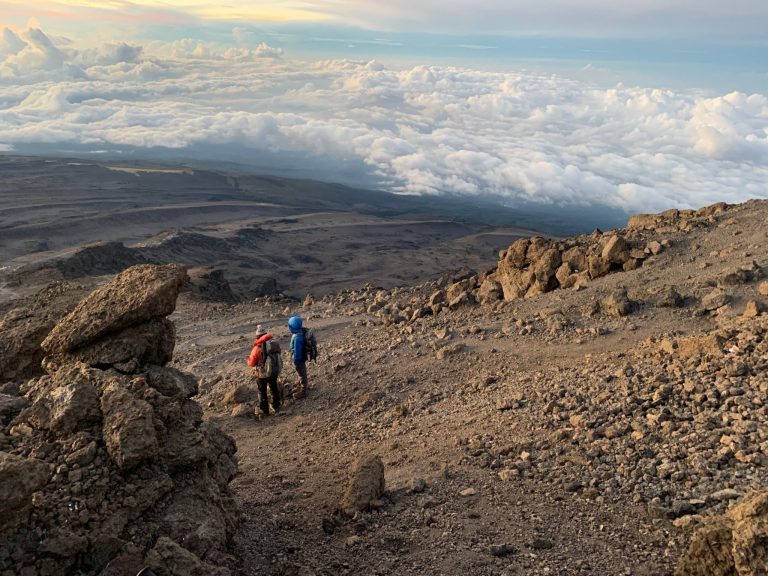
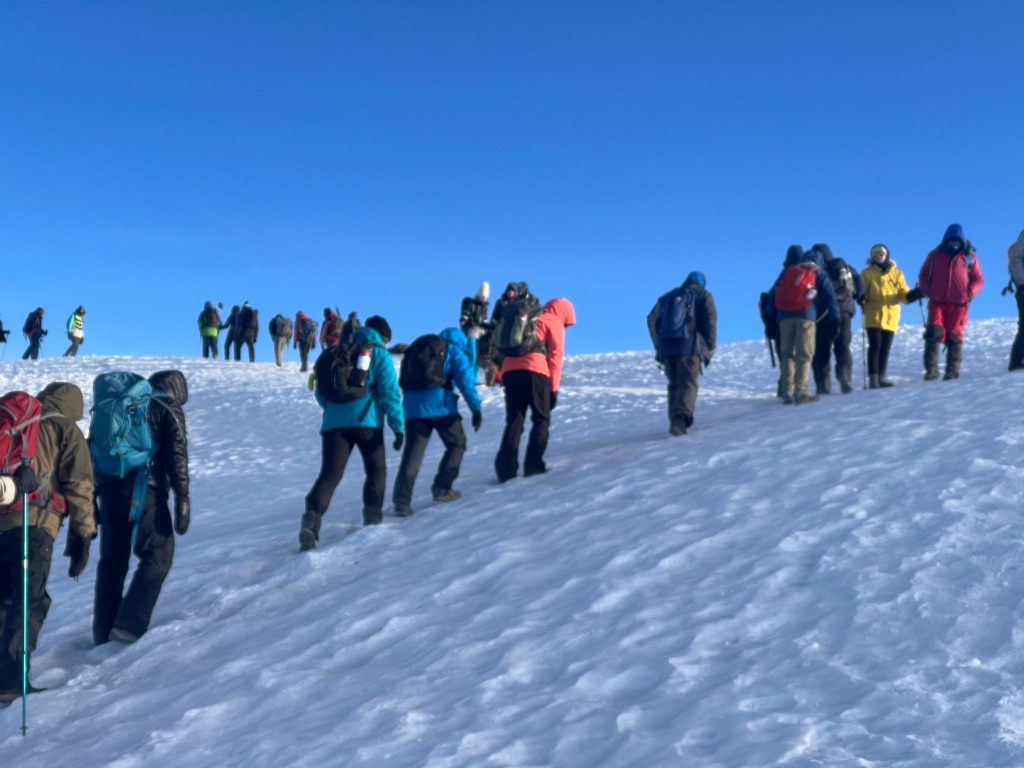
Kilimanjaro trekking involves a summit night on loose scree and then a descent of well over 2,000 metres to a lower camp, followed by another long walk out through the forest the next day. Almost every climbing operator lists poles as standard kit, and you can rent them in Moshi, though rental pairs are often worn and the locks can slip. The Kilimanjaro trekking guide explains the route and summit night, and our Kilimanjaro gear list covers the rest of the kit, from the sleeping bag to the hiking boots for Kilimanjaro.
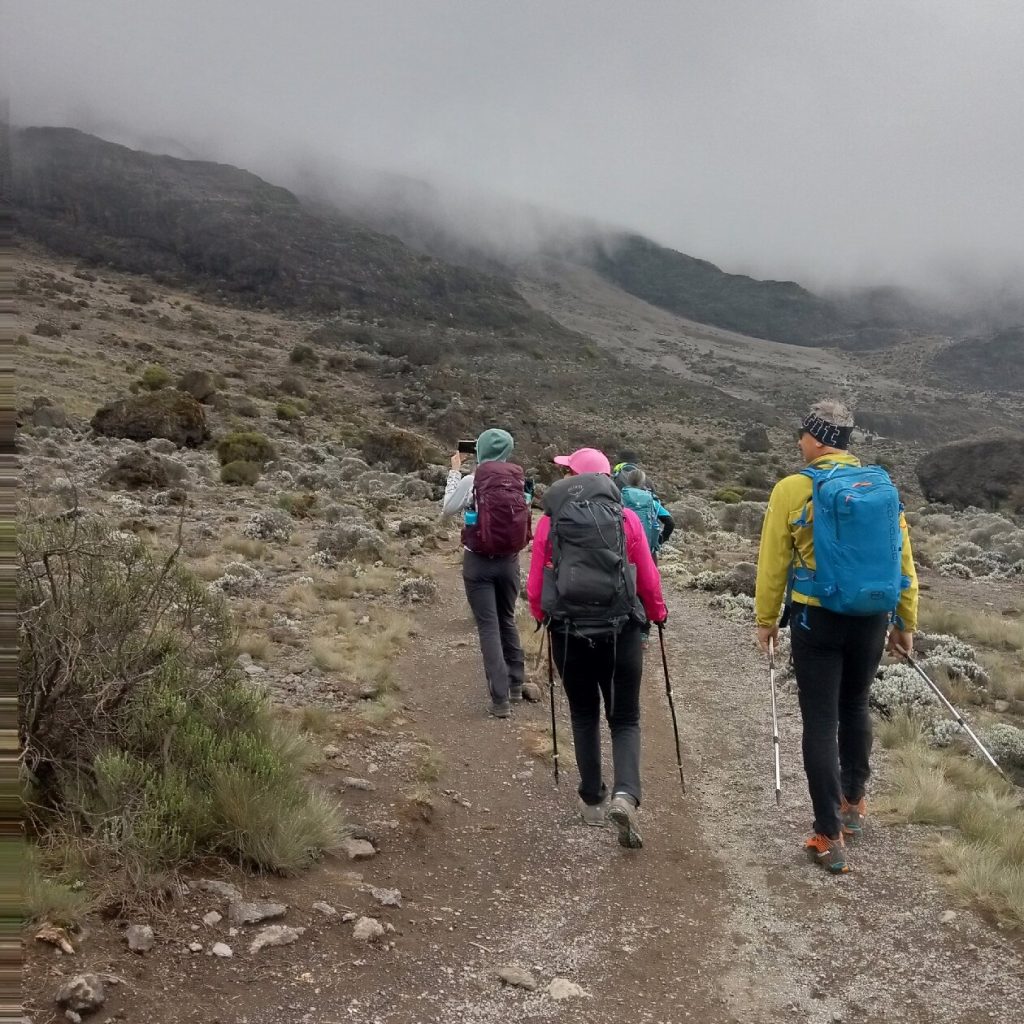
On the mountain, poles do three jobs. They save the knees on the long descents. On the summit push they give a rhythm to the slow steps in thin air, and they steady you when you stop to breathe. Lower down, on the wet forest trail of the Machame or Marangu routes, they work much as they do in Bwindi. A pair that packs short also rides easily on a porter’s load on the days you do not want them. On the days you carry them yourself they strap to your daypack, and our guide to the best backpack for Kilimanjaro covers fit and what goes in it each day.
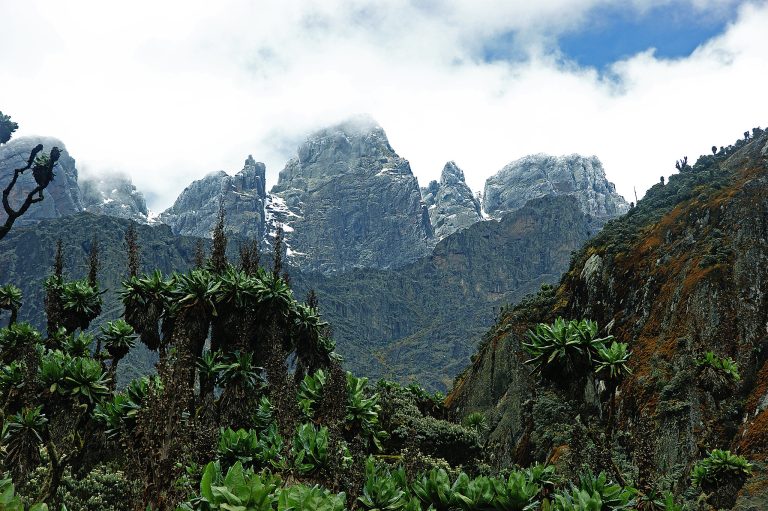
The Rwenzori are wetter and harder on equipment. The Central Circuit crosses deep bogs where trekkers wear gumboots for days, and poles act as a probe to test the depth of mud before you step and as a brace when one leg sinks further than the other. Sideways loads in a bog are exactly what snaps a carbon shaft, which is why aluminium is the safer choice there. See Rwenzori Mountains National Park for the routes.
Volcano day hikes sit in between. Mount Bisoke, Muhavura and Sabinyo in the Virungas, and Mount Karisimbi over two days, are steep, muddy and often rained on, with slick descents. Park sticks are available here as well, but a pair of poles makes the way down far easier on the knees. The same is true of the overnight climb on Mount Nyiragongo in Congo, where the upper slopes are loose volcanic rock.
Hiking Poles or Trekking Poles: Is There a Difference?
Mostly a naming one. Shops use hiking poles and trekking poles for the same thing, and the big outdoor retailers file them on the same shelf. Where people draw a line, a trekking pole is one of a pair with a wrist strap, a basket and an adjustable length, built for multi day trips with a pack, while a hiking pole or hiking staff is often a single, simpler stick for day walks. Nordic walking poles are different again: they have a glove like strap and an angled rubber foot for pavements, and they are poor on steep mud.
For an African trek the label does not matter much. What counts is the length range, the locks and how small the pole packs for a soft bag on a light aircraft.
Trekking Pole Features That Matter on Muddy African Trails
Most buying guides are written for dry, well built trails in North America or the Alps. African mountain trekking asks for a slightly different set of priorities: mud, wet hands, rough handling by porters and airlines, and occasional sideways loads.
Shock absorbing poles are worth a mention because they are sold heavily. Most reviewers find the spring adds weight, rattles and wears out, with little benefit on a descent. Skip them unless you have a specific wrist or elbow problem and have tried a pair.
Aluminium or Carbon Trekking Poles for an Africa Trip
This is the question most hikers ask, and the answer depends on where the poles will go. Carbon saves weight you lift thousands of times a day, and it absorbs more of the jar on hard ground. Aluminium survives the abuse a trekking trip in Africa hands out: roots, bogs, porters’ loads, airline holds.
On a gorilla trek or in the Rwenzori, a tip trapped between two roots while you keep walking is the classic way to break carbon. Aluminium in the same moment bends, and you can usually straighten it enough to walk out. On Kilimanjaro the ground is open and the loads are mostly straight down, so carbon is a reasonable choice for a careful climber. If you buy one pair for a mixed trip, aluminium is the safer bet. If your trip is mostly Kilimanjaro and you look after kit, carbon is fine.
Folding, Telescoping or Fixed Trekking Poles: Which Type for Your Trip
The three main designs differ in how they pack, how adjustable they are and how much abuse they take. Here is how they compare for an East African trekking trip.
| Pole type | Packs to | Adjusts | Best for |
|---|---|---|---|
| Telescoping | About 60 cm | Fully | Most trips |
| Folding, adjustable | About 40 cm | Partly | Flights, travel |
| Folding, fixed | About 35 cm | No | Light kit |
| Single staff | About 60 cm | Fully | One hand free |
Telescoping poles slide into themselves in two or three sections. They are the sturdiest design, fully adjustable, easy to repair and the best all rounder. A good choice here is aluminium telescoping trekking poles with lever locks and cork grips, from makers such as Black Diamond, Leki or Montem.
Folding poles break down like a tent pole into three or four short sections held by an internal cord, a design borrowed from avalanche probes. They pack small enough for a carry on or a daypack side pocket, which suits travellers flying between several countries. The trade off is less adjustment and a joint that is a little less sturdy. Look at adjustable folding Z poles if packed size matters most.
Fixed length folding poles are the lightest of all, but you must buy the right size and you cannot lengthen them for a descent. They suit trail runners more than gorilla trekkers.
A single hiking staff is the halfway house: one adjustable pole that mimics the park stick but packs down and fits your height. For people who only want help on descents, an adjustable single hiking staff is a sensible middle option.
Best Trekking Poles for Hiking: Named Models Worth a Look
These are the models that keep turning up at the top of long term tests and hikers’ recommendations. We have not tested them ourselves; the notes below come from maker descriptions and the consensus of reviewers, so check current specifications before you buy.
| Model | Shaft | Design | Suits |
|---|---|---|---|
| BD Trail Back | Aluminium | Telescoping | All round |
| BD Trail Ergo Cork | Aluminium | Telescoping | Long days |
| Leki Makalu FX Carbon | Carbon | Folding | Travel, Kili |
| MSR DynaLock Ascent | Carbon | Folding | Light, packable |
| BD Distance Carbon Z | Carbon | Folding, fixed | Ultralight |
| Trekology Trek Z | Aluminium | Folding | Low cost |
Sturdy all rounders. The Black Diamond Trail Ergo Cork is the pole one Colorado reviewer still treats as the benchmark after six years of use, with cork grips and a wide length range; the only grumble is a long collapsed length. The Trail Back is its foam gripped sibling. Leki’s Makalu Cork Lite is a telescoping aluminium option with one of the broadest adjustment ranges, at the cost of a little weight. The Montem Ultra Strong is the budget heavy duty pick, heavier again, with levers that one tester found could slip on rough ground.
Light and packable. The MSR DynaLock Ascent Carbon and Leki Makalu FX Carbon are the two folding carbon poles reviewers rate most highly for travel, because they adjust yet still pack to around 40 cm. The Black Diamond Distance Carbon FLZ adds a small adjustment range to a very light folding pole, and the Distance Carbon Z drops adjustment altogether to save more weight. The Black Diamond Alpine Carbon Cork is the tougher telescoping carbon choice for year round mountain use.
Ultralight backpacking. The Gossamer Gear LT5 is a three section carbon pole with twist locks, a favourite of long distance hikers who also use poles to pitch a tarp or trekking pole tent. For that job the poles need to reach about 125 cm. Twist locks are the weak point in African mud, so it suits Kilimanjaro better than Bwindi.
Budget picks. Cheaper poles have come a long way. The Trekology Trek Z took a best budget award in one big test, and Cascade Mountain Tech carbon poles with cork grips are the most common cheap carbon pair on hiking forums, though testers rated them well below the premium models. For one gorilla trek and a volcano day, either is plenty.
Women’s and shorter hikers. Women’s models such as the Leki Cressida FX Carbon have slimmer grips and a shorter length range. Men use them too: anyone under about 165 cm or with small hands may find them more comfortable.
Outdoor retailers also sell their own brand poles, such as REI’s Traverse with cork grips, and Mountainsmith makes long poles that suit tall hikers. If you live near one, handling a few pairs in a shop before buying is worth the trip.
Best Trekking Poles for Each Kind of Africa Trip
No single pole suits every traveller, so match the type to the trip you are actually taking. Well known brands make good versions of each.
Two small add ons pay their way. A set of rubber trekking pole tip covers protects the forest floor and grips wet roots, and spare small trekking pole baskets stop the tips vanishing into clay. Both weigh almost nothing.
Since poles put your hands to work, gloves matter more. Rubber palmed gardening gloves are the trekker’s favourite for nettles, and the gorilla trekking gloves guide covers the options.
How to Size and Use Trekking Poles on a Steep Gorilla Trek
Sizing is simple. Stand upright in your trekking boots, hold the pole with the tip on the ground beside your foot, and set the length so your elbow bends at about 90 degrees with the forearm level. That is your flat ground length.
| Your height | Pole length |
|---|---|
| Under 160 cm | 100 to 110 cm |
| 160 to 170 cm | 110 to 115 cm |
| 170 to 180 cm | 115 to 120 cm |
| 180 to 190 cm | 120 to 130 cm |
| Over 190 cm | 130 to 140 cm |
Then adjust on the trail. Shorten the poles by about 5 to 10 cm for a long climb so you can push without lifting your shoulders. Lengthen them by a similar amount for a descent, so the tips reach the ground below you before your foot lands. On a traverse across a slope, shorten the uphill pole and lengthen the downhill one. A small mark on each shaft at your usual length saves fiddling every morning.
Straps take a moment to learn. Bring your hand up through the loop from below, then grip the handle over the strap, so the strap carries weight on the heel of your hand and your grip can stay loose. Plant the opposite pole to the foot that steps, as your arms swing when you walk.
Technique on clay is different from technique on gravel. Plant the tip close to your feet rather than far ahead, test it before you trust it, and keep your weight over your boots. On a steep descent, place both poles first, then step down between them. When a ranger stops the group near the gorillas, collapse the poles or hand them to your porter; you need your hands for the camera and the hour passes quickly. Sticks and poles are also left a few metres back when the group moves in to the viewing distance, 10 metres in Uganda and 7 in Rwanda, so the gorillas do not mistake them for a threat.
Streams and fallen logs are where poles are most useful. Probe the depth first, keep three points of contact, and do not lean your full weight on a pole planted on a wet, smooth rock. A well broken in gorilla trekking boot with a deep lug does more for grip than any pole, and hiring a porter does more still. Porters steady you on the worst ground and carry the bag that would otherwise pull you off balance.
One Trekking Pole or Two on a Hike?
Two poles give the most support: they share the load evenly, keep you balanced on a descent and make a tripod with your legs in a river crossing. That is why reviewers and mountain guides recommend a pair for Kilimanjaro and any long trek with a pack.
One pole has its place. It leaves a hand free for vines, a camera or a porter’s arm, which is exactly why the parks hand out a single stick for gorilla trekking. Some long distance hikers use one pole on easy ground and carry the second. A sensible pattern for a combined trip is a pair, used singly in Bwindi’s thick growth and together on Nkuringo’s descent, the Virunga volcanoes and the mountain.
Trekking Pole Mistakes to Avoid on Safari Treks
A few errors come up again and again in trip reports, and all of them are easy to avoid.
Buying poles for one short trek. If you are trekking once in Buhoma or Ruhija and your knees are fine, the park stick is enough. Spend the money on boots, gloves or gaiters for gorilla trekking instead.
Leaving the tips bare. Carbide tips skate on wet roots and boardwalks and dig holes in soft trails. Fit rubber covers in the forest and take them off for scree.
Trusting a rental pole blindly. On Kilimanjaro, rental poles are convenient but often worn. Extend them fully, lean your weight on each section and check the locks hold before you leave Moshi.
Using carbon as a lever. Never prise a pole out of a root tangle or a bog by bending it sideways. That is how carbon snaps.
Over tightening twist locks. Wet twist locks seize, then strip. If yours are twist locks, tighten them firmly by hand and no more, and open them to dry each evening.
Wearing straps in dense bush. A pole that catches on vegetation with your wrist through the strap can pull you over. In the thick of the forest, hold the grip without the strap.
Choosing camouflage. Some poles come in camouflage prints. Uganda does not allow civilians to wear camouflage, and while poles are rarely an issue, plain colours avoid any discussion at a checkpoint. The same rule applies to clothing, as our guides to safari pants and safari shirts explain, along with what to wear gorilla trekking.
Never trying them at home. New poles need a few walks to set the length and learn the locks. Test them on a hill near home, not at the Nkuringo trailhead.
Flying to Uganda, Rwanda and Tanzania With Trekking Poles, and Care After the Trek
The simplest rule is to pack poles in checked luggage. The US Transportation Security Administration says hiking poles with blunt tips may go in carry on bags while sharp tipped poles may not, and officers have the final say. Airlines and security rules in Europe, the Gulf and East Africa vary, so a pole that flew out in your cabin bag may be stopped on the way home. Collapse them, fit the rubber covers and pack them inside the duffel, wrapped in clothing.
Light aircraft to the airstrips near Bwindi carry tight soft bag limits. AeroLink in Uganda allows 15 kg per person in soft bags, hand luggage included, and lists walking sticks among the personal items that count toward it. Short packing poles help, and the safari duffel bag guide explains the bag rules in full. A simple trekking pole travel bag keeps tips from tearing your clothes or the bag. The getting to Bwindi guide covers flight options and road transfer times.
After a muddy trek, separate the sections, rinse the clay off with clean water and let everything dry fully before you collapse the poles again. Mud left inside a telescoping pole dries like cement and jams the sections. Many Bwindi lodges wash boots after the trek; ask them to rinse your poles too. Replace worn tips before a big climb, and check that lever locks still clamp firmly; most have a small screw to adjust the tension.
If you are also heading out on a savannah safari, poles have no role on a game drive. Pack them away and switch to the kit in the African safari packing list, from a safari hat with a chin cord to insect repellent for Africa and the safari camera and binoculars you will use every day. The forest day itself needs a small waterproof bag, covered in the gorilla trekking daypack guide.
Trekking Poles for Gorilla Trekking: Frequently Asked Questions
Are walking sticks free on a gorilla trek in Uganda and Rwanda?
Yes. Wooden walking sticks are handed out free at the briefing point in all four Bwindi sectors, at Mgahinga and at Kinigi in Volcanoes National Park, and you return them after the trek. Trekking poles are not provided by the parks, though some lodges lend them. A porter can also carry a stick for you or help you on steep ground.
Should I bring trekking poles for gorilla trekking?
Bring them if you already own a pair you trust, if your knees or hips struggle on descents, or if you are trekking in Nkuringo or Rushaga, doing the habituation experience or adding a volcano hike. For a single trek in Buhoma, Ruhija or Rwanda with healthy knees, the free stick is enough for most people.
Is there a difference between hiking poles and trekking poles?
Not in any strict sense; retailers use both names for the same adjustable poles. Where people distinguish them, trekking poles come as a pair for multi day trips with a pack, while a hiking pole is often a single staff for day walks.
What’s better for trekking poles, aluminum or carbon fiber?
Aluminium for gorilla trekking and the Rwenzori, because it bends rather than snapping when a tip gets trapped in roots or mud and survives rough handling. Carbon is lighter, absorbs more vibration and is fine for Kilimanjaro if you treat it carefully. If you only buy one pair for a mixed trip, aluminium is the safer choice.
Should you hike with 1 or 2 poles?
Two for long descents, Kilimanjaro and river crossings, since they share the load and take more strain off the knees. One in dense forest, where a free hand helps more than a second pole. Many gorilla trekkers carry two and use one in the thick vegetation.
Do expensive trekking poles make a difference?
Yes, but less than the price gap suggests. Premium poles are lighter, have more reliable locks, better grips and spare parts that keep them going for years. Budget pairs are heavier and their locks can slip, but they do the job for a few treks. For one gorilla trek, a cheap pair is fine; for Kilimanjaro and years of hiking, mid range or premium earns its keep.
How much do good trekking poles cost?
As a rough guide from current retail listings, budget aluminium pairs sell for about US$30 to US$70, solid mid range pairs with lever locks and cork grips for about US$100 to US$150, and premium carbon or ultralight folding pairs for about US$170 to US$230. Spare rubber tips and baskets cost a few dollars. Prices vary by retailer and season. For context, the gorilla permit itself is US$800 in Uganda for foreign non residents (US$600 in the April, May and November low season) and US$1,500 in Rwanda, and no trekking gear is included.
Can I rent trekking poles for Kilimanjaro or gorilla trekking instead of buying?
On Kilimanjaro, yes: most operators and Moshi rental shops hire poles, commonly reported at around US$10 to US$35 for the whole climb depending on the shop and quality. Check the locks before you leave town. Around Bwindi and Volcanoes, pole rental is rare, but the free walking sticks do the same job for most treks. If you are doing Kilimanjaro and gorillas on one trip, owning a pair is usually simpler.
Do I need trekking poles for Kilimanjaro?
They are not compulsory, but nearly every climbing operator recommends them, and most climbers who skip them regret it on the descent from the summit. A pair that adjusts and packs short is the best fit.
Can I take trekking poles in my hand luggage?
Sometimes, but do not count on it. US security allows blunt tipped poles in carry on bags at the officer’s discretion and bars sharp tips, and other countries and airlines set their own rules. Pack them collapsed in your checked bag with rubber covers on the tips.
Are trekking poles allowed near the gorillas?
Yes, but rangers ask the group to leave sticks and poles a few metres back once you reach the family, so the gorillas do not see them as a threat. Collapsible poles are easy to stow or hand to your porter for the hour of viewing.
Do older trekkers need poles for gorilla trekking?
Not always, but poles plus a porter make a big difference for older trekkers and anyone unsure of their balance. There is no upper age limit for gorilla trekking, while the minimum age is 15. If mobility is limited, ask your operator about a shorter trek group and, in Bwindi, about the sedan chair service carried by local porters.
Plan Your Gorilla Trekking Safari and Mountain Climbs
Poles are a small part of the kit. The Bwindi gorilla trekking guide explains the sectors and the day itself, the Uganda gorilla permits guide covers booking, and the best time for gorilla trekking page shows how the wet months change trail conditions. If you plan to pair the gorillas with the mountain, the Kilimanjaro climb and safari page shows how the trips fit together. Every gear guide on the site sits in the safari gear section.