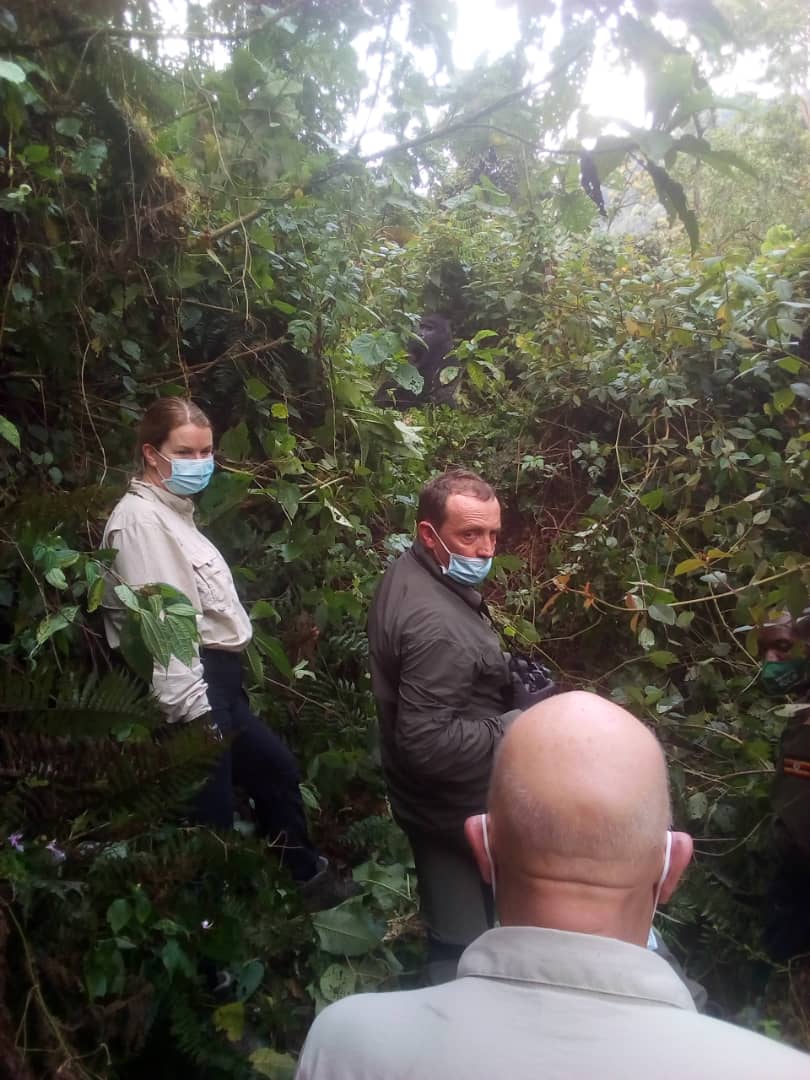
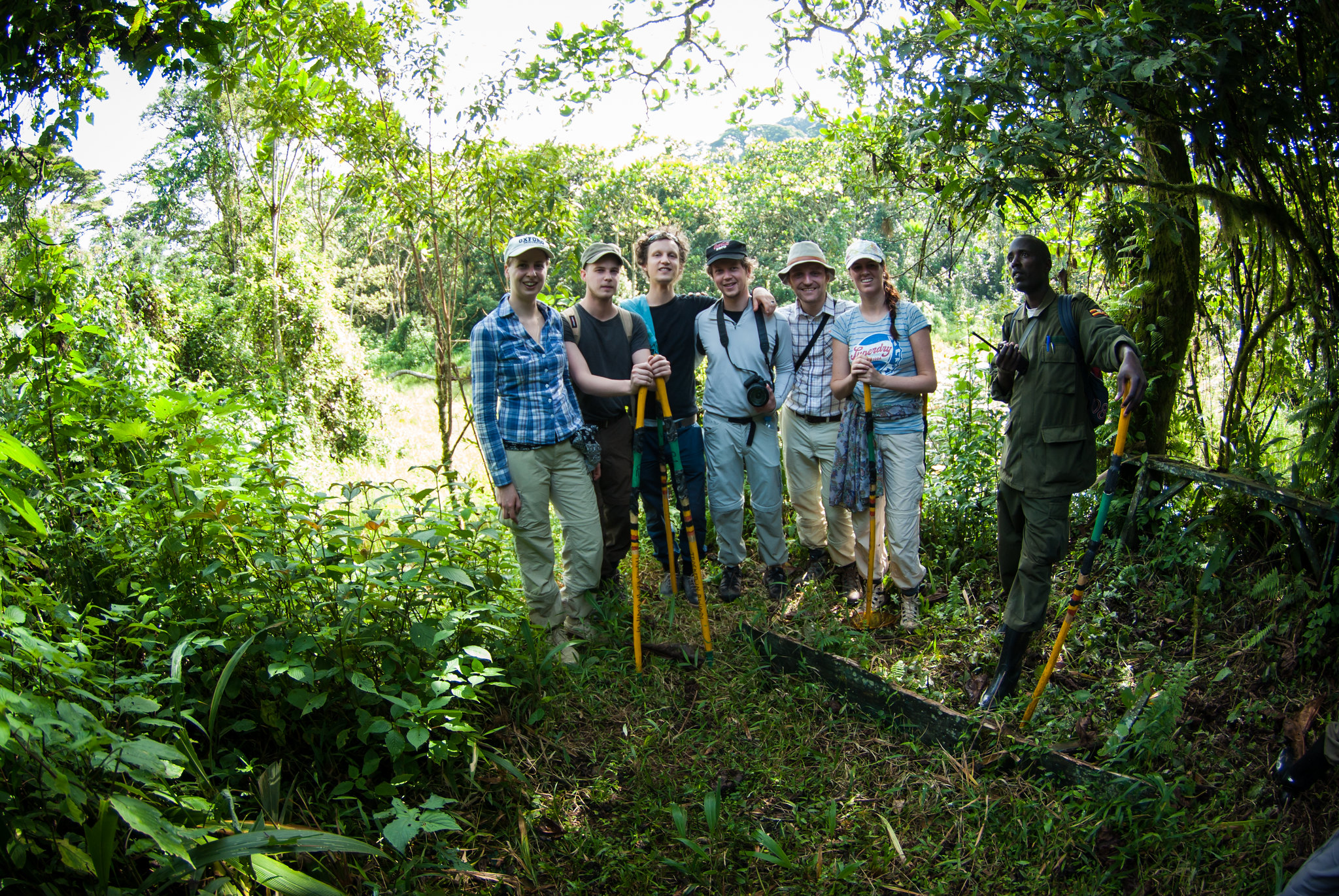
As a woman on a gorilla trek, wear what every trekker wears, long quick dry trousers tucked into socks, a long sleeved shirt, waterproof boots and gardening gloves, then add a supportive sports bra, synthetic underwear, a braid or low bun under a brimmed hat and a small kit for periods and toilet stops. Bwindi and Volcanoes have no toilets inside the forest, and a trek can fill most of the day.
The full outfit for every trekker, garment by garment, is in our main guide to what to wear for gorilla trekking. This page picks up the questions women ask that general packing lists skip: fit, bras, hair, periods, modest dress in the villages and finding boots and gloves in women’s sizes.
Gorilla Trekking Clothes for Women: Layers and Fit on the Trail
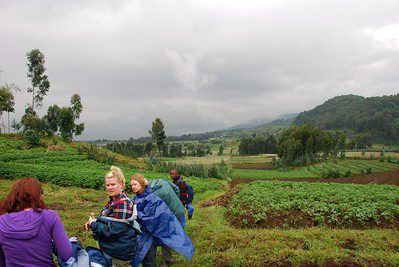
A gorilla trekking day starts cold and ends warm. Trekkers report to the sector office at about 7.30am for the briefing, often in mist, and by the second hour of climbing most people are sweating. Bwindi’s trails run at roughly 1,500 to 2,500 metres, and Volcanoes National Park in Rwanda sits higher still, so the morning chill is real on both sides of the border.
Build the outfit in three thin layers rather than one thick one. Next to the skin goes a fitted wicking tee or a merino long sleeve. Over it, a women’s vented UPF 50 shirt in khaki with buttoned cuffs keeps nettles and safari ants off your arms. A fleece or rain shell rides on top until the first steep section, then goes in the daypack.
Fit matters more than brand. Women’s trekking shirts are cut shorter in the body and narrower in the shoulder, so they do not bunch under a hip belt or flap open when you bend to duck under a vine. Trousers need room in the hip and thigh for big step ups over roots and logs. Anything tight pulls on every high step, and anything very loose snags on thorns. If you are between sizes, size for movement and use a belt.
Colour follows the same rules as for everyone on the trek: greens, browns and khaki, and nothing bright or white. Our guide to safari shirts compares fabrics and UPF ratings if you are buying new.
Sports Bras and Underwear for a Steep Gorilla Trek
Ask women back from a gorilla trek what they were glad of and the sports bra comes up again and again. The walk is not running, though it is hours of steep climbing, sliding descents and hauling yourself up with a stick or a porter’s hand, often with a daypack strap across the chest. A medium impact wireless sports bra suits most women. If you are larger busted or tend to need more support for hiking, pick a high impact style with adjustable straps.
Test it at home first, on a long hilly walk with a loaded daypack. Seams and clasps that are fine for an hour in a gym can rub raw after five hours under a hip belt. Wireless is kinder in humid heat, and a racerback sits better under pack straps. Bring two, since one will still be damp the next morning.
Underneath, skip cotton. It soaks up sweat and rain and stays wet against the skin all day. Quick dry travel underwear in a synthetic or merino fabric dries overnight in a lodge room and resists chafing on the climb. A small stick of anti chafe balm on the inner thighs and under the bra band saves a lot of discomfort on a long, sticky trek.
Pack a spare pair of underwear and socks in a dry bag in your daypack. On wet days in the forest, swapping into dry ones at lunch feels better than you would expect.
Trousers, Leggings and Skirts on a Gorilla Trekking Day
Long trousers are not optional on a gorilla trekking safari. Rangers expect legs covered, and the forest gives you good reason: stinging nettles, thorny bramble and safari ants that climb straight up any gap at the ankle. The cuff goes inside your sock or under a gaiter, so the inseam has to be long enough to reach. Women’s ranges often run short in the leg, which is why women’s quick dry hiking trousers in a long inseam are worth hunting down if you are tall.
What about leggings? Many women hike at home in them, and they are comfortable, but nettles sting straight through thin stretch fabric and thorns ladder it. Leggings work best as a layer. Several trip reports describe wearing a lightweight merino base layer legging under loose trekking trousers on cold Ruhija or Rwanda mornings, then taking them off at the first rest stop. Thick, opaque hiking tights under trousers do the same job.
Skirts and dresses stay at the lodge. They belong to village walks and dinner, which the section on modest dress below covers. On the trek itself, a mid rise or high rise waist stays put under a hip belt and keeps a gap from opening at the back when you bend. In the wet months, women’s waterproof rain pants with side zips pull on over boots, which matters on a slope when you cannot sit down to change. Our safari pants guide covers fabric and convertible styles in more detail.
Hair, Hats and Skin Care for Gorilla Trekking in the Rain Forest
Long hair and a dense forest do not mix well on a gorilla trek. Loose hair catches on twigs and vines, collects burrs and leaf litter, and gets soaked under a wet canopy. A single braid or a low bun tucked at the nape is the most practical style, since it sits under a hat and does not get pushed around by a daypack. Pack spare hair ties, because one always snaps or disappears.
A brimmed hat does more in the forest than shade you. It stops drips from wet leaves running down your collar and takes the first scrape from low branches. Ponytails and high buns push most hats off, so look for women’s wide brim safari hats with a ponytail opening, or a soft crown that sits over a low bun. Add a chin cord. Our safari hats guide compares the styles.
Curly and textured hair often frizzes in Bwindi’s humidity. A satin scarf or bonnet for the night and a leave in conditioner help more than daily washing, especially in lodges where hot water depends on solar panels. Dry shampoo is handy for the day after a trek, when you may not want a cold shower.

Skin needs two things. Sunscreen on the face, neck and hands before you leave the lodge, since the first hour is often across open farmland at altitude. And a DEET or picaridin repellent on any exposed skin, with nothing perfumed: strong scents draw bees and wasps, which are common in the forest. Skip foundation and heavy makeup too, since sweat and rain run it into your eyes. Our guide to insect repellent for Africa compares formulas.
Periods and Toilet Stops on a Gorilla Trek With No Facilities
Here is the part women ask about most and guides mention least. There are no toilets inside Bwindi or Volcanoes National Park once you leave the trailhead. The sector office and most trailheads have a pit latrine or a flush toilet, so use it just before you set off. After that, a gorilla trek of anything from one to seven hours of walking, plus the hour with the gorillas, means any stop is a bush stop.
How that works in practice: tell your guide or a ranger quietly that you need a stop. They will hold the group or step ahead and point you to a spot off the trail, out of sight and away from the gorillas. Nobody is shocked. Rangers handle this every day. Squatting on a steep, muddy slope is the hard part, which is why some women carry a reusable female urination device and practise with it at home. It lets you stay standing, with trousers mostly up, in thick undergrowth.
No rule stops you trekking during your period, and plenty of women do. Planning makes it easy:
If your travel clinic prescribes doxycycline for malaria, ask about thrush, a known side effect for some women, and pack a treatment. Some women time contraception to skip a period over the trek dates, which is a conversation for your own doctor well before you travel. Our travel first aid kit guide covers the rest of the medical kit.
Modest Dress for Women on Gorilla Trekking Trips in Uganda and Rwanda
Most gorilla trekking trips pass through farming villages, trading centres and markets on the long drives to Bwindi or Musanze, and many include a community walk or a visit to a Batwa group. Rural Uganda and Rwanda are conservative about women’s dress, and covering up a little is a courtesy people notice.
The simple rule is knees and shoulders. A skirt or dress that falls below the knee, or loose trousers, with a top that covers the shoulders, is welcome everywhere outside the lodge. Kampala and Kigali are more relaxed, and lodges and trails expect practical outdoor clothes, so this is about the time you spend in towns and villages, not the forest. Short shorts, crop tops and low necklines draw stares in rural areas and are best kept for the pool.
A lightweight midi skirt with pockets pulled on over trekking leggings is a neat answer on travel days, and a scarf handles shoulders, sun and dust. In Rwanda, Kigali is very tidy and people dress smartly in town, so a clean shirt and trousers go a long way. Our page on Uganda people and culture explains customs in the regions you pass through, and the what to wear on safari guide covers dress on the coast and in cities.
Women travelling alone or in small groups of women report Uganda and Rwanda as welcoming, with drivers and rangers who look out for their guests. Modest dress is about respect, not safety.
Boots, Gloves and Gaiters Sized for Women Trekkers
Good fit is where most women’s gorilla trekking gear goes wrong, because so much of it is sold in unisex sizes that start too large. A boot that is roomy at the heel lets your foot slide forward on every steep descent, and that is how toenails bruise and blisters form.
Each item has its own buying guide: gorilla trekking boots, gloves, gaiters and the rain jacket. Our page on renting gorilla trekking gear explains what lodges and local shops lend, from gaiters to ponchos. Boots are the exception: buy a pair that fits and break them in at home, since a borrowed boot rarely fits a woman’s heel as well as her own.
A Woman’s Daypack for Gorilla Trekking in Bwindi
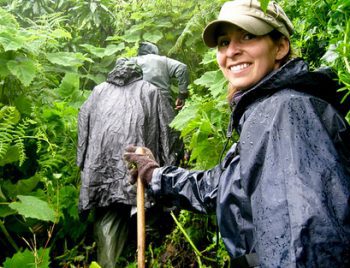
Your daypack for gorilla trekking carries the same water, lunch and rain gear as anyone’s, plus a few personal items. A pack with a women’s specific back system, such as the Osprey Tempest 22, has a shorter back and curved shoulder straps that sit around the chest rather than across it. Our gorilla trekking daypack guide has more options.
You do not have to carry it yourself. Porters wait at the sector office every morning, and hiring one is the single most helpful thing many women say they did on the trek: a steadying hand on muddy descents, a strong arm on the climbs and the pack off your shoulders. Free wooden walking sticks are handed out at the briefing too. If knees are a worry, our guide to trekking poles covers adjustable poles, and the page on trek difficulty and fitness explains how to ask the rangers for a nearer gorilla family.
The rest of the packing, from binoculars to the lodge evening, is in our gorilla trekking packing list, and every item has a matching buying guide in our safari gear and clothing guide. If the trip continues to a game drive safari in the Masai Mara or the Serengeti, our guide to safari clothes for women covers outfits for the vehicle, camp and lodge.
Gorilla Trekking for Women: Common Questions
What should a woman wear for gorilla trekking?
Long quick dry trousers tucked into socks or gaiters, a long sleeved shirt over a wicking tee, a supportive sports bra, synthetic underwear, waterproof boots, gardening gloves that fit, a brimmed hat and a rain jacket. Tie long hair back in a braid or low bun. The same outfit works in Uganda and Rwanda, with an extra layer for cold Rwanda mornings.
Can I go gorilla trekking on my period?
Yes. No rule stops you, and many women trek during their period. Change at the lodge or sector office just before the trek, wear period underwear as a backup, and carry an opaque pouch, wipes and sanitiser so you can pack everything out. There are no toilets in the forest.
Are there toilets on a gorilla trek?
Only at the sector office and some trailheads. Inside Bwindi and Volcanoes National Park, any stop is a bush stop. Tell a ranger quietly and they will hold the group and point you to a discreet spot away from the trail.
Can women wear leggings for gorilla trekking?
Not on their own. Nettles sting through thin leggings and thorns tear them. Wear them under loose trekking trousers for warmth on cold mornings, or keep them for travel days.
Do women need to dress modestly in Uganda and Rwanda?
In villages, markets and on community visits, yes: cover knees and shoulders with a skirt below the knee or trousers and a sleeved top. Lodges, trails and the capital cities are relaxed. On the trek itself, practical trekking clothes are what everyone wears.
Is gorilla trekking hard for women?
It is a fitness question, not a gender one. The walk usually takes one to seven hours on steep, muddy ground, and women of all ages and builds complete it, many with a porter and a walking stick. Ask at the briefing for a nearer family if you want a shorter trek.
How old do you have to be to trek gorillas?
The minimum age for gorilla trekking is 15 in both Uganda and Rwanda. Mothers planning with younger children often add chimpanzee tracking in Kibale, which takes children from 12, and our kids’ safari gear guide covers what younger travellers need.
How much does women’s gorilla trekking clothing cost?
Little, if you already own hiking clothes. Most women buy only the gaps: a sports bra they trust, small gardening gloves, gaiters and perhaps boots. Prices vary widely by brand and change often, so check current listings, and see our gear rental guide for what you can borrow or hire near the parks.