The best down jacket for Kilimanjaro is a hooded, expedition style jacket with 700 to 800 fill down or better and plenty of it, cut loose enough to zip over every other layer you own. Climbers wear it at the high camps and through summit night, when the walk to Uhuru Peak starts near midnight in temperatures between about minus 10C and minus 20C once wind chill is counted. Light down sweaters suit the lower camps, not the crater rim.
Why Summit Night on a Kilimanjaro Climb Needs Serious Insulation
Most of a Kilimanjaro climb is not very cold. You start in warm, damp rainforest, walk the moorland in a shirt, and only reach real cold after the third or fourth day, when the camps sit above 3,800 metres. Then comes summit night.
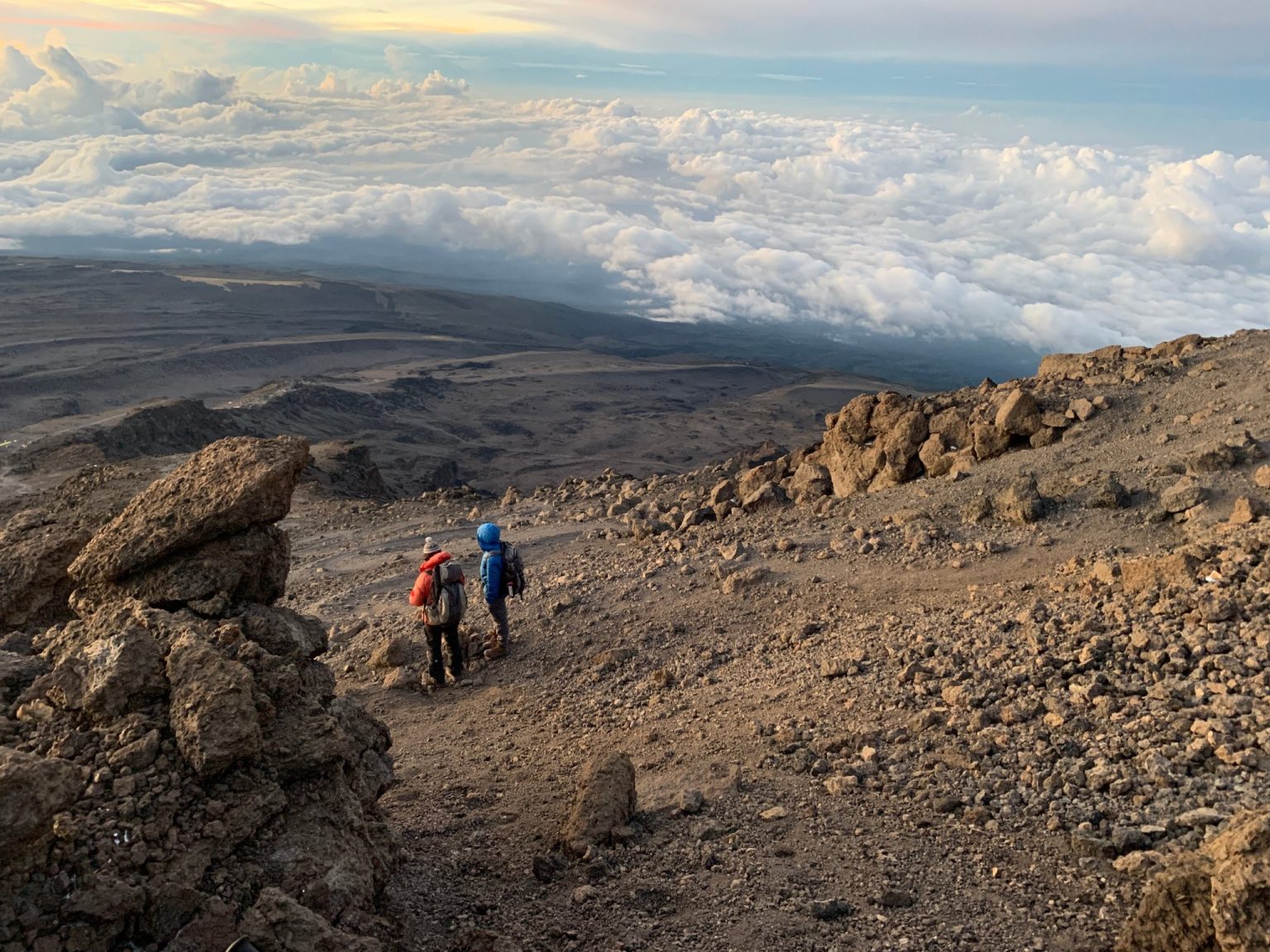
Climate records from the weather station near the summit put the mean annual air temperature around Kibo’s crater at roughly minus 7C. That is the average across day and night. Before dawn, on the slope between Barafu Camp at about 4,670 metres and Stella Point on the crater rim, readings between minus 10C and minus 20C are normal once the wind is factored in, and climbers in the cold dry months of July to September sometimes see lower. Guides often say the hour between 3am and 4am is the hardest. You are tired, short of oxygen and moving very slowly, so your body makes far less heat than it would on a brisk winter walk at home.
That slow pace is the point most people miss. A ski jacket works on a chairlift because you move again in ten minutes. On Kilimanjaro you walk for six to eight hours at a crawl, stopping every few minutes to breathe, and the down jacket is what holds the heat your body still makes. Trip reports return to one regret more than any other: climbers who brought a thin puffy and spent the night counting the minutes to sunrise.
The jacket also works hard off the summit. Afternoons at Karanga and Barafu turn cold the moment the sun drops, and you will wear it at dinner in the mess tent and on every pre dawn toilet trip. The Kilimanjaro gear list places it inside the full packing system; this page is only about choosing the right one.
Down or Synthetic Insulation for Kilimanjaro Climbing
Both work on the mountain. The choice turns on weight, packed size and how much you worry about damp.
Goose or duck down traps more warm air for its weight than any synthetic fill. A down jacket warm enough for summit night packs into a stuff sack about the size of a football, which matters when your porter duffel has a weight cap. Its weakness is water. Wet clusters collapse, lose their loft and take days to dry, and a tent at 4,600 metres is no place to dry anything. Many jackets now use water resistant treated down, sold under names such as hydrophobic or DWR down, which holds up better in a damp duffel but still should not be soaked. Check the label for the Responsible Down Standard as well; The North Face, Patagonia and Mountain Hardwear list RDS down on their summit jackets, which means the birds were not live plucked or force fed.
Synthetic insulation, under trade names such as PrimaLoft, Coreloft or ThermoBall, keeps much of its warmth when damp and dries faster. It is heavier and bulkier for the same warmth, and it does not carry a fill power figure, so judging warmth means reading the maker’s insulation weight in grams per square metre and looking at how thick the jacket is. A synthetic belay parka, the big hooded jacket climbers throw on at a rock belay, is the usual pick for summit night.
If you already own a warm synthetic parka from winter climbing, bring it. Buying new, down gives more warmth for each kilo the porter carries.
Fill Power and Fill Weight on a Kilimanjaro Trekking Jacket
Two numbers decide how warm a down jacket is, and most shoppers only look at one of them.
Fill power measures loft: how many cubic inches one ounce of the down fills when it is allowed to expand. One ounce of 800 fill down takes up about 800 cubic inches. Higher figures mean larger, better clusters that trap more air per gram. For Kilimanjaro, 650 fill is the floor most guides accept, 700 to 800 is the usual target, and 850 or 900 fill buys the same warmth in a lighter, smaller package rather than a warmer jacket.
Fill weight is how much down is in the jacket, in grams or ounces. This is the figure that sets real warmth, and many brands leave it off the label. A high fill number with a small amount of down gives a light, pleasant jacket that feels cold at 5,500 metres. Down sweaters made for town and easy hiking often carry around 100 grams of down or less; jackets built for high, cold summits commonly carry two to three times that. If the maker does not publish fill weight, total jacket weight and the depth of the baffles are a fair clue: a summit jacket is visibly puffy and rarely weighs much under 500 grams.
Those are the makers’ own figures for a men’s medium. Brands revise fill amounts between seasons, so check the current listing before you buy. Roughly 200 to 300 grams of good down is the band several Kilimanjaro operators recommend for summit night.
A third figure, the down to feather ratio, appears on some labels as 80/20 or 90/10. The first number is the share of down clusters. Aim for 80/20 or better; 90/10 is common on good jackets.
A few makers also print a temperature or comfort rating. Read it as the lowest temperature at which an average person stays comfortable resting in the jacket over normal layers, and for Kilimanjaro look for one that reaches the summit night range of about minus 10C to minus 20C. Most mountain jackets carry no rating at all, which is why the fill figures on the tag do the work.
Put together, a sound Kilimanjaro jacket reads something like this on the tag: 800 fill, 90/10, a stated fill weight in the low hundreds of grams, and a hood. That combination is warmer on the crater rim than an 850 fill sweater with half the down.
Hood, Baffles and Shell Fabric for Summit Night Trekking
Features matter more on a summit jacket than on a camp puffy, because you will be using them with mittens on, in the dark, in wind.
Several climbers say the inside pocket is the feature they used most. Phones and headlamp batteries die quickly in the cold; tucked against your body they last the night. The headlamp guide covers lithium cells that also hold up better at low temperatures.
Sizing a Down Jacket Over Your Kilimanjaro Hiking Layers
Buy the jacket for the Kilimanjaro hiking layers you will wear under it, not for the shirt you have on in the shop. On summit night that usually means two base layers, a fleece, possibly a softshell, and on many climbers the waterproof shell too.
Guides differ on order. Some put the down jacket under the hard shell to keep it dry and block wind; others put it on top so it can go on and off fast at rest stops without stripping the shell. On a dry, cold summit night most guides favour the down jacket as the outer layer, which means it must zip over the shell without compressing the down. Compressed down is cold down.
The easy test: at home, put on everything you plan to wear on summit night, then the jacket. Reach your arms forward as if planting trekking poles, bend down, and raise them overhead. The hem should stay below your hips, the cuffs should cover your wrists, and you should feel no tightness across the back. Many climbers go up one size from their everyday fit. Women’s cuts are shorter in the body and narrower at the shoulder, which suits many women better than a small men’s size; a women’s hooded expedition down parka often has the right length without excess bulk.
Test the hood too, over the beanie and balaclava you will wear. If it pulls the jacket collar up into your chin, size up.
Where the Down Jacket Fits in a Kilimanjaro Climbing Jacket System
A down jacket is one of three jackets on a Kilimanjaro climbing trip, and it is the one you wear least while walking. The waterproof hard shell handles rain in the forest and wind on the ridges. A fleece or softshell is the walking layer above the forest, on and off through the day. The down jacket comes out at the high camps, at rest stops and on summit night, when the pace is too slow to keep you warm.
Walking uphill in it during the day is a common mistake. You sweat into the insulation, and damp clusters lose their loft by nightfall. Keep it in the duffel or the daypack until you stop, and try the shell, the fleece and the down jacket on together at home so you know all three fit as one set.
Down Jacket Types That Work on the Kilimanjaro Trek
There is no single best model, because climbers differ in budget, how cold they run and what they will use the jacket for afterwards. These are the types that work on the Kilimanjaro trek, with named examples where the specs are widely published. Check the current fill power and fill weight on the maker’s page before you buy, since models are updated often.
Brands such as Rab, Mountain Hardwear, The North Face, Patagonia, Arc’teryx, Montane and Mountain Equipment all make suitable summit jackets. The label figures matter more than the logo.
One mistake comes up again and again in climbers’ reports: buying a fashionable city puffer. They look thick, but many use a lot of polyester wadding or low fill down and a cotton blend face, and they are heavy for the warmth. Read the tag.
Packing the Jacket in the Porter Duffel on the Climb
On a supported Kilimanjaro climb your down jacket spends most days in the duffel that a porter carries, and you see it at camp each afternoon. Operators commonly cap that duffel at about 15 kg including the sleeping bag, and bags are weighed at the gate. The Kilimanjaro Porters Assistance Project, now the Kilimanjaro Responsible Trekking Organization, sets a 20 kg limit on the company load each porter carries, which is why the personal allowance sits lower.
Down helps here. A summit jacket weighs well under a kilo and compresses small, so it costs little of the allowance. Pack it in a roll top dry bag inside the duffel, since porters walk through the same rain and mist you do and duffels sit on wet ground at camp. Tanzania bans plastic carrier bags, so use dry bags rather than bin liners. Our dry bags guide covers sizes, and a 90 litre waterproof duffel with backpack straps adds a second barrier. A waterproof compression stuff sack does both jobs in one.
On summit day the jacket moves to your daypack or goes straight on. A 30 to 35 litre daypack fits it with the shell; a 20 litre pack usually does not. At camp, take it out of its sack each evening so the down lofts back up before you need it, and sleep with it inside the sleeping bag foot or over the bag on the coldest nights. Moisture from your breath condenses inside the tent, so keep the jacket off the tent walls.
After the trip, store it loose on a hanger, never compressed for weeks, and wash it only with a down specific cleaner such as Nikwax Down Wash, dried slowly with a few tennis balls in the drier to break up clumps.
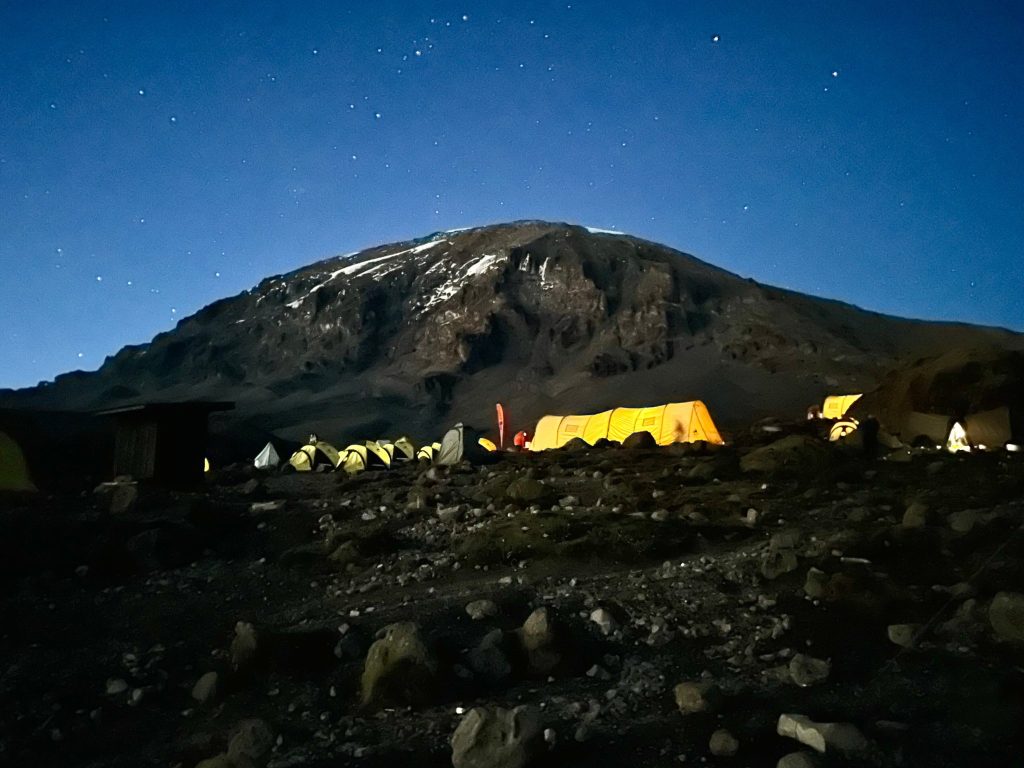
Renting a Down Jacket in Moshi for Your Kilimanjaro Climb
Renting is a sensible choice for climbers who will not use an expedition jacket again. Most operators keep rental stock or work with shops in Moshi and Arusha, and deliver the kit to your hotel the night before the climb. Some operators include a jacket in the climb price.
Quality varies widely. Some shops carry recent branded jackets; others carry tired, off brand down that has lost much of its loft after years of climbs. Ask your operator, in writing, for the fill power and the brand of the jacket you will get, and whether you can swap it at the briefing. When it arrives, check four things before you sign for it: the hood fits over a beanie, the main zip runs smoothly, the down springs back when you squeeze a baffle, and the jacket closes over your fleece and shell.
Buying makes more sense if you run cold, plan more high treks, or live somewhere with real winters. It also makes sense if your trip continues to a safari or a gorilla trek, since a warm jacket keeps working there, as the next section shows. Rental rates sit in the FAQ below. If you are flying with a tight bag allowance or a light aircraft transfer afterwards, renting the bulkiest item can save weight; the packing cubes guide shows how to split a duffel between mountain and safari kit.
Reusing Your Kilimanjaro Jacket on Safari Mornings
A lot of climbers fly home with a down jacket they wore for three nights. Those who go on to a Tanzania safari keep using it. Morning game drives leave camp around 6am in open sided or pop top vehicles, and the wind through a moving open vehicle on the Serengeti plains in June or July bites harder than most people expect. On the Ngorongoro Crater rim, where lodges sit at about 2,300 metres, dawn temperatures in the cool months often sit in single figures Celsius, and the descent road into the crater stays cold until the sun is up.
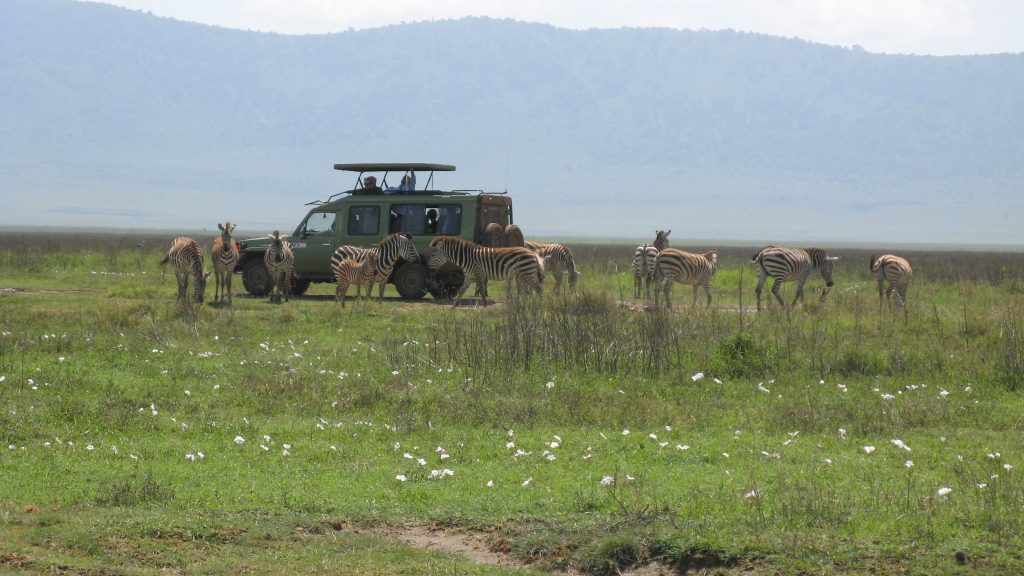
Your expedition parka is more than you need there. The lighter camp jacket from your summit layering is the right weight, and a neutral colour such as olive, tan or grey suits a game drive better than bright orange. Our guide to the best jacket for safari covers fleece, light down and rain shells for game drives. The same light layer helps on a gorilla trek in Bwindi, where the higher sectors such as Ruhija, above 2,000 metres, are chilly before the sun clears the ridges, and on the Kilimanjaro climb and safari combination that many travellers book together.
Best Down Jacket for Kilimanjaro: Frequently Asked Questions
What fill power do I need for Kilimanjaro?
Aim for 700 to 800 fill, with 650 as the lowest most guides accept. Fill weight matters as much: a summit jacket needs plenty of down, often a few hundred grams, and an ultralight sweater with high fill but little down is not warm enough for summit night on its own.
How cold is summit night on Kilimanjaro?
Between about minus 10C and minus 20C before dawn once wind chill is counted, occasionally colder in the dry months from July to September. The summit area averages around minus 7C across the year. The coldest stretch is usually between 3am and sunrise.
Do I wear the down jacket over or under my rain shell?
On a dry, cold night most guides put the down jacket on top so it can go on and off quickly at rest stops. If it is snowing or wet, wear it under the shell to keep the down dry. Either way, size it to fit over a fleece and your base layers without squashing the insulation.
Is a synthetic jacket warm enough for the Kilimanjaro climb?
Yes, if it is a thick, hooded belay parka. Synthetic fill is heavier and bulkier for the same warmth but copes better with damp, so it suits the April, May and November rains. Thin synthetic jackets are camp layers only.
How much does a Kilimanjaro down jacket cost to rent or buy?
Operators’ published rental lists in Moshi and Arusha mostly charge about US$15 to US$20 for a down jacket for the whole climb; shops with newer branded jackets charge more, and some operators include one in the price. Buying, the summit weight jackets named on this page list at roughly US$400 to US$500 on the makers’ own sites, 700 fill camp jackets cost less, and an expedition parka such as the Phantom Belay lists near US$675. Prices change, so check the current listing.
Can I use my ski jacket instead of a down jacket?
Usually not on its own. Insulated ski jackets are made for short spells of cold between runs and are heavy for their warmth. Paired with a thick fleece and a light down layer underneath, some climbers manage, but a proper down jacket is warmer and lighter in the duffel.
Do I need a down jacket for a Marangu or Rongai trek?
Yes. Every route reaches the same crater rim before dawn, and the Marangu and Rongai summit nights from Kibo Hut are just as cold as those from Barafu. Hut accommodation on Marangu does not change the summit conditions.
Which down jacket is best for Kilimanjaro?
For most climbers, a hooded 800 fill jacket with around 200 grams of down or more, such as the Rab Neutrino Pro or the Patagonia Fitz Roy Down Hoody. Climbers who run cold can step up to the Rab Positron Pro or a down parka, and a 700 fill hoody suits those who run warm in the dry season. Fit over your layers matters as much as the model.
What kind of jacket do I need for Kilimanjaro?
Three: a waterproof hard shell, a fleece or softshell for walking above the forest, and a hooded down or thick synthetic jacket for camp and summit night. The down jacket is the warmest and the one most often bought too thin.
Is 700 fill down warmer than 600 fill?
Ounce for ounce, yes. One ounce of 700 fill down lofts to about 700 cubic inches against 600 for 600 fill, so it traps more warm air for the same weight. A jacket’s warmth still depends on how much down it holds, so a 600 fill jacket packed with down can beat a 700 or 800 fill jacket with very little. Compare fill weight first, then the fill rating.
Plan Your Kilimanjaro Climb and Safari
Once the jacket is sorted, the full Kilimanjaro packing list covers sleeping bags, daypacks and the rest of the kit, and boots for Kilimanjaro deal with the other item people most often get wrong. For the full clothing system day by day, read what to wear on Kilimanjaro. Route choice and itinerary length sit in the Kilimanjaro trekking guide, park fees and crew costs in the cost to hike Kilimanjaro, and the climbing seasons in the best time to visit Tanzania. Every gear guide on the site lives in the safari gear and clothing section, with glacier sunglasses and warm trekking socks close by.