On Kilimanjaro you wear layers that come on and off through the day: a wicking merino or synthetic base layer, a fleece, a hooded down jacket and a waterproof shell, over quick dry trekking trousers. The climb runs from warm rainforest at about 1,800 metres to a crater rim that sits between minus 10C and minus 20C with wind chill before dawn, so what to wear on Kilimanjaro changes almost daily. Cotton stays at the hotel.
Kilimanjaro Layering System Across the Five Trekking Zones
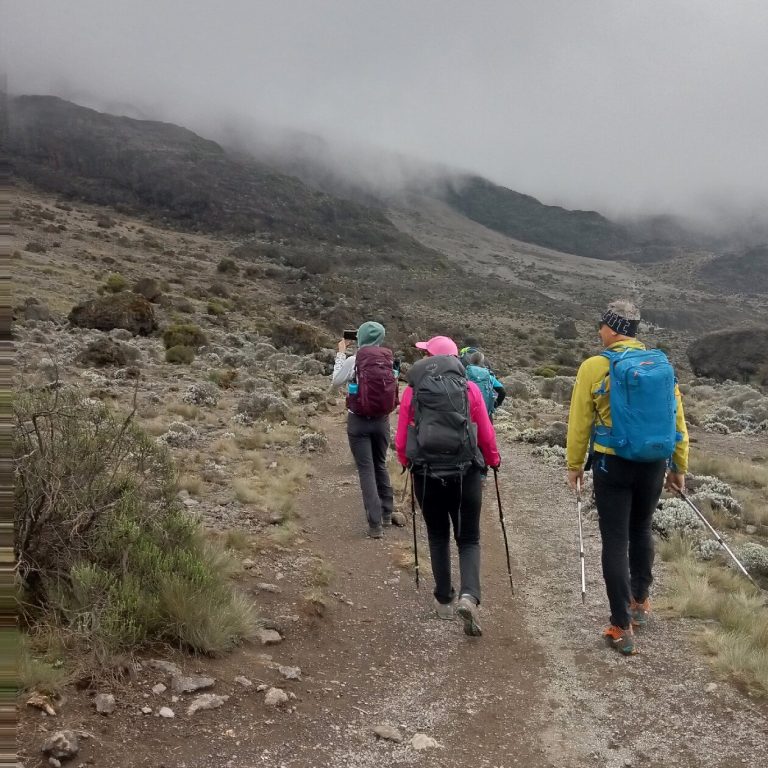
The Kilimanjaro layering system exists because one trek crosses several climates. Each layer has one job. The base layer moves sweat off your skin. The fleece holds warmth. The insulated jacket adds heat when you stop or slow down. The shell keeps rain and wind out. Wear the combination that matches the hour, and change it often.
| Zone | Altitude | Walking in | At camp |
|---|---|---|---|
| Rainforest | 1,800 to 2,800 m | T shirt, shorts | Fleece |
| Heath, moorland | 2,800 to 4,000 m | Sun shirt, trousers | Fleece, puffy |
| Alpine desert | 4,000 to 5,000 m | Base, fleece | Down jacket |
| Summit zone | Above 5,000 m | Every layer | No camp |
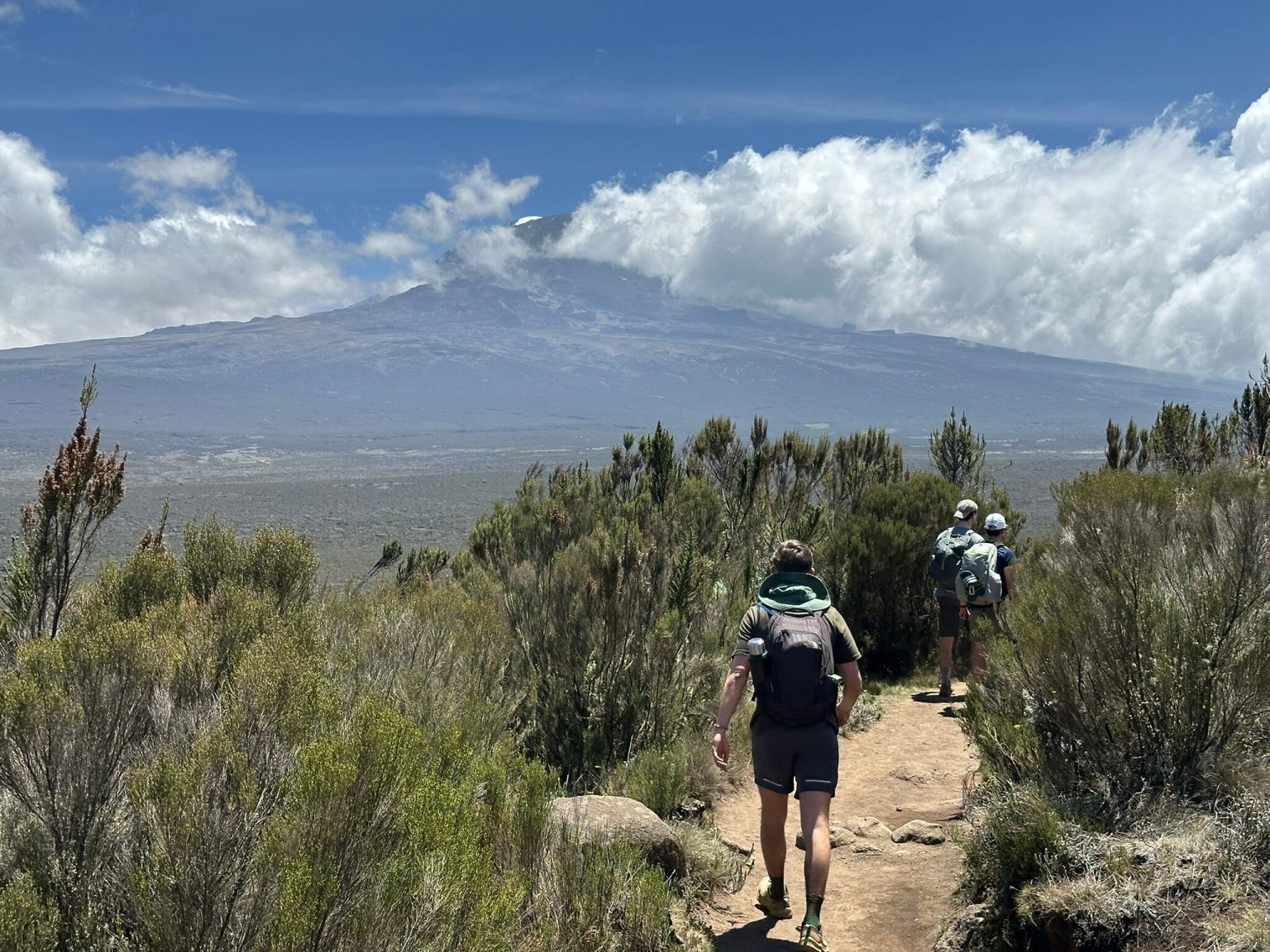
The cultivated foothills around Moshi make a fifth zone, which you only cross by vehicle. Above the forest, the sun is strong and the air cool, so the right outfit on the moorland often looks odd: a long sleeved sun shirt, a hat and sunglasses, plus shorts or light trousers. Then the sun goes behind Kibo at camp and the temperature can fall by fifteen degrees in an hour.
Trip reports return to one habit again and again. Open zips while you walk, close them the moment you stop. Sweat that soaks a base layer on the climb chills you at the rest stop, so the aim is to stay slightly cool on the move rather than warm. Guides brief you each evening on the next day’s conditions; ask what to have ready.
Base Layers for Kilimanjaro Trekking: Merino or Synthetic
Your base layer for Kilimanjaro trekking sits against the skin for a week without a proper wash, which rules out cotton. Cotton soaks up sweat, stays wet and pulls heat from your body, and that matters once you pass 4,000 metres.
Merino wool resists odour for days, stays warm when damp and feels soft. It dries more slowly and wears through faster than synthetic fabric. Synthetic tops, such as polyester base layers from Patagonia’s Capilene range, dry fast and cost less, but they smell after two days. Many climbers mix them: merino for the summit set and sleeping, synthetic T shirts for the forest days.
What most climbers bring:
One small detail from climbers’ accounts: do not walk in the thermal leggings you plan to wear on summit night. They get damp and stale on the trail, then lose warmth when you need it most.
Fleece and Mid Layers for Kilimanjaro Hiking
The mid layer is the piece you will wear most on the Kilimanjaro hike. It goes on at every rest stop above the forest, every evening at camp, and on the cold mornings at Shira, Barranco and Karanga.
A full zip 200 weight hiking fleece is the standard. Full zip matters more than it sounds: you can open it on the move without taking off your pack. A second, lighter packable fleece or a grid fleece gives you a thinner layer for summit night, when two thin layers trap more warmth than one thick one. A softshell jacket can stand in for the second fleece if you run warm; it blocks more wind and breathes less.
Fleece vests have fans. They keep your core warm while leaving arms free to vent, and they pack small.
The Insulated Jacket for Kilimanjaro Climbing
The insulated jacket for Kilimanjaro climbing is the warmest single piece you bring. You wear it at the high camps every evening and through summit night. It should be hooded, filled with 700 to 800 fill down or a thick synthetic insulation, and roomy enough to zip over your base layers, a fleece and, on many climbers, the rain shell.
Light down sweaters and city puffers do not qualify for the crater rim. They work as a second, camp layer at the lower camps. If you buy one jacket for the climb, buy the warm one: an 800 fill hooded down jacket with a generous amount of down. Fill ratings, down weight, hoods, sizing and rental quality are covered in full in our guide to the best down jacket for Kilimanjaro.
Hard Shell Jacket and Rain Trousers on the Kilimanjaro Trek
Rain falls on the lower slopes of the Kilimanjaro trek in any month, and much more often in the long rains of April and May and the short rains around November. Higher up, the same shell blocks wind on the exposed ridges and on summit night.
Bring a waterproof breathable hardshell jacket with a hood, with taped seams, a stiff peak on the hood and pit zips for venting. Budget shells such as the Marmot PreCip work on the lower slopes; three layer jackets from Arc’teryx, Rab or Outdoor Research are tougher and breathe better. The layer count on the label describes how the waterproof membrane is bonded to the fabric: 2 and 2.5 layer shells are lighter and cheaper, while 3 layer fabric stands up better to scree, pack straps and a week of rain. Any of them works on the mountain if the seams are taped and the face fabric still beads water. Make sure it fits over your fleece and, if you wear it that way on the summit, under the down jacket.
For your legs, rain trousers with full side zips go on over boots without sitting in the mud. They double as a wind layer on summit night. In the forest, where it can be humid and wet at once, some climbers carry a small umbrella instead of sweating inside full waterproofs, and others pack a rain poncho that covers the backpack for the wettest forest days, though a poncho flaps badly once the wind picks up higher on the mountain. Both shell pieces stay in the daypack every single day, whatever the sky looks like at breakfast.
Your waterproofs also suit a gorilla trek in Uganda or Rwanda, where the forest is wet in any month. Our best jacket for safari guide compares rain shells for game drives and forest walks.
Trekking Trousers and Legwear for the Kilimanjaro Climb
Two pairs of quick dry trousers cover most of the Kilimanjaro climb. Convertible trousers with zip off legs, such as men’s convertible hiking pants or the women’s version, turn into shorts in the forest and back to trousers when the moorland wind picks up. Stretch fabric helps on the Barranco Wall scramble. Jeans, cotton chinos and heavy ski trousers all stay behind: the first two stay wet, and the last are too hot for six hours of walking.
For the cold days, add thermal leggings under your trekking trousers. On summit night most climbers wear three layers on the legs: a thermal base, a warm trouser such as a fleece lined softshell hiking trouser, and the rain trousers on top. Climbers who feel the cold sometimes swap the middle layer for insulated synthetic trousers. A pair of warm fleece trousers does three jobs: pulled on at camp each evening above Shira, worn to sleep on the coldest nights, and used as the middle leg layer on summit night if you leave the softshell at home. A pair of waterproof hiking gaiters keeps scree out of your boots on the descent and adds a little warmth around the ankles.
Summit Night Clothing for the Final Kilimanjaro Climb
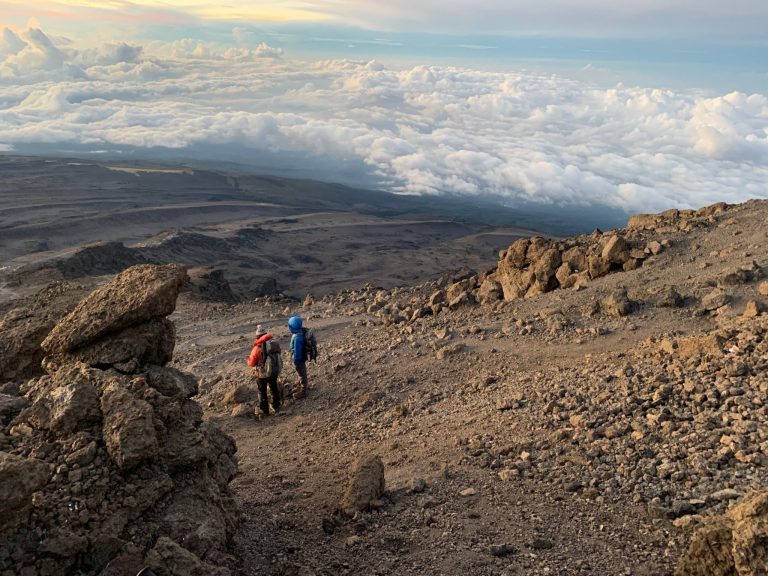
Summit night starts between about 11pm and midnight from Barafu, Kibo Hut or a similar high camp, and most climbers reach the crater rim around sunrise after six to eight hours of very slow walking. The cold peaks in the hours before dawn. Dress fully in the tent before you leave, because stopping on a dark slope to pull on another layer with mittens on is hard, and several climbers describe losing feeling in their fingers doing exactly that.
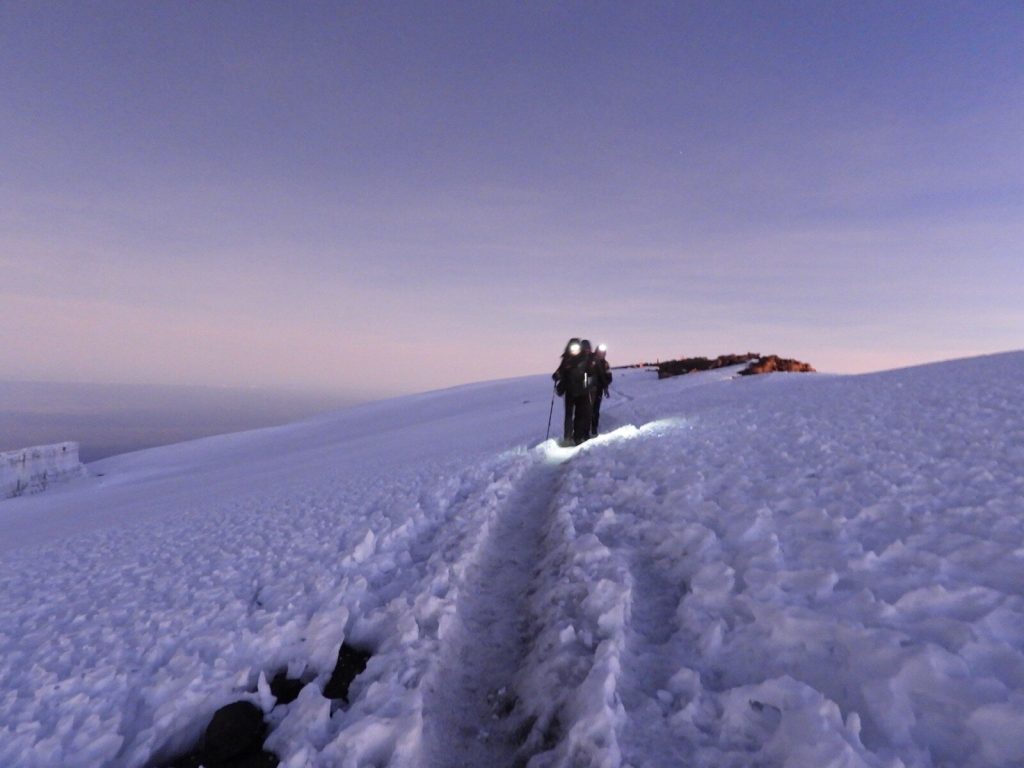
Wear nothing new on summit night. A base layer you have never walked in, or gloves you have never tried with poles, is a poor surprise at 5,500 metres. Put the whole outfit on at home once, in your garden or a cold garage, and walk around for half an hour. Several climbers say this one test changed what they packed.
The descent warms up fast once the sun is high. Strip layers at Stella Point or on the way down to Barafu, and switch the mittens for liners.
Gloves and Mittens for Kilimanjaro Climbing
Ask climbers what hurt on summit night and the usual answer is fingers. Hands are out in front holding trekking poles, exposed to the wind for hours, and circulation is weaker at altitude. Gloves for Kilimanjaro climbing work as a pair of layers.
Liner gloves. Thin merino or synthetic liner gloves for cold mornings, camp and the first hour of summit night, and for working zips and cameras without exposing bare skin.
Insulated mittens. Mittens keep your fingers together and stay warmer than gloves of the same weight. Insulated waterproof mittens with liner gloves cover both jobs in one purchase. Choose a pair with a wrist leash so they do not blow away when you pull them off for a photo.
Some climbers add a midweight softshell glove for the cold but dry days between Lava Tower and Barafu. Bring hand and toe warmer packs from home, since they are hard to find in Moshi. One trekker who left heavy gloves in the tent at the last minute described cold, aching hands from the start until the sun came up; that is a common story.
Beanie, Buff and Sun Hat on the Kilimanjaro Trek
Headwear on the Kilimanjaro trek covers two opposite problems, sun and cold, sometimes on the same day.
For the cold, a warm fleece lined wool beanie that covers your ears goes on every evening above the forest and stays on through summit night. Sleep in it on the coldest nights. Add a windproof fleece balaclava for the summit, or a lightweight neck gaiter or buff, which also keeps dust out of your mouth on the dry alpine desert days and shields your neck from the sun. Many climbers bring both.
For the sun, bring a wide brim sun hat with a chin strap; wind on the moorland takes caps away. Our best safari hats guide covers styles that also work on a game drive. Above 4,000 metres the UV is fierce, and the snow and pale rock near the summit reflect it, so category 3 sunglasses for the trail and category 4 glacier glasses for the summit morning are the norm. The sunglasses guide explains the categories.
Socks for Kilimanjaro Hiking
Four to five pairs of hiking socks cover a six to eight day Kilimanjaro hike, since you can air and rotate them. Cushioned merino wool hiking socks handle the forest and moorland. Add one pair of heavyweight merino mountaineering socks for summit night, kept sealed until then, and a separate warm pair for sleeping. Climbers prone to blisters wear thin liner socks under the main pair.
Make sure the thick summit socks fit inside your boots without squeezing your toes, since tight boots cut blood flow and make cold feet worse. Our guides to trekking socks and hiking boots for Kilimanjaro cover fit in detail. A pair of light trainers or sandals for camp lets your boots and feet dry each evening. Crampons are not part of a normal climb on the main routes; on rare mornings after fresh snow, guides may suggest microspikes.
What to Wear Each Day on a Seven Day Kilimanjaro Trek
No two climbs get the same weather, and you will change these outfits by the hour. Still, a rough plan for a seven day Machame route trek helps you pack the daypack each morning. Lemosho and the other western routes follow a similar pattern with an extra day low down.
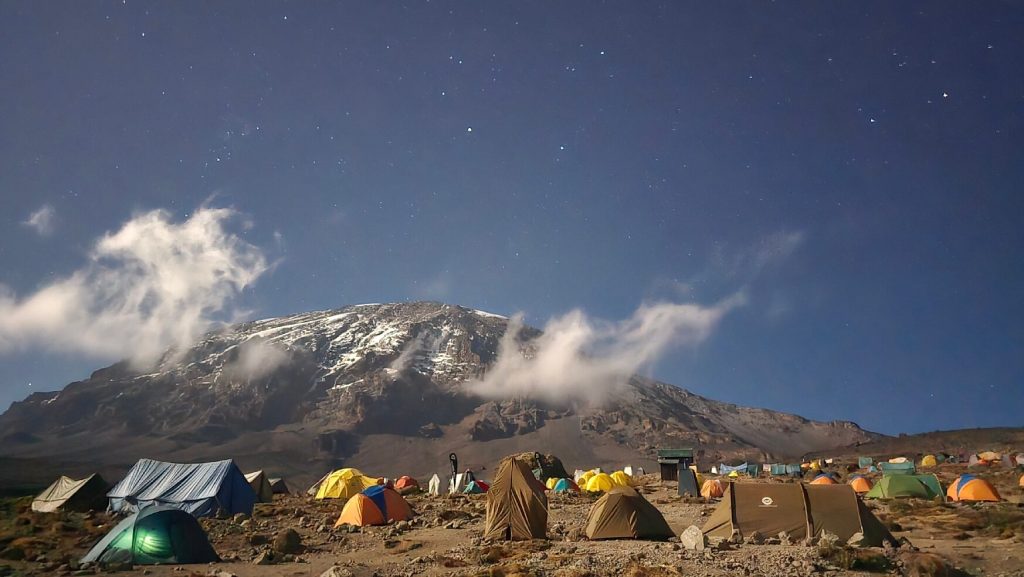
At camp each evening, change into dry camp clothes: a clean base layer, the fleece, the down jacket, warm socks and camp shoes. Many climbers keep one thermal set and the fleece trousers only for sleeping, so there is always something dry to change into at night; others sleep in the next day’s base layer to keep it warm for the morning. Wet socks and damp shirts go in the sleeping bag foot or hang in the tent porch; nothing dries outside at night.
Kilimanjaro Clothing by Climbing Season
The layering system stays the same all year on a Kilimanjaro climb. What changes by season is which layers work hardest. The mountain sits just south of the equator, so there is no true winter, yet the months still differ.
Whatever the month, summit night is well below freezing. The summit outfit never changes.
What Porters Carry on a Kilimanjaro Climb: Duffel Weight and Daypack
On a supported Kilimanjaro climb your clothing travels in two bags. A porter carries the duffel with your sleeping bag, spare clothes, camp shoes and the summit outfit, and you only see it at camp. You carry a daypack with the layers you might need between camps.
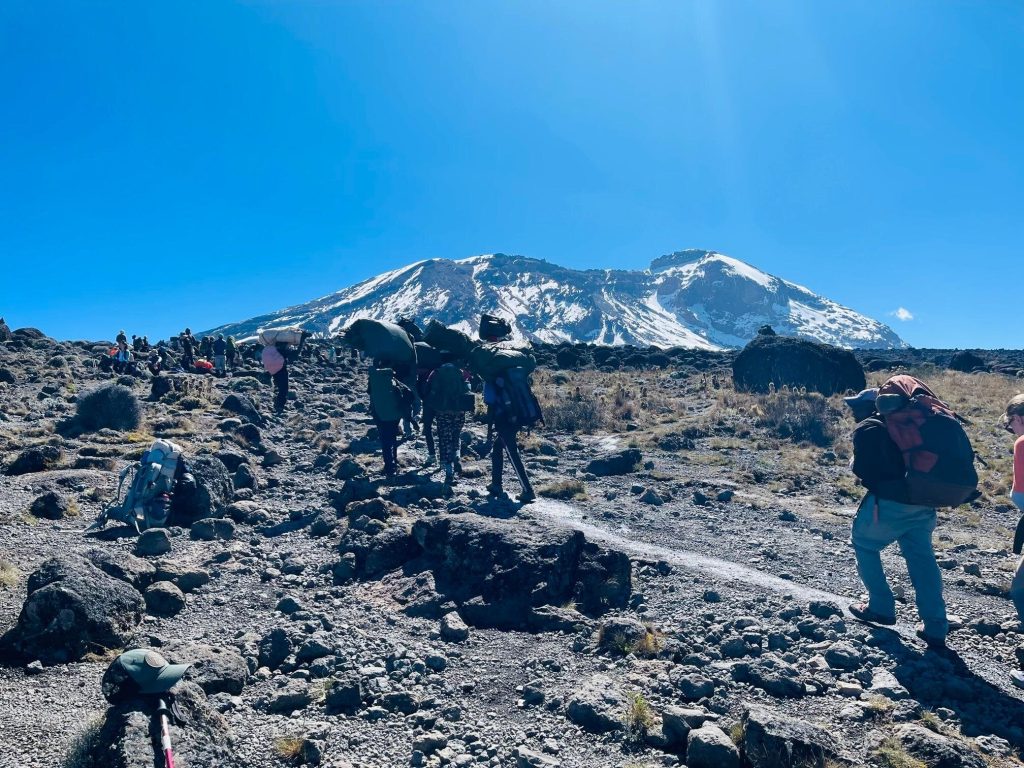
Operators commonly cap the duffel at about 15 kg, sleeping bag included, and bags are weighed at the park gate; extra weight usually means paying for an extra porter. The Kilimanjaro Porters Assistance Project, now the Kilimanjaro Responsible Trekking Organization, sets a 20 kg ceiling on the company load each porter carries, which is why the personal allowance is lower. Clothing is the easiest place to save weight. Two trekking trousers, three tops, two thermal sets, one fleece of each weight, the down jacket and the shell are enough for a week.
Tanzania bans plastic carrier bags, so pack clothes in roll top dry bags inside a soft 90 litre waterproof duffel. Separate bags for summit clothes, sleep clothes and trail clothes make the tent less chaotic at 5am. The dry bags guide and the packing cubes guide show how to split them.
Your daypack, 30 to 35 litres, holds the shell jacket and trousers, a fleece, liner gloves, the beanie and sun hat, sunglasses, and from Lava Tower onward the down jacket. Add water, snacks and a small first aid kit. The full list of what goes where, including sleeping bags, headlamps and water bottles, is in the Kilimanjaro gear list.
Renting Kilimanjaro Trekking Clothing in Moshi or Arusha
Rental shops in Moshi and Arusha, and many operators’ own stores, hire out the bulky cold weather clothing for the climb and deliver it to your hotel the evening before. Quality ranges from nearly new branded kit to worn, off brand pieces, so treat it as something to inspect.
Buying makes sense for anything you will use again, which for most people is the fleece, shell and base layers. If your trip continues to a game drive safari or a gorilla trek, the same fleece, rain shell and liner gloves keep working, while the summit mittens and heavy jacket can go back to the shop. Rental prices are in the FAQ below.
Airlines do sometimes lose bags on the way to Kilimanjaro International Airport. Fly in your broken in boots and a trekking outfit, and keep the shell jacket, one base layer set, the fleece and spare socks in your cabin bag. With those, plus a few rented items, you can still start the climb if the duffel turns up a day or two late.
What to Wear on Kilimanjaro: Frequently Asked Questions
What should I wear on summit night on Kilimanjaro?
Two thermal base tops, two fleeces or a fleece and softshell, a hooded down jacket and a shell on top; thermal leggings, warm trousers and rain trousers on the legs; liner gloves under insulated mittens; a beanie, balaclava or buff; and fresh thick merino socks. Dress fully in the tent before you set off.
How many clothes do I need for a Kilimanjaro trek?
For a six to eight day climb, about two or three trail tops, two thermal sets, two trekking trousers, one or two fleeces, a down jacket, a waterproof jacket and trousers, five to seven pairs of underwear and four to six pairs of socks. Less is better; the duffel weight cap is strict.
Can I wear shorts on Kilimanjaro?
Yes, in the rainforest on the first and last days and sometimes on a sunny moorland morning. Above about 4,000 metres it is too cold and the sun too strong for bare legs. Convertible trousers give you both.
Is cotton really a problem on Kilimanjaro?
On the trail, yes. Cotton holds sweat and rain and chills you at rest stops, which matters once nights fall below freezing. A cotton T shirt for the hotel or for sleeping at the forest camp is fine.
How much does it cost to rent Kilimanjaro clothing in Moshi?
Operators’ published rental lists in Moshi and Arusha mostly charge about US$15 to US$20 for a down jacket for the whole climb, US$10 to US$15 for a rain jacket or rain trousers, and about US$5 to US$10 each for gaiters, gloves or a hat. Shops renting newer branded summit jackets charge more and quality varies, so confirm the price and the item before you travel. Buying a full clothing system from scratch costs several hundred US dollars.
Do women need different clothing for the Kilimanjaro climb?
The layering system is the same. Many women add a second comfortable sports bra, find women’s cut down jackets fit better than small men’s sizes, and pack an extra pair of warm leggings, since many women report feeling the cold more at camp. Pack period products even if your cycle is not due, because some women find altitude and hard walking change its timing.
What should I wear in the forest on the first day?
A light synthetic T shirt, shorts or convertible trousers, a sun hat and broken in boots. Carry the rain jacket, rain trousers and a fleece in the daypack, since afternoon showers and mist are common below 3,000 metres.
How cold is it at the top of Kilimanjaro?
Before dawn on summit night, expect about minus 10C to minus 20C (14F to minus 4F) on the final slopes once wind chill is counted, and colder on windy nights in the dry season. The summit area averages around minus 7C across the year, so even the sunny hour at Uhuru Peak is below freezing. Every summit layer goes on before you leave the tent.
What should I wear on the plane to Kilimanjaro?
Your hiking boots and one trekking outfit, with the shell jacket, a fleece, a base layer set and spare socks in your cabin bag. If checked luggage goes missing, those pieces plus rented gear in Moshi let you start the climb on time.
Plan Your Kilimanjaro Climb and Tanzania Trip
With the clothing sorted, the Kilimanjaro trekking guide helps you choose a route and number of days, and the cost to hike Kilimanjaro breaks down park fees, crew pay and tips. The best time to visit Tanzania shows which months are dry and which are cold. Many climbers add a game drive safari afterwards; the Kilimanjaro climb and safari page and our guide on what to wear on safari cover the switch. All our gear guides sit in the safari gear and clothing section.