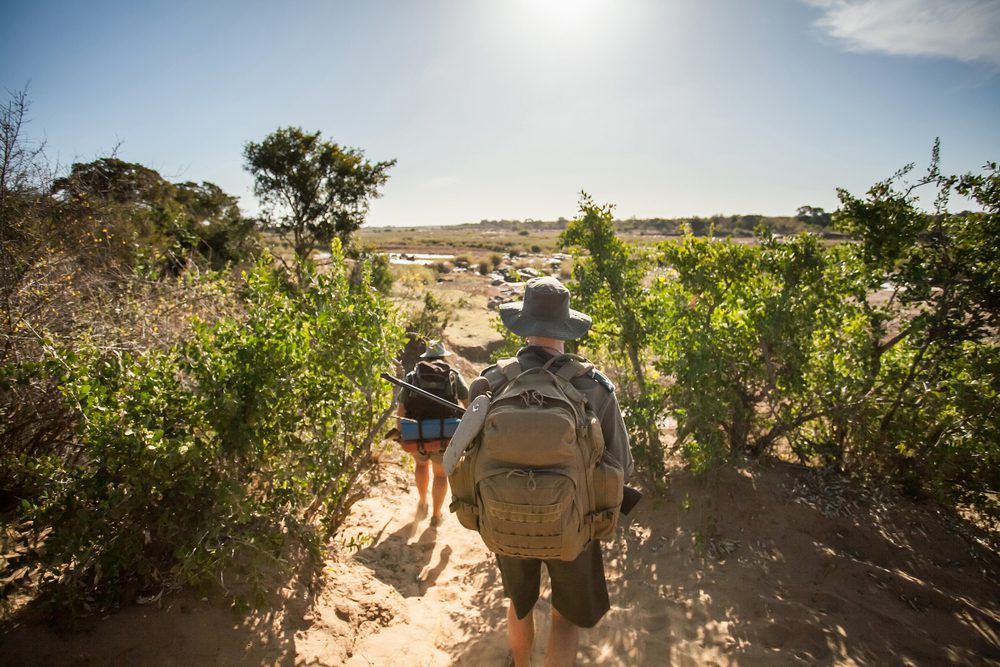
On a walking safari, wear muted bush colours such as khaki, olive, tan and soft brown, with no white, no bright colours and no camouflage, in quiet fabrics that do not swish or rustle. Long light trousers and sleeves, closed trail shoes or light ankle boots, socks that shed grass seeds, a brimmed hat and a small daypack with water and binoculars complete the kit. Guides enforce this stricter code on foot from Zambia’s South Luangwa to Uganda’s Lake Mburo.
Our what to wear on safari guide covers game drives, camp and evenings. This page deals only with the hours you spend on foot, where the rules tighten.
Walking Safari Colours: The Stricter Rule on Foot
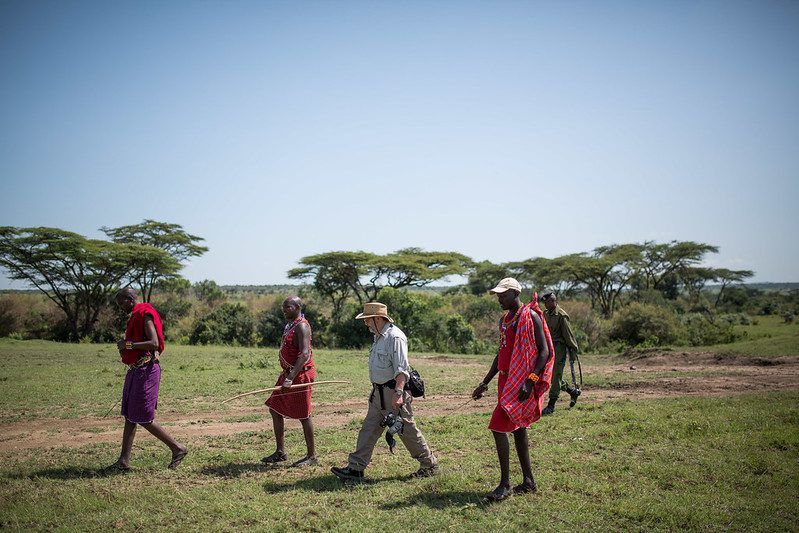
Colour is where a walking safari differs most from a game drive. In a vehicle, animals see one large shape and mostly ignore what the people inside are wearing. On foot you are a small upright animal in their space, and anything that flashes or contrasts makes them notice you sooner, move off sooner, or in the case of buffalo and elephant, watch you more closely than anyone wants.
White is the colour most guides ban outright. Many antelope flash white rumps and tails as an alarm signal, and a white shirt bobbing through the grass reads the same way to everything around you. Bright reds, oranges and pinks stand out at a distance. Hiking gear in vivid technical colours, which suits a mountain trail, is the wrong choice here.
Dark blue and black have their own problem: in tsetse fly country, which takes in parts of Zambia, Tanzania, Kenya and Malawi, both colours attract the flies, and their bites hurt. Camouflage is off the list for a different reason, since several African countries restrict it to the military and rangers. Our what not to wear on safari page lists the full set.
That leaves the classic bush palette. UPF 50 vented button up shirts in khaki are what most walking guides wear themselves, and the best safari shirts guide compares fabrics and insect treated options. Patterns count as well: bold checks and logos break up less than you might think against dry grass.
Quiet Fabrics for a Walking Safari
Noise is the second rule nobody mentions until the guide stops the group and looks back. On a bush walk you move in single file and in near silence, listening for oxpeckers, alarm calls and branches breaking. A stiff rain shell that rasps with every arm swing, nylon trousers that whistle at the thighs or a bag full of loose kit undoes that.
Soft cotton, brushed polyester and merino are the quiet choices. If your best walking trousers are noisy synthetic, rub the fabric together at home; if you can hear it across a room, a guide will hear it across a clearing. Velcro is the worst offender, so avoid opening velcro pockets during a sighting, and tape down or remove dangling zip pulls and buckles that click.
Scent counts as noise to an animal with a good nose. Leave perfume, aftershave and strongly scented deodorant for the evening, and choose an unscented sunscreen. Jewellery that glints or jingles stays in camp.
Long Sleeves, Trousers and Layers for a Bush Walk
Long clothes on a walking safari protect against more than the sun. Acacia thorns, sharp grass, ticks and tsetse flies all reach bare legs far more easily on foot than in a vehicle. Light, loose trousers in a neutral colour are the default: stretch travel trousers in tan or women’s lightweight stretch hiking pants move easily and dry quickly. Our safari pants guide covers fits and lengths.
Can you wear shorts? Some guides allow them on short morning walks in open country, and plenty of Southern African guides wear them. Zip off trousers such as convertible zip off pants give you both, though the zips can rub on long walks. Leggings are fine on a gentle walk in a neutral colour, but thin ones offer little against thorns and grass seeds.
Walks start at first light, which in the dry season can be cold, especially in Zambia, Zimbabwe and South Africa in June and July. By ten o’clock the same walk is hot. Layer a lightweight full zip fleece over the shirt, then strip it off and stow it in the pack as the sun climbs. Full zips come off without lifting a hat or dropping binoculars.
Insect protection rides on the clothes too. A permethrin clothing spray applied before the trip treats shirt, trousers and socks against ticks and flies for several washes. Skin repellents for the walk itself are compared in our insect repellent for Africa guide.
Walking Safari Footwear: Closed Shoes or Ankle Boots
Open sandals are not allowed on a walking safari, and for good reason: thorns, uneven ground and the odd scorpion. Beyond that, the choice is between light shoes and boots. Most walks follow game paths over fairly level ground at a slow, stop and start pace, so lightweight breathable trail shoes or lightweight trail walking shoes in brown are enough for a morning walk.
Light ankle boots earn their weight on multi day walking safaris, in rocky country and on riverbanks with loose sand. Waterproof mid hiking boots also keep out seeds and dust better than low shoes. In the dry season, waterproofing matters less than breathability, so a boot with a mesh upper can be the cooler pick.
Whatever you choose, break it in before you fly. A walking safari is no place for new shoes, and blisters on day one of a five day trail are hard to fix in the bush. Pick brown, tan or olive rather than white soles and neon trim. Our best shoes for safari guide compares game drive, walking and camp footwear in more depth.
Socks and Gaiters Against Grass Seeds on a Walking Safari
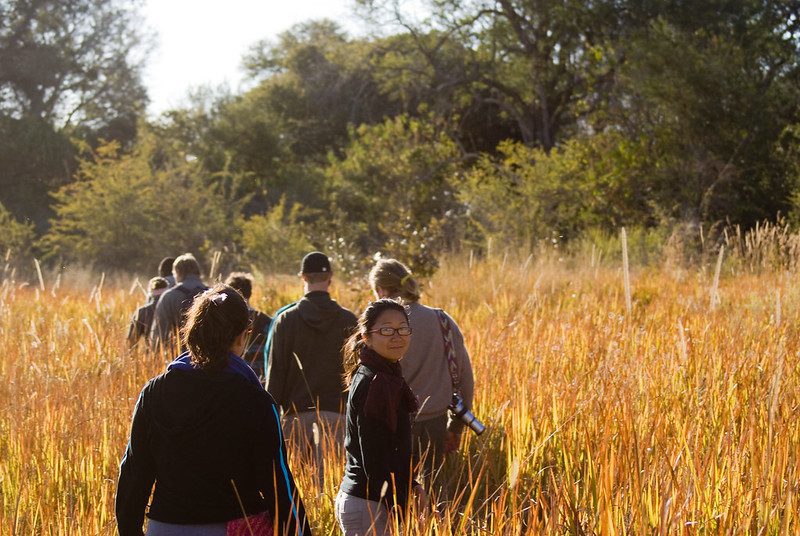
Grass seeds are the small irritation that trip reports return to again and again. In the dry season, savannah grasses shed barbed seeds that hook into knitted socks and work through to the skin, and after an hour of walking through long grass a pair of fluffy cotton socks can be furred with them.
Smooth socks help most. Tightly knitted cushioned merino hiking socks or fine synthetic hiking socks collect far fewer seeds than loose cotton terry. Some walking guides take the opposite route and wear very low socks inside boots so there is less fabric to catch anything, but that only works with high boots.
Low gaiters close the gap. Outdoor Research Rocky Mountain Low gaiters or similar ankle height models cover the top of the shoe and the sock cuff, which is where seeds, sand and ticks get in. Long gaiters are overkill on the savannah but welcome in very tall grass early in the dry season. Our gaiters guide explains heights and fits, and the best socks for safari compares weights.
Sun Protection on Foot: Hat, Buff and Sunglasses
There is no roof on a walking safari, and walks often run into mid morning. A wide brim safari hat with a chin strap shades the neck and ears and stays on when you duck under a branch. Keep it a muted colour, and skip floppy brims that flap in the wind. The best safari hats guide compares shapes and fabrics.
A UPF 50 neck gaiter covers the back of the neck and doubles as a dust mask on dry, windy days. Polarised wrap around sunglasses cut glare off pale sand and water, though many walkers push them up when scanning shade for a resting lion, where tinted lenses hide detail. Pick a non reflective frame.
Use an unscented sunscreen such as a fragrance free SPF 50 mineral sunscreen, put on before the walk rather than during it.
Walking Safari Daypack: Water, Binoculars and Small Kit
Your pack on a walking safari is small, because the guide and ranger carry the heavy and the serious kit: rifle, radio, first aid and often extra water. On multi day walks a vehicle or porters move your main bag between camps. What you carry fits in a packable 20 litre daypack, and some camps lend one.
Binoculars matter more on foot than on a drive. A walking safari is as much about dung beetles, tracks, birds and plants as big game, and the best sightings are often at a distance the guide will not close. Our binoculars for safari guide explains magnification and size. Pack anything that rattles in a pouch so the bag stays quiet.
Walking Safari Destinations and the Kit Each One Needs
The clothing rules hold everywhere, but each walking safari destination tilts the kit list a little.
| Park | Country | Walks | Kit note |
|---|---|---|---|
| Lake Mburo | Uganda | Ranger led | Light shoes |
| Murchison | Uganda | Nature walks | Repellent |
| Kidepo | Uganda | Valley walks | Sun, water |
| South Luangwa | Zambia | June to Oct | Low gaiters |
| Mana Pools | Zimbabwe | April to Nov | Heat layers |
| Kruger trails | South Africa | Multi night | Boots |
| Mara | Kenya | Conservancies | Muted colours |
Lake Mburo is Uganda’s easiest walking safari: ranger led walks to the Rwonyo salt lick among zebra, impala and eland on gentle ground, often at the start of a trip west to Bwindi. See our Lake Mburo National Park guide. In Murchison Falls, the hike to the top of the falls and forest walks in Rabongo and Budongo bring tsetse and forest insects, so treated clothing and repellent count; the Murchison Falls safari page covers the options. Kidepo Valley in the far north is hot and dry, with guided walks in open valleys, so sun cover and extra water come first.
South Luangwa is where the walking safari as a product began, and the season runs from around June, once the grass is down, to the end of October. Dawn walks there are cold in June and July and very hot by October; see our Zambia safari guide. Mana Pools on the Zambezi is one of the few parks where walking among big game on the open floodplain is part of every visit, in a season from about April to November that ends in fierce heat; the Zimbabwe safari page has more.
In South Africa, Kruger’s multi night wilderness trails cover more ground over rougher terrain, which is where boots beat trail shoes, and rest camps run shorter morning walks; our South Africa safari guide covers Kruger. In Kenya, walking happens in the Masai Mara conservancies around the reserve with Maasai guides rather than inside the reserve itself, so book a conservancy camp if a walk matters; the Masai Mara safari guide explains the difference.
Following the Guide’s Rules on a Walking Safari
The briefing before a walk matters more than anything you pack. Walk in single file behind the lead guide, in the order you are given. Talk in whispers or use hand signals. If an animal charges or approaches, stand still and do exactly what the guide says, and never run, because running triggers a chase in predators. Keep the gap to the person in front small so the group reads as one body.
Guides decide what is acceptable to wear, and they do turn people back or ask them to change. A white shirt or a bright jacket at the morning briefing usually means a borrowed khaki top from camp or a few minutes back at the tent. Minimum ages are set by the park or camp and usually sit between 12 and 16, with shorter family walks for younger children at some lodges.
Packing Walking Kit Into a Bush Flight Bag
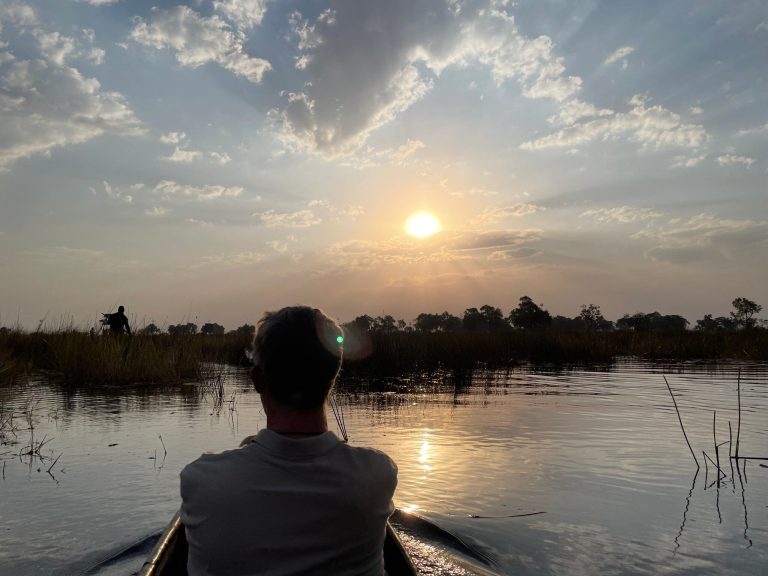
Many walking safaris are reached by light aircraft, with a limit of around 15 to 20 kilograms in a soft bag. Walking kit fits that easily if you wear the heaviest items on the plane: boots on your feet, fleece on your back. Two walking shirts, two pairs of trousers and three pairs of good socks cover a week, since most camps wash clothes daily, though some do not wash underwear. Our dry bags for safari page covers keeping kit dry on canoe legs in Mana Pools and the Okavango.
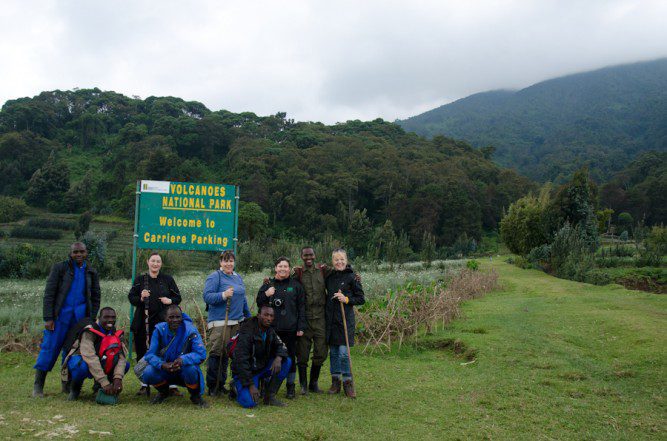
If the same trip includes a gorilla trek, the walking kit carries over almost entirely. Add gardening gloves, gaiters and a rain jacket from the gorilla trekking packing list, and browse the safari gear hub for the rest.
Walking Safari Clothing: Questions Travellers Ask
What colours should I avoid on a walking safari?
White above all, then bright colours such as red, orange and pink, and camouflage, which is restricted in several African countries. In tsetse areas avoid dark blue and black too. Stick to khaki, olive, sand, stone and soft brown.
Can I wear shorts on a walking safari?
Some guides accept them on short walks in open country, but long trousers protect against thorns, ticks, grass seeds and tsetse flies. Zip off trousers let you switch. Check at the briefing, since the guide’s call is final.
Do I need hiking boots for a walking safari?
Not for a morning walk on level ground, where closed trail shoes with grip are enough. Light ankle boots are better for multi day walking safaris, rocky ground and long grass. Sandals and open shoes are not allowed.
Are leggings or jeans okay on a walking safari?
Leggings in a neutral colour are fine on a gentle walk, though thorns and grass seeds go through thin fabric. Jeans are heavy, hot, slow to dry and stiff to walk in, so light cotton or synthetic trousers are a better pick.
What is the minimum age for a walking safari?
Most parks and camps set it between 12 and 16, and many Zambian camps use 12. Some lodges run shorter, gentler bush walks for younger children that focus on tracks, insects and plants.
What happens if I turn up in the wrong clothes?
The guide will usually ask you to change, and many camps keep spare khaki shirts to lend. On a strict walk a bright or white item can mean being left behind, so pack at least one full muted outfit.
Do walking safaris cost extra?
Often they are an add on paid on top of park entry. In Uganda, operator listings put a guided walk in Lake Mburo at roughly US$15 to US$40 per person, on top of park entry of US$40 per day for foreign non residents. In Zambia, South Luangwa camps list park entry at about US$25 per international visitor per day, and walks are usually included at full board camps. Mana Pools entry is US$24 a day on the ZimParks tariff. Multi day walking trails are priced as packages, so confirm what is included when booking.