The best window for a Masai Mara migration safari runs from late July to mid October, when the wildebeest herds have crossed from Tanzania into Kenya and the Mara River crossings come most often; August and September are the surest weeks. Most travellers book three to six nights from Nairobi, driving in about five to six hours or flying from Wilson Airport in under an hour. The reserve sits in Narok County on the Tanzanian border, at the northern end of the Serengeti and Mara ecosystem.
This guide stays on the Kenyan side: when the herds usually arrive, what you see, where they cross, which base to pick, four trip shapes day by day and how to book well. For the whole twelve month loop, calving at Ndutu included, read our great migration safari packages guide, and for the herd movements in depth, the great wildebeest migration guide. Prices and fees sit in the FAQ.

When the Herds Reach Kenya: Masai Mara Migration Safari Dates by Month
For most of the year the herds graze in Tanzania. A Masai Mara migration safari targets the months when wildebeest, zebra and gazelle push north over the border after fresh grass, roughly July to October. Rain sets the timetable, so a wet season in the Serengeti can hold the columns back for weeks and a dry one can send them early.
Treat any date near the edge of the season as a guess.
| Period | Herds usually | Crossings | Vehicles |
|---|---|---|---|
| Late June | Mostly in Tanzania | Rare | Light |
| Early July | First columns in | Some | Building |
| Late July | Spreading north | Frequent | Heavy |
| August | Across the Mara | Most often | Heaviest |
| September | Mara, Triangle | Frequent | Heavy |
| Early October | Thinning out | Some, south | Easing |
| Late October | Heading south | Occasional | Light |
July. Leading herds tend to enter through the southern reserve and the Mara Triangle. Early July is patchy: in slow years guides spend hours on the plains looking for the front columns, and some groups see their first big herd only on day three.
August. Every number peaks at once. Most animals sit on the Kenyan side, crossings come most often, vehicle counts climb and camps charge their top rates. If a crossing is the reason you are going, this is the month with the best odds.
September. Plenty of guides would pick it over August. The herds keep crossing, often back and forth after a storm, and the crowds thin a little.
October. The shoulder of the season. Herds begin walking south, the last crossings tend to happen in the first fortnight, and both rates and traffic fall away.
The Mara Conservancy, which manages the Mara Triangle, notes that the first herds can arrive in late June and the last can leave in November, so the edges stretch in some years. Two more points shape Kenyan dates. A big share of the herds never leaves Tanzania’s northern Serengeti, so the Mara receives part of the migration rather than all of it. And a smaller resident population, the Loita herd, moves in from the plains to the northeast and spends part of the year in eastern conservancies such as Naboisho, Olare Motorogi and Ol Kinyei. Its timing is poorly documented, so count it as a bonus.
The reserve ticket switches to its high band on 1 July and stays there until the end of December, which is worth knowing if your dates straddle the end of June.
What a Masai Mara Migration Safari Shows You: Herds, Numbers and Predators
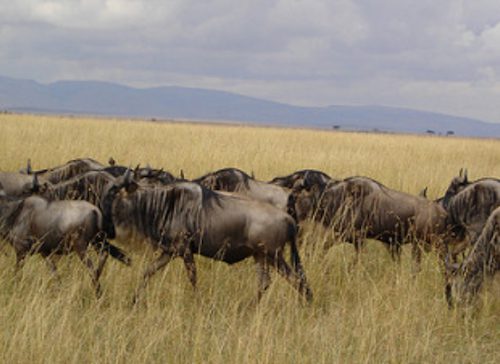
On a Mara migration safari the herds are the backdrop to everything else. The animals are western white bearded wildebeest, the Serengeti form of the blue wildebeest, and the latest aerial census of the calving grounds by the Tanzania Wildlife Research Institute put them at about 1.37 million. Hundreds of thousands of plains zebra and Thomson’s gazelle travel with them, with eland and Grant’s gazelle on the fringes. Totals of two million or more on some tour sites count every species and should be read as rough.
Where do they come from? The herds walk a roughly clockwise loop of about 800 to 1,000 kilometres. They calve on the short grass plains around Ndutu in the southern Serengeti from about January to March, drift northwest through the central Serengeti and the Western Corridor from April to June, reach the northern Serengeti and the Mara from July, then head back south down the eastern Serengeti in November. Kenya hosts the northernmost stretch, usually for three or four months.
Predators make the season. Lion density in the better parts of the Mara is among the highest in Africa, and prides that hold territory near the river eat well when the herds arrive. Cheetahs hunt on the open plains, hyena clans work through the herds at dawn, and leopards stay in the riverine forest. In the river itself, large Nile crocodiles take animals at most busy crossing points.
Not every day is about wildebeest. The reserve covers about 1,510 square kilometres of grassland, acacia country and riverine forest, holds all of the Big Five (black rhino are scarce) and has a bird list past 450 species, from kori bustards to vultures that gather over every kill. A day with no crossing still tends to bring lions, elephants, giraffe, topi and buffalo, which is why trip reports rarely call a migration trip a waste even when the river stayed quiet.

Mara River Crossing Safaris: Where the Herds Cross and How Long You Wait
A Mara River crossing safari is what most people have in mind. The river flows south through the western side of the reserve, with the Mara Triangle on its west bank, and on into Tanzania. Crossings cluster between the Purungat Bridge area near the border and the country below Lookout Hill, with more near the Talek River confluence; the Talek, a tributary that cuts through the central reserve, sees crossings of its own.
Guides call favourite spots Main Crossing or Paradise Crossing. These are nicknames, not marked sites, and the exact point moves as floods cut and collapse the banks each year. A camp that sells itself as being “at the crossing” can be twenty minutes or an hour away by the time you travel. Ask how long the drive to the river takes from that camp in your month.
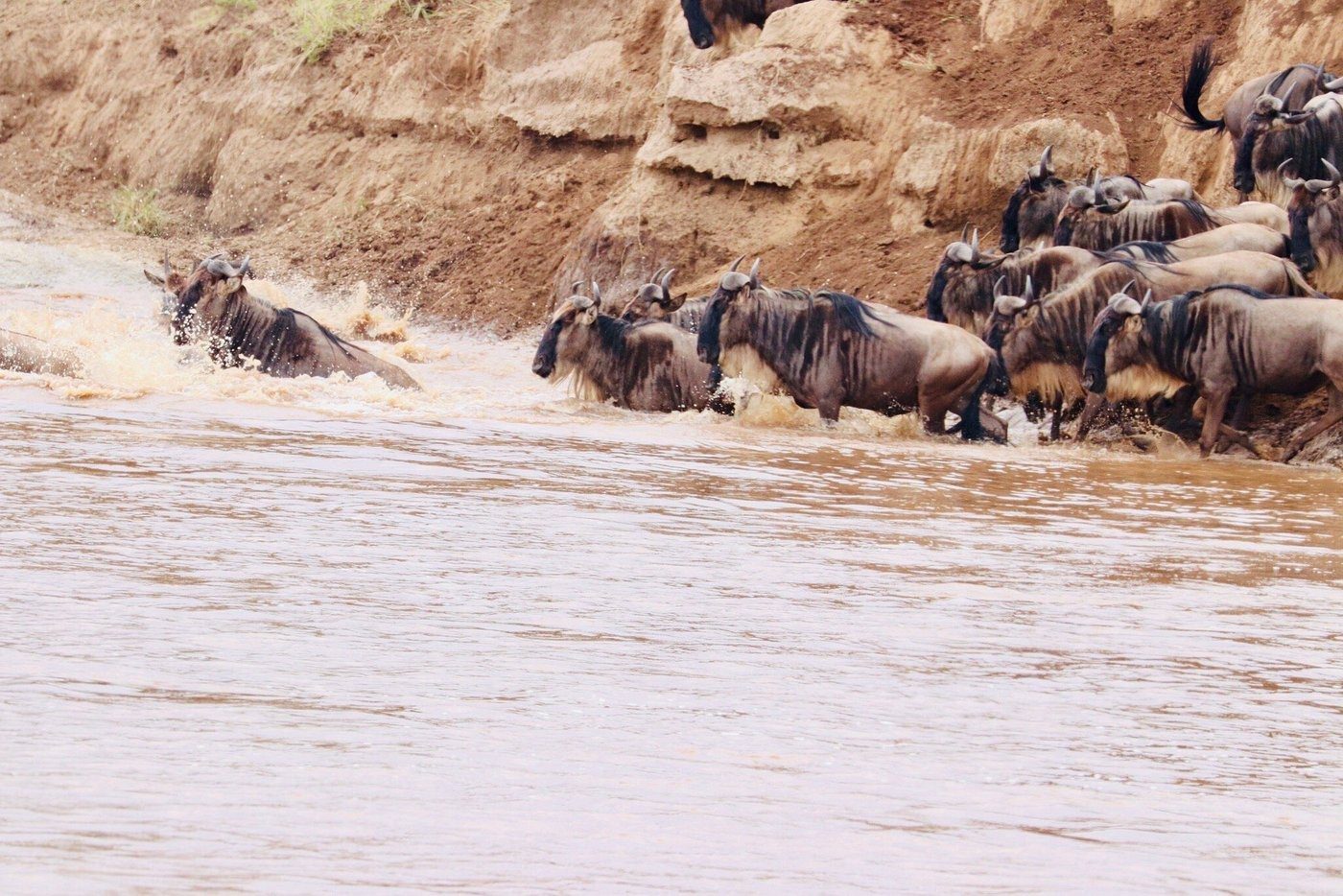
The waiting is what brochures leave out. A herd bunches on the bank, edges down, turns back, and repeats this for hours, occasionally a whole day, before one animal jumps and thousands follow within minutes. Trip reports agree: the people who saw a big crossing usually spent most of a day near the river with a packed lunch, while those who drove down for an hour and left usually missed it. A few describe arriving just after a crossing ended because their guide was slow to move.
So plan for patience. Hold one full day for the river, and book enough nights that a blank day costs you nothing. After the crossing, lions often work the far bank.
Even without one, the plains in these months fill with grazing herds and the cats that follow them.
Reserve, Mara Triangle or Conservancy: Choosing a Base for a Migration Safari
On a migration safari in the Masai Mara, where you sleep decides how far you drive to the river and how many vehicles you share it with. Guides divide the reserve into sectors: Musiara in the north near the Marsh, central Talek, Sekenani and Keekorok on the eastern side, and the Mara Triangle west of the river below the Oloololo Escarpment. Four kinds of base work for the herds.
Most guides answer with a split stay: two or three nights near the river, then two or three in a conservancy for quiet sightings, walks and night drives. It costs one road transfer.
A conservancy on its own can still work in season. Herds spill out of the reserve onto the conservancy plains, Mara North in particular, and the eastern conservancies when the Loita herd is in. Tens of thousands of wildebeest with three other vehicles in sight can beat a crossing watched with forty. You give up the river unless you budget a long day trip into the reserve. Many conservancy guides are Maasai from the surrounding community, which is one plain way your money reaches local families.
Our Masai Mara safari guide compares the sectors and camps in detail, and the safari lodges section covers lodges across the region.
Ways to See the Migration: Game Drive Safaris, Balloon Flights, Walks and Fly In Tours
The game drive safari does almost all the work. In the main reserve you leave camp at first light, follow the herds on the plains in the morning, and on a river day stay out with a packed lunch until the light goes. Licensed safari vehicles with a guide are required, and private cars cannot game drive in the main reserve.
A dawn hot air balloon safari lifts off before sunrise, drifts over the plains for about an hour and lands for a bush breakfast. In migration months the herds below make it the best season to fly, and launches sell out, so book the flight with the trip rather than on arrival. Balloon operators set minimum ages and weight rules, so check before you pay.
Walking safaris and night drives belong to the conservancies, since neither is allowed in the main reserve. A walk with a Maasai guide shows the plains at ground level: tracks, dung, medicinal plants, and herds watched from a respectful distance. Night drives with a red filtered spotlight turn up hyena, genets, owls and lions on the move. A few conservancy camps offer horseback safaris for confident riders.
Fly in tours change the shape of a short trip. Light aircraft from Wilson land at Mara airstrips close to camp, which turns a lost road day into an extra game drive, and on longer trips a small plane can carry you out of the Mara at the end instead of a second long drive. Birdwatching rides along with everything else; the Mara’s raptors, storks and bustards keep a birding guest busy between crossings.
Four Masai Mara Migration Trips, Day by Day
Nearly every Mara migration safari package sold in Kenya follows one of these four shapes.
All four keep at least one full day for the river. A trip with a single Mara day is not a migration safari in any useful sense. Small group departures on the road trips usually carry between two and eight guests; ask for the maximum before you book, because a full van shares one guide’s decisions. Our 3 day Kenya safari, 5 day Kenya safari, 7 day Kenya safari and 10 day Kenya safari pages show how each length uses the time, and the best safari in Kenya guide sets out longer first timer routes.
Building a Mara Migration Trip: Flights, Vehicles, Weather and Kit
Road or air. The drive from Nairobi takes five to six hours on a mostly tarred road through Narok, then rougher track inside. Flights from Wilson run several times a day with Safarilink and Airkenya and take under an hour. Light aircraft hold you to a soft bag of about fifteen kilograms including hand luggage; our safari duffel bag guide covers what fits.
Vehicle. Budget trips use pop roof minivans with a window seat for each passenger. Land Cruisers sit higher, cope better with black cotton soil after rain and give everyone a clear view. On a river day a private vehicle lets you decide how long to wait; in a shared one the group decides, and someone always wants to leave.
Camp position. In August, a camp ten minutes from the river beats a smarter one an hour away.
Weather. The Mara lies at roughly 1,500 to 2,000 metres. Dawn in the dry migration months is often near 10 to 13°C, especially in an open vehicle at speed, while afternoons reach the mid to high twenties. Rain is light from July to September; storms return in late October and November.
Kit. A fleece and a warm hat for early drives, neutral layers, a buff against dust, sunscreen, and binoculars for each person, because sharing a pair at a crossing never works. A zoom lens matters more than a second body. Our binoculars for safari guide and what to wear on safari page cover the detail, and Kenya uses three pin British style plugs.
How to Book a Masai Mara Migration Safari Package
Booking a migration safari comes down to timing. Camps near the river fill first, often nine to twelve months ahead for August and September, with the best seasonal camps gone earliest. For early July or October, three to six months is usually enough.
Ask every operator for an itemised quote and read these lines.
Check the company before you pay. A Kenyan operator should hold a Tourism Regulatory Authority licence, and membership of the Kenya Association of Tour Operators adds a complaints route. Pay deposits by card or bank transfer to the company’s own account, never a personal one. Our list of Kenya safari companies explains these checks.
No honest operator promises a crossing on a given day.
Crossing Etiquette and Ranger Rules on a Migration Safari Game Drive
The crossings have a crowding problem, and it touches every trip. Kenyan news outlets have reported visitors leaving vehicles and drivers pushing to the bank, blocking herds that then turned away. Rangers are now posted at the main crossing points and hold vehicles back until animals are already in the water.
In the Mara Triangle, the Mara Conservancy’s rules are plain: when more than five vehicles wait at a sighting, viewing is limited to ten minutes, and waiting vehicles keep 100 metres back. Rangers can fine a driver on the spot or remove a vehicle from the park. Across the reserve, Narok County requires game drives in licensed safari vehicles with a guide, and off road driving is not allowed. The reason is practical. A herd pushed to the wrong spot, where the far bank is too steep, can drown or be trampled in large numbers.
So stay seated, keep voices low while a herd is deciding, never sit on the window frame or stand on the roof, and do not ask your guide to edge closer. Good guides take up position early, slightly downstream, and then wait.
Pairing the Mara Migration With the Serengeti or Gorilla Trekking
The Serengeti holds the other bank of the same river. Its northern end around Kogatende sees the same crossings with fewer vehicles, but the Sand River and Bologonja route between the two parks is closed to tourists. A cross border trip either flies via Nairobi and Kilimanjaro or drives round through the Isebania and Sirari border post between Migori and Tarime, changing vehicle there. The Serengeti safari guide and Serengeti safari cost page cover that side.
Gorilla trekking fits the migration months neatly, since July to September is the long dry season in Bwindi and Volcanoes. Fly from Nairobi to Entebbe or Kigali and allow three or four days for one trek. Secure the gorilla permit first, because permits sell out before Mara camps do. Our gorilla and Masai Mara safari plan sets out the combined route, and the Bwindi gorilla trekking guide, the Uganda gorilla permits page and the Rwanda gorilla trekking guide cover that leg. The East Africa tourist visa page explains the joint visa for Kenya, Uganda and Rwanda and why the Kenya leg needs checking. For licensed operators who run the combination, see our gorilla safari companies list. For a wider choice of parks, see our guide to the best African safari countries.
Masai Mara Migration Safari FAQ
How much does a Masai Mara migration safari package cost?
On operators’ own rate cards, a three day shared road safari from Nairobi costs about US$570 to US$970 per person from July, park fees included, depending on the camp. A two night fly in conservancy package with Wilson flights, conservancy fees, drinks and drives runs about US$2,800 per person sharing from July to September and US$2,600 in October. River and conservancy camps in August cost roughly US$975 to US$1,600 per person per night. These are market prices, not fixed ones; our Masai Mara safari cost guide builds them up line by line.
What park and conservancy fees apply in migration season?
Narok County and the Mara Conservancy charge non resident adults US$200 per day from July to December and US$100 from January to June, on a 12 hour ticket from 6am to 6pm. Children aged nine to seventeen pay US$50 and under nines enter free. Conservancy fees of about US$130 per adult per night, rising to about US$150 at most conservancies, are usually built into the camp rate. Fees change, so confirm close to travel; the Kenya safari cost guide has the full tables.
What do flights, a balloon and gorilla trekking add?
Scheduled light aircraft between Wilson Airport and the Mara cost about US$224 to US$320 per person each way before airstrip taxes. A shared balloon flight with breakfast is listed at about US$450 to US$500. The Kenya eTA costs US$30 at the standard speed. If you add gorillas, a Uganda permit costs US$800 for foreign non residents and a Rwanda permit US$1,500, or US$1,050 on the RDB offer from November to May, before flights and lodge nights.
What month is the wildebeest migration in Kenya?
Usually July to October in the Masai Mara, with August and September the busiest crossing months. The first herds can arrive in late June and the last can leave in November, so the edges move with the rain.
When is the best week for a Masai Mara migration safari?
Mid August to mid September gives the best odds of crossings in most years. Late July and late September come close with slightly fewer vehicles. Early July and late October depend on luck with the herds’ timing.
Where do the wildebeest migrate to and from?
They walk a loop of about 800 to 1,000 kilometres between the southern Serengeti plains, where they calve from about January to March, and the Masai Mara, which they reach around July. They return south through the eastern Serengeti from about November.
How many wildebeest take part in the migration?
The latest aerial census by the Tanzania Wildlife Research Institute estimated about 1.37 million wildebeest, with hundreds of thousands of zebra and gazelle moving alongside. Larger totals on tour sites include every species, so treat all counts as estimates.
How many nights do I need to see a river crossing?
Plan at least three nights near the river, with one full day set aside for waiting. Four is better. Two nights gives you one full day, and many people on two night trips see herds on the bank but no crossing.
Is the Masai Mara or the Serengeti better for the migration?
For crossings from July to October, both work. The Mara is quicker and cheaper to reach on a short trip but busier at the river; the northern Serengeti is quieter and harder to reach.
Can I see the migration from a conservancy camp?
Yes. Herds spread onto the conservancy plains in the migration months, and the eastern conservancies sometimes host the Loita herd too. For crossings you need a long day trip into the reserve, which most conservancy camps arrange.
How far ahead should I book a Mara migration safari tour?
Nine to twelve months for August and September at river camps and seasonal camps. Three to six months often works for early July and October, and for larger lodges.
Is a migration safari suitable for children?
Yes, though a long day waiting at the river is hard on young children. A split stay with a pool camp helps, and many conservancy camps set minimum ages, often around five, with walking safaris usually from about twelve. See our Kenya family safari guide.
What should I pack for a Mara migration safari?
A warm fleece and hat for dawn drives, neutral layers, sunscreen, a buff for dust, binoculars for each person and a zoom lens. Keep it in a soft bag if any leg flies. Our African safari packing list covers the rest.