A Serengeti safari cost starts at about US$990 per person for a 4 day group camping trip from Arusha and runs to US$1,890 for 5 days in lodges, while a private 7 day trip with two sharing costs about US$3,300 to US$3,600. Most visitors book a Serengeti safari package with a licensed Arusha operator. Serengeti National Park in northern Tanzania hosts the wildebeest migration, and its park fees alone come to about US$130 a night inside from July to September.
This page is for travellers holding a quote and wondering why two Serengeti safari tours that look alike can sit so far apart. It prices each line of a Serengeti trip, from park and Ngorongoro fees to camps by area, flights, group size and the month. For the whole northern circuit and the southern parks, our Tanzania safari cost guide goes wider; for regions, wildlife and camps, see the Serengeti safari guide. The Tanzania safari guide covers every other park on the route.

Serengeti Safari Cost per Day by Safari Style
Dividing operators’ published package prices by the number of days gives a fair daily figure for a Serengeti safari tour, with the vehicle, guide, meals, lodging and park fees all inside. The style you choose moves that number more than anything else.
| Style | Example trip | Per day |
|---|---|---|
| Group camping | 5 days, US$1,100 | About US$220 |
| Group camping | 4 days, US$990 | About US$248 |
| Group lodge | 5 days, US$1,890 | About US$378 |
| Group lodge | 3 days, US$1,220 | About US$407 |
| Private, 6 sharing | 7 days, US$2,401 | About US$343 |
| Private, 2 sharing | 7 days, US$3,585 | About US$512 |
The group rows are ZK Tanzania’s joining departures, which cap each Land Cruiser at six. The private rows are Kilidove Tours’ 7 day northern circuit in its mid luxury tier, low season for six and high season for two. Blessing Safaris’ 7 day private camping route lands in between at US$2,680 per person for four or more, about US$383 a day.
Shorter trips cost more per day because a bigger share of them is the drive in and out from Arusha. Luxury is priced per night rather than per trip: Singita Sasakwa publishes US$2,550 to US$3,525 per adult per night, and with a private vehicle and fees on top, luxury Serengeti days rarely fall under about US$900. Trip reports from budget travellers say the same thing in reverse: a quote far below the park fee floor shown further down this page is either missing something or will be made up later.
Serengeti Safari Package Prices for 3, 4, 5 and 7 Day Trips
Most Serengeti safari packages fall into four lengths, and each one buys a different number of nights in the park.
A package price normally covers the vehicle and driver guide, park and crater fees, lodging, full board and drinking water. Check the airport transfer, the balloon, drinks and tips separately. Deposits vary by company: Acacia Safaris, for example, asks for 40 percent at confirmation in the low season and 50 percent in the high season. Longer migration and honeymoon itineraries are covered on our great migration safari packages and Tanzania honeymoon package pages.
Serengeti National Park Fees on a Safari: Entry, Concession and Camping
Serengeti park fees are set by Tanzania National Parks (TANAPA), and its current tariff, running 1 July to 30 June, lists non resident fees in Tanzanian shillings. The shilling amounts equal the old dollar rates at 2,555 to the dollar.
| Fee | Adult | About US$ | Child 5 to 15 |
|---|---|---|---|
| Entry, 24 hours | TZS 178,850 | US$70 | TZS 51,100 |
| Concession, night | TZS 153,300 | US$60 | TZS 25,550 |
| Public campsite | TZS 76,650 | US$30 | TZS 12,775 |
| Special campsite | TZS 153,300 | US$60 | TZS 12,775 |
| Fly camping | TZS 127,750 | US$50 | TZS 25,550 |
Three things change the real bill. VAT at 18 percent is added by most operators, which is why so many quotes still show the entry fee as US$82.60 and the concession as US$70.80. The concession and special campsite rates shown are the July to September high season figures, and the adult entry rate shown applies from 16 May to 14 March, while entry from 15 March to 15 May is US$70.80 with VAT; ask the operator which rate applies. And under fives enter free.
Put together, one night in a Serengeti lodge or tented camp in July to September costs TZS 332,150 per adult in fees, about US$130 before VAT and US$153 with it. A night at a public campsite costs TZS 255,500, about US$100, which is why camping trips save less on fees than people expect. Ask whether VAT is included, how many 24 hour periods are charged and which nights fall inside the park.
Smaller lines turn up too. A Tanzanian registered vehicle up to 2,000 kg pays TZS 20,000 a day, while a foreign registered one of 2,001 to 3,000 kg pays TZS 383,250, which matters to anyone on one of the self drive safaris in Africa coming in from Kenya. Camping crew pay TZS 1,500 to enter. Foreign residents of Tanzania pay TZS 89,425 entry. TANAPA even lists TZS 12,775 per person for a hot bush meal or sundowner served inside the park, so a bush breakfast on a quote may carry a fee of its own. Fees are paid electronically, usually by the operator. Our African safari cost guide compares these fees with other countries.
Ngorongoro Transit and Crater Fees on a Serengeti Road Safari
Every Serengeti road safari from Arusha crosses the Ngorongoro Conservation Area, which is run by a different body, the Ngorongoro Conservation Area Authority (NCAA), with its own tariff in US dollars. That is the line people forget when they add up the Serengeti fees alone.
The crater fee is why group size matters on the crater day: two people split US$295 into US$147.50 each, six pay under US$50 each. The Ndutu area, where the herds calve from about December to March, lies inside the conservation area rather than the national park, so a night at a Ndutu camp pays the NCAA’s US$70.80 entry and US$59 concession, about US$130 per adult, instead of the Serengeti rates. Our Ngorongoro safari tours page covers crater trips, and the Ngorongoro Crater safari guide covers the crater itself.
Serengeti Safari Lodge and Camp Rates by Area
Where a Serengeti safari lodge sits matters nearly as much as how comfortable it is, because the herds move and every hour of driving costs fuel and guide time. The park has four main areas.
Accommodation runs from public campsites with shared washblocks, through budget tented camps and permanent lodges, to luxury tented camps. Mobile camps relocate a few times a year to stay near the herds; they cut daily driving, though the nightly rate is higher than a fixed lodge at Seronera.
The lodges that publish their own rates sit at the upper end. Gibbs Farm in the crater highlands near Karatu, a common night before or after the Serengeti, charges US$518 to US$683 per person full board with VAT included, and its single supplement is 50 percent. Singita’s rate includes premium drinks, laundry and its own game drives, so a lodge that provides the safari itself replaces the operator’s vehicle line. Most budget and mid range camps price only through operators, which is why the package figures above are the best guide to their cost.
Sleeping outside the park in Karatu avoids the Serengeti concession, about US$60 a night before VAT, but the drive to Seronera then takes most of a morning, so it suits a crater night far better than a Serengeti one. Our safari lodges section covers individual properties.
Drive In or Fly In: Serengeti Safari Transport Costs
A Serengeti road safari from Arusha takes about seven to eight hours to Seronera with stops, through Karatu, over the Ngorongoro highlands and down past Naabi Hill gate. It is the cheaper option because the vehicle you are paying for anyway does the work, and it lets you add Tarangire, Lake Manyara or the crater. The cost is time, two NCAA transits and a lot of dust north of the crater rim.
A fly in Serengeti safari uses scheduled light aircraft. Coastal Aviation’s own fare sheet, per adult before taxes:
Many quotes mix the two, driving in through the crater and flying back from a Serengeti airstrip. That adds about US$277 per person but saves a full day on corrugated roads and that day’s fees and lodging. For the northern crossings, flying is often the only sensible choice, since the drive from Seronera to Kogatende alone takes several hours. Bush flights allow 15 kg per person in soft bags, and Coastal sells an extra seat allowance for 30 kg where the aircraft can take it. Children aged 2 to 12 fly at a lower fare.

Group Safari or Private Safari: How Group Size Changes the Serengeti Price
The Land Cruiser and driver guide cost the same with two passengers or six, so group size changes the per person price on a Serengeti safari more than anything except the lodge. Kilidove’s 7 day northern circuit shows it in one set of rates: in the high season two people pay US$3,585 each, four pay US$2,943 and six or more pay US$2,691, for the same lodges and route. Blessing Safaris’ 7 day camping trip runs from US$4,460 for a solo traveller to US$3,200 each for two and US$2,680 each for four or more.
A group joining safari fills the vehicle with strangers; ZK Tanzania caps it at six so everyone has a window. A private safari lets you set the pace and stay at a sighting as long as you like, which photographers and birders usually want. A family of four or more often pays little extra for privacy.
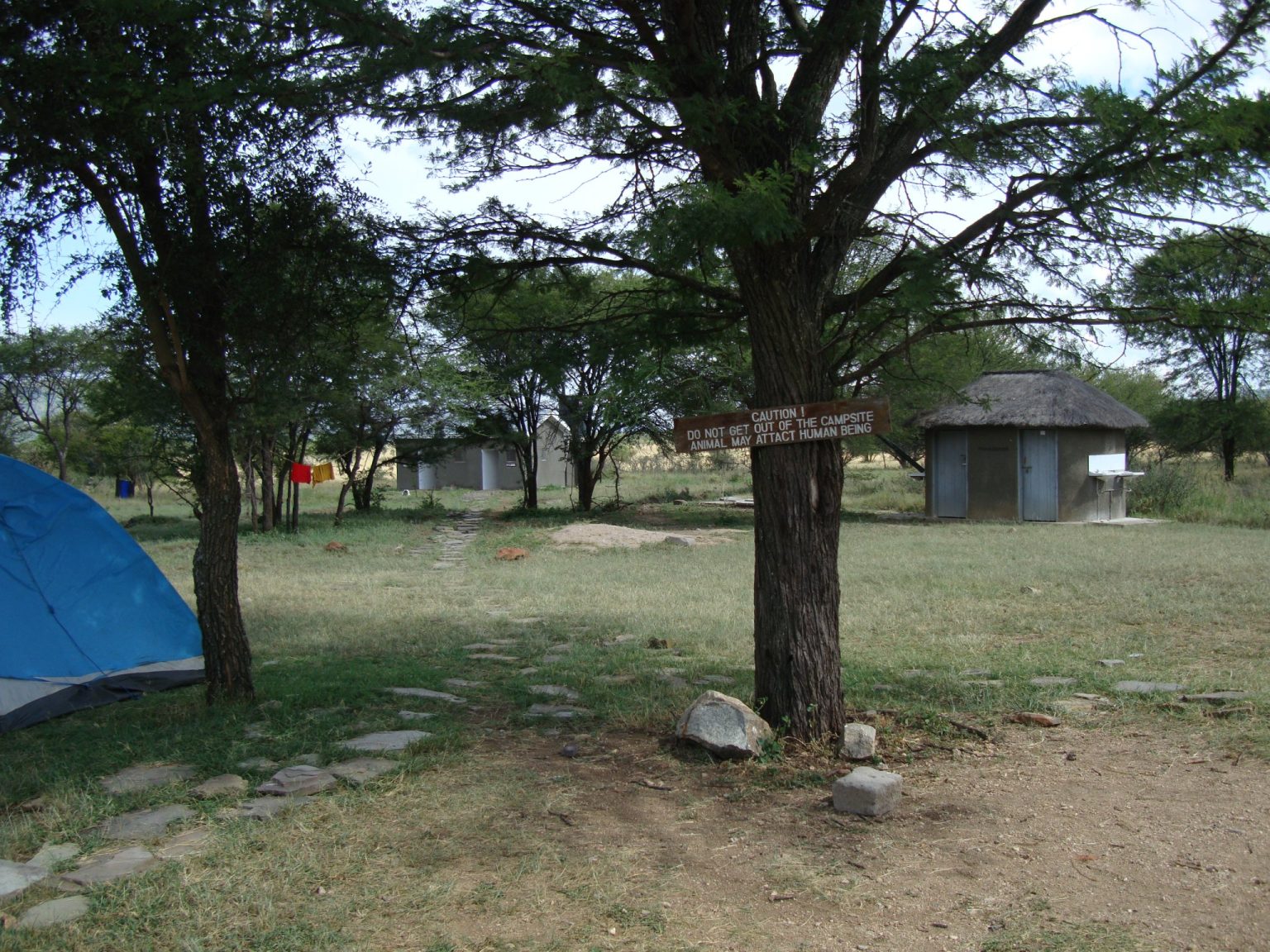
Budget camping safaris are the cheapest way in. You sleep in dome tents at Seronera public campsites, eat what the cook prepares and share washblocks that can run short of hot water. Nights are colder than people expect and hyenas walk through camp after dark, so bring a warm sleeping bag and a head torch. The game is the same as from a luxury tent; the comfort is not. Forum reports return to one warning: the cheapest operator is sometimes cheap for a reason, with old vehicles, breakdowns or a guide who says little. Ask the vehicle’s age and seat count, and the guide’s years in the park.
Serengeti Safari Prices by Month and Migration Season
The month moves a Serengeti safari price through lodge rates and, to a smaller extent, park fees. The table shows where the herds usually are and how rates behave.
| Months | Herds | Rain | Lodge rates |
|---|---|---|---|
| Jan to Feb | South, calving | Short dry | High |
| March | South | Rains start | Mid |
| Apr to May | Moving west | Long rains | Lowest |
| Jun to Jul | West to north | Dry | High |
| Aug to Oct | North, crossings | Dry | Highest |
| Nov to Dec | Heading south | Short rains | Mid |
April and May are the green season, with afternoon storms, muddy black cotton soil and some camps closed. Lodges discount, and the central Serengeti still has resident lions and cheetahs. January and February bring the calving on the southern plains at prices close to peak; Kilidove’s top band runs from December 20 through February for that reason. July to October is the most expensive period, driven by the crossings, and no crossing is guaranteed, since herds can gather at the river for days. November is a quieter shoulder, and Christmas and New Year carry peak rates whatever the herds are doing. Our best time to visit Tanzania guide covers the weather month by month.
Worked Example: A 5 Day Serengeti and Crater Safari Costed per Person
Here is a realistic Serengeti safari budget for one named trip shape: 5 days on a group lodge safari from Arusha, six to a vehicle, with Tarangire, two nights in the central Serengeti and a crater descent, travelling in August. It uses ZK Tanzania’s published group lodge price.
Government fees come to under a third of this package, so the lodges and the vehicle still take most of the money. And the extras outside the quote add about 9 to 17 percent before drinks, souvenirs or a beach extension. A couple travelling privately on the same route would pay more per head, as the group size section shows.
Serengeti Safari Extras: Balloon, Walks, Olduvai and Cultural Visits
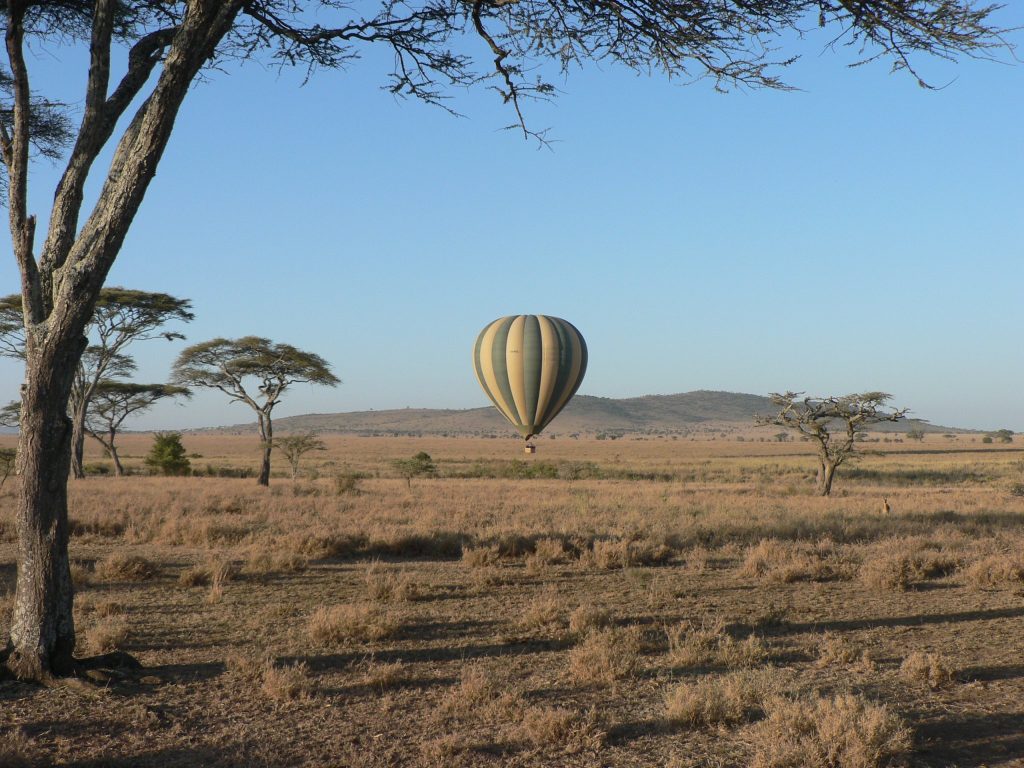
The Serengeti balloon safari is the best known extra: about an hour over the plains at dawn, followed by a bush breakfast. Serengeti Balloon Safaris publishes US$599 per person for a shared balloon with camp pickup, leaving park fees to your operator, and Blessing Safaris prices it as a US$500 extra on its trips. TANAPA lists a balloon safari fee of TZS 127,750, about US$50, so ask whether the operator has included it. Flights book out in peak months, so reserve with the safari. Plenty of travellers call it the highlight; a few found it pleasant but not worth paying for twice.
Walking safaris carry their own TANAPA fees in the Serengeti: TZS 51,100 per adult for a short walk and TZS 63,875 for a long one, plus a ranger fee of TZS 51,100. Specialist birding and photography safaris mostly cost more because they need a private vehicle and longer days in the field, not because of any extra fee. Olduvai Gorge on the road in costs US$35.40 per adult. Visits to a Maasai village or to the Hadzabe near Lake Eyasi are paid per person or per group to the community; ask for the figure in writing before you go, since quotes for these vary widely.
Zanzibar is the usual add on, with the Coastal flight from Arusha at US$348 plus US$32. For a mountain instead of a beach, our cost to hike Kilimanjaro page shows why a 7 day climb carries about US$956 in park fees before the operator adds anything.
Hidden Serengeti Safari Costs: Visas, Insurance, Tips and Drinks
The quote covers the safari. A handful of costs sit outside it, and they are where Serengeti budgets slip.
Carry clean, recent US dollar notes in small denominations for tips, since torn or old notes are often refused, and use the shared staff box at each camp for lodge staff. Our guide to African safari insurance explains what proper cover looks like. A yellow fever certificate may be checked if you arrive from Kenya or Uganda, and malaria tablets are worth a clinic visit before you fly.
Dust is a cost in its own way. Camera gear suffers on the roads north of Seronera, and many travellers wish they had brought a dust cover and a buff. Our African safari packing list, the safari clothing guide and the camera and binoculars guide cover what to bring, and avoiding dark blue and black keeps tsetse flies away in the wooded west.
How to Pay Less for a Serengeti Safari and Read the Quote
The biggest savings on a Serengeti safari price come from choices already priced above. Travelling in April or May trims about 8 percent off Kilidove’s 7 day rate and much more at luxury camps. Filling a vehicle with six cuts the 7 day private price from US$3,585 to US$2,691 per person in the high season. Sleeping in Karatu on the crater night avoids an NCAA concession of US$59 per person. Flying out from Seronera for about US$277 can be cheaper than a full extra day of fees, lodging and vehicle on the road back.
Booking channel affects the price too. Local Tanzanian operators sell directly, while overseas agents often add their own margin on top of a local ground handler. That margin can buy real value, such as financial protection and one contact for a multi country trip, but compare like with like. Posters on budget forums suggest that a traveller with only a few days and a tight budget may get better value from Tarangire and the crater than from a rushed Serengeti visit, and that February at Ndutu is a good month for the calving on a camping budget.
Serengeti, Masai Mara or Gorillas: Combined Safari Costs Compared
Kenya’s Masai Mara is the northern end of the same ecosystem, and the fee structures differ more than the animals. The Mara charges non residents US$100 per adult per day from January to June and US$200 from July to December, for a 6am to 6pm day, wherever you sleep. In the Serengeti a night inside costs about US$153 with VAT in July to September for entry and concession together. So in the peak crossing months the Serengeti is cheaper on fees per day, while in the first half of the year the Mara’s flat US$100 usually comes out lower. The Mara is also closer to Nairobi, which shortens the road day. The direct border at Bologonja is closed to tourist traffic, so a two country trip flies between Nairobi and Kilimanjaro or goes round by road. Our Masai Mara safari cost page has the full Kenya side, and the great wildebeest migration guide follows the herds month by month.
The Serengeti also pairs well with gorilla trekking in Uganda or Rwanda. A Uganda gorilla permit costs US$800 for foreign non residents and US$700 for foreign residents, or US$600 and US$500 in April, May and November, when permits cannot be rescheduled and are paid in full at booking. Rwanda’s permit is US$1,500, with the RDB 30 percent offer bringing it to US$1,050 from November to May when booked with nights in Nyungwe or Akagera. Book the permit first and build the safari around it. Our Tanzania safari and gorilla trekking guide, the Bwindi gorilla trekking guide and the Uganda gorilla permits page cover that leg, and our Kenya safari cost guide helps if you are weighing the whole of Kenya instead.
Serengeti Safari Cost FAQ
How much does a Serengeti safari cost per person?
On operators’ published prices, about US$990 for a 4 day group camping safari, US$1,520 to US$1,890 for a 4 or 5 day group lodge safari and US$2,401 to US$3,585 for a 7 day private mid range trip, park fees included. Luxury camps such as Singita Sasakwa charge US$2,550 to US$3,525 per adult per night before fees. Visa, insurance, tips and international flights come on top.
How much does a 3 day Serengeti safari cost?
ZK Tanzania’s 3 day group lodge safari to the Serengeti and the Ngorongoro Crater costs US$1,220 per person. With a visa, inbound insurance and tips it comes to about US$1,360 to US$1,375, or about US$1,410 to US$1,425 on a US passport. Expect long road days, since a third of the trip is spent driving in and out.
How much does a 7 day safari cost in Tanzania?
From US$2,401 to US$3,585 per person on Kilidove’s private mid range northern circuit, and US$2,680 per person on Blessing Safaris’ 7 day camping trip for four or more, up to US$4,460 for a solo camper, depending on group size and season. Our Tanzania safari cost guide works through a full 7 day total.
Which is cheaper, Serengeti or Masai Mara?
On park fees it depends on the month. The Mara charges US$100 a day from January to June and US$200 from July to December, while a Serengeti night inside costs about US$153 with VAT in July to September. Kenya budget trips are often cheaper overall because the Mara is a shorter drive from Nairobi than the Serengeti is from Arusha.
How much does a Serengeti safari package cost?
Packages from Arusha run from about US$990 for 4 days camping to US$2,400 for a 6 day group lodge circuit and US$3,585 for a private 7 day trip for two in the high season. A good package names each camp, the number of park days and every fee with VAT.
How much are the Serengeti park fees per day?
TZS 178,850 per adult per 24 hours, equal to US$70, or US$82.60 in the high season and US$70.80 from mid March to mid May with VAT. A lodge night adds a TZS 153,300 concession in July to September and a public campsite TZS 76,650. Children aged 5 to 15 pay TZS 51,100 entry, and under fives are free.
How many days do I need for a Serengeti safari?
Three nights inside the park gives two full days of game drives and is a sensible minimum. Driving from Arusha adds a day each way, so 5 to 7 days with the crater is the common choice. For the northern crossings, plan three or four nights near the river.
Can I see a river crossing on any Serengeti safari?
Only in the north, usually from July to October, and never with certainty. Crossings depend on rain and the herds. Several nights near Kogatende and long mornings at the river give the best odds.
Is a Serengeti safari suitable for children?
Yes, with planning, and children aged 5 to 15 pay lower park fees. Long hours on bumpy roads are hard on young children, so shorter drives, a lodge with a pool or flying in all help. Some camps and balloon flights set minimum ages. Our family safari in Africa guide has more detail.
How far ahead should I book a Serengeti safari?
For July to October, Christmas and the calving season, six to twelve months ahead secures the best camps. Green season trips can often be arranged a few weeks out. If you are adding gorilla trekking, book the permit first.
Is a Serengeti Safari Worth the Money? What a Day in the Park Is Like
For most people, yes, and the reason shows in how the US$1,890 or so of a 5 day group trip is spent. Days start before six with coffee in the dark and the first drive while the light is low and the cats are still moving. By late morning the vehicle has usually stopped for lion, elephant or a cheetah on a termite mound, and the guide’s radio has done half the finding. The middle of the day is hot and slow, then the second drive runs until the gates close. Sightings are never guaranteed, but the Serengeti’s odds are high in every month.
The tiredness is real too. Dust, corrugated roads and long transfer days are what trip reports mention most, and they are the best argument for an extra night inside the park rather than a cheaper, shorter trip.
Choosing Your Serengeti Area: Central, South, West or North
First timers with a week usually do best in the central Serengeti, where resident game is good all year and the drive is shortest. Ndutu in the south suits those travelling from December to March for the calving and the predators that follow it. The western corridor rewards a May to July trip with fewer vehicles. The north is the place for the river crossings from July to October, with the longest trip in. Many travellers combine two areas, central plus one more, and say that was the right balance.