A 14 day Tanzania safari gives you nine days on the northern circuit, enough for Tarangire, Lake Manyara, four Serengeti nights split between two areas and the Ngorongoro Crater, plus five days for a flight to Uganda and a mountain gorilla trek in Bwindi. Most travellers book it as a private safari with one operator handling both countries. Northern Tanzania and southwest Uganda are a short regional flight apart.
Two weeks is the length where you stop trading one park against another. Most fourteen day plans online pair the northern parks with a week on Zanzibar, and that version is covered below, but the site’s own 15 day Tanzania safari and Zanzibar holiday handles the beach route in full. This page leads with the trip people ask us about most: the Serengeti and the gorillas in one go.
The 14 Day Tanzania Safari and Gorilla Trek at a Glance
Nine days in Tanzania, five in Uganda, one flight in between. That is the whole idea of this Tanzania safari and gorilla trekking route, and the order matters: savannah first, forest second, so a late international arrival costs you a game drive rather than a gorilla permit that cannot be moved.
Thirteen nights, seven beds. That count matters more than the park list, because the common regret in safari trip reports is not a missed animal but packing a bag every morning. Every stop on this route gets at least one full day where you do not move.
Days 1 to 3: Arusha, Tarangire and Lake Manyara Game Drives
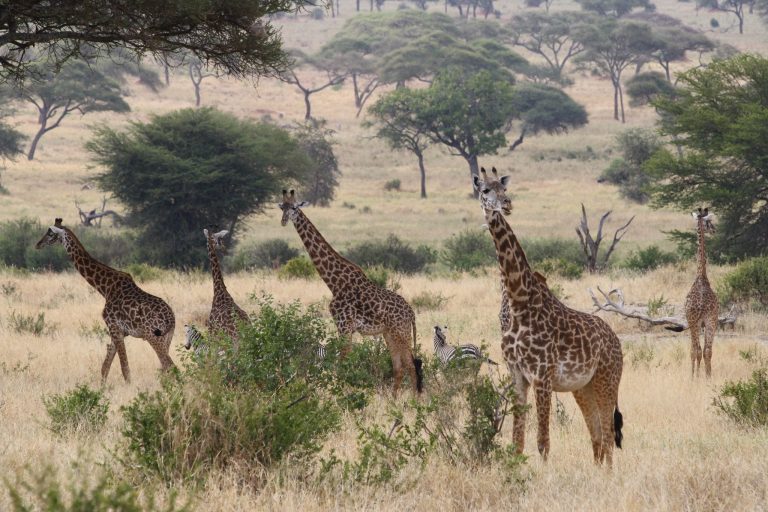
Arrival day is for sleep. Lodges on the coffee estates around Arusha and Usa River sit a short drive from the airport, and nobody expects you to do anything beyond dinner and an early night. If your flight lands in the morning, a game drive and canoe trip in Arusha National Park, with black and white colobus monkeys in the forest and giraffe grazing below Mount Meru, makes good use of the afternoon. Other easy first afternoons include a guided walk with a Maasai guide on the Meru foothills, a canoe on the crater lake at Duluti, or a tour of the coffee estate you are sleeping on. Across the Kenyan border, our Amboseli safari guide covers the park beneath Kilimanjaro.
Which airport you land at shapes day one. Kilimanjaro International sits between Arusha and Moshi and is the natural gateway. Fares into Dar es Salaam are sometimes lower, and families planning a fortnight often spot that first, but you then need a domestic flight north of roughly an hour and a half, and an overnight flight plus a connection makes a poor first day. Price both before you book the long haul tickets.
The Tarangire game drive on day two runs from breakfast to sunset with a picnic in between. Between June and October the Tarangire River draws large elephant herds, and the park’s baobabs and termite mounds make it look nothing like the Serengeti. Lion are seen often, leopard less so. Birders should ask the guide about the yellow collared lovebird and the large flocks of weavers along the river. Lodges and tented camps on the park boundary can add a guided walking safari or a night drive, neither of which is allowed on the park’s own roads, so a boundary camp is worth asking for if you want to get out of the vehicle.

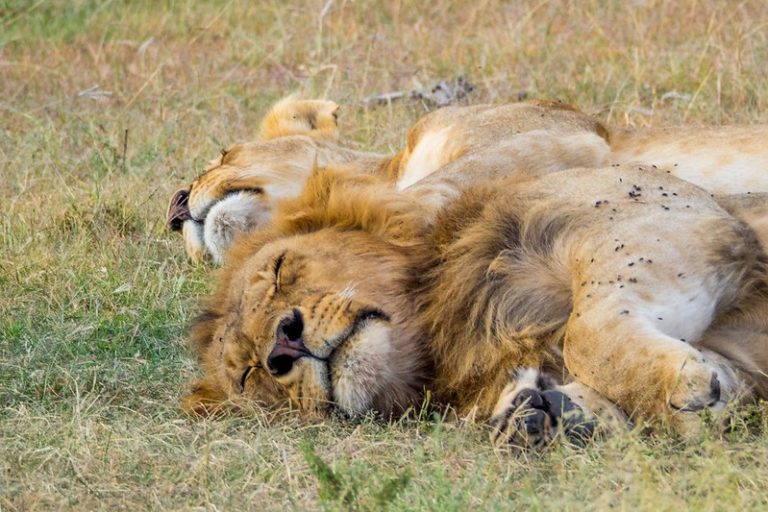
Day three is gentler. Lake Manyara National Park is small, and two or three hours covers its forest, the hippo pool and the lake edge where flamingos and pelicans feed when water levels allow. Manyara’s lions are famous for climbing trees, much like those at Ishasha in Uganda, but the tree climbing lions are an occasional bonus rather than a promise. Afterwards, a guided walk through Mto wa Mbu, a market town where dozens of ethnic groups farm bananas and rice side by side, gives a view of everyday Tanzania that a game drive never does. Manyara also has a treetop walkway, a chain of suspended bridges through the forest canopy, which suits anyone stiff from the vehicle. Then the road climbs the Rift Valley escarpment to Karatu, where farm lodges offer coffee tours and, at a few, horse rides through the highland fields.
Days 4 to 7: Two Bases on a Serengeti Safari
Four nights is what separates this route from shorter trips. A Serengeti safari of two nights shows you the central plains; four nights, split across two bases, lets you follow the herds.
Day four is mostly travel, but not wasted. From Karatu the road climbs past the crater rim, drops onto the short grass plains and passes the turning for Olduvai Gorge, where a museum explains the early human fossils found in the gorge walls. Naabi Hill Gate is three to four hours from Karatu, Seronera another hour or more, and game viewing starts long before the gate. Expect dust in the dry months and mud in the wet.
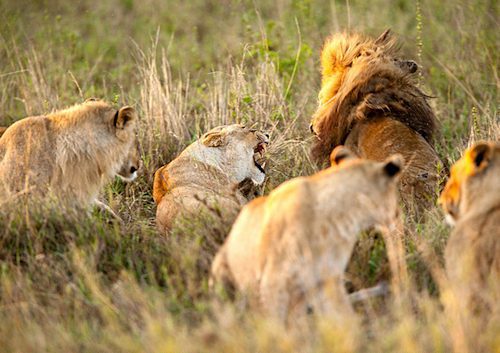
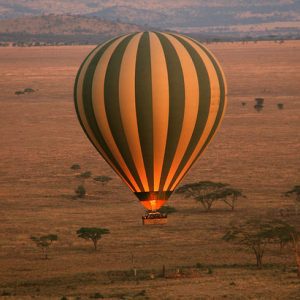
Central Serengeti is the first base. The Seronera River and its kopjes hold resident lion, leopard and cheetah through the year, and day five is a full day of morning and afternoon drives here, with a rest at camp in the heat of midday. A dawn balloon safari from Seronera is the most popular extra, an hour in the air followed by breakfast in the bush. The small visitor centre at Seronera, with a short trail and displays on the migration, fills the hot middle of the day well.
On a luxury version of this route the Serengeti leg is often flown rather than driven. Light aircraft link Arusha with airstrips at Seronera, the Western Corridor and Kogatende in the north, and a flight of an hour or two replaces most of a day on gravel. You lose the Olduvai stop and the slow drive across the plains, and you keep a full extra afternoon of game viewing.
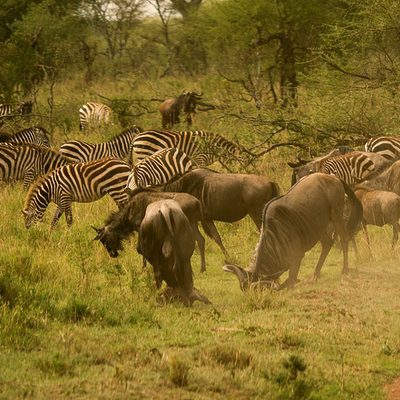
Days six and seven move you to the great wildebeest migration. From about December to March that means Ndutu in the south, where calving peaks in February. In June the herds usually mass in the Western Corridor near the Grumeti River. From July into October they reach the northern Serengeti and the Mara River crossings around Kogatende. Mobile tented camps relocate during the year to stay near the herds, and they are the easiest way to sleep close to the action.

Two warnings people often learn the hard way. River crossings are never on a schedule: herds can stand on the bank for a day or more and then turn back, so two full days in the north is the minimum worth booking. And the north is far from the crater, a drive of seven or eight hours. In crossing season many operators fly you from a northern airstrip back to Arusha on day eight instead, then do the crater on the way out of a shorter road loop or drop it. Ask which version your quote uses.
Days 8 and 9: Ngorongoro Crater Safari and the Road Back to Arusha
Day eight ends on the crater rim, high enough that evenings call for a jacket even in the hot months. That bed is chosen for one reason: the descent road opens at 6am, and rim guests are first down.
The Ngorongoro Crater safari is short and dense. The caldera floor, roughly 260 square kilometres and about 600 metres below the rim, holds wildebeest, zebra, buffalo and hippo year round, along with lion and spotted hyena, elephant bulls with very long tusks, and a small population of black rhino that keeps to the open grass. Lake Magadi, the shallow soda lake in the middle of the floor, often holds flamingos, and the Lerai fever tree forest is where elephant bulls tend to feed. Vehicles are limited to about six hours on the floor. By late morning in busy months a dozen vehicles may gather at one lion sighting, so a dawn start and a picnic at the hippo pool before the rush keeps the day calm.
From the crater gate, tarmac runs all the way back to Arusha in about four hours with a lunch stop. Sleep near Kilimanjaro airport, not in town. Tomorrow’s flight is the hinge of the whole trip, and you want to be close to it. Climbers can see our Kilimanjaro climb and safari guide.
Days 10 and 11: Flying From Kilimanjaro to Bwindi for the Gorilla Trek
Direct flights between Kilimanjaro and Entebbe run on a few days each week, and the flight takes one to two hours. Because they do not fly daily, the gorilla half of this 14 day Tanzania safari is built around the flight day, and the Tanzania half is fitted in front of it. If no direct flight suits, connections through Nairobi work at the cost of half a day.
Entebbe sits on Lake Victoria, a short drive from the airport, and a quiet night there resets everyone after nine days of early starts. The next morning a domestic flight of about one and a half to two hours carries you to Kihihi, for the Buhoma and Ruhija sectors of Bwindi, or Kisoro, for Rushaga and Nkuringo. By road the same trip takes eight to ten hours, which is why almost everyone flies. These domestic flights carry tight luggage limits, much like Tanzania’s bush planes. Our getting to Bwindi guide covers every route, including the drive from Kigali.
Which sector you trek in is set by your permit, so book the permit first and the lodge to match. Lodges in each sector sit within walking or short driving distance of the briefing point. The Bwindi lodges page lists them by area.
Days 12 to 14: Gorilla Trekking Safari in Bwindi and the Flight Home
Day twelve is the one most travellers plan the whole fortnight around. A gorilla trekking safari in Bwindi starts with a ranger briefing at the sector office around 8am. Groups of up to eight visitors are assigned to a habituated gorilla family, and trackers who left at dawn radio the family’s position. The walk in can take thirty minutes or five hours, on steep, muddy, overgrown slopes. Once you reach the gorillas you stay for one hour, at a distance of several metres, masks on, and then walk out.
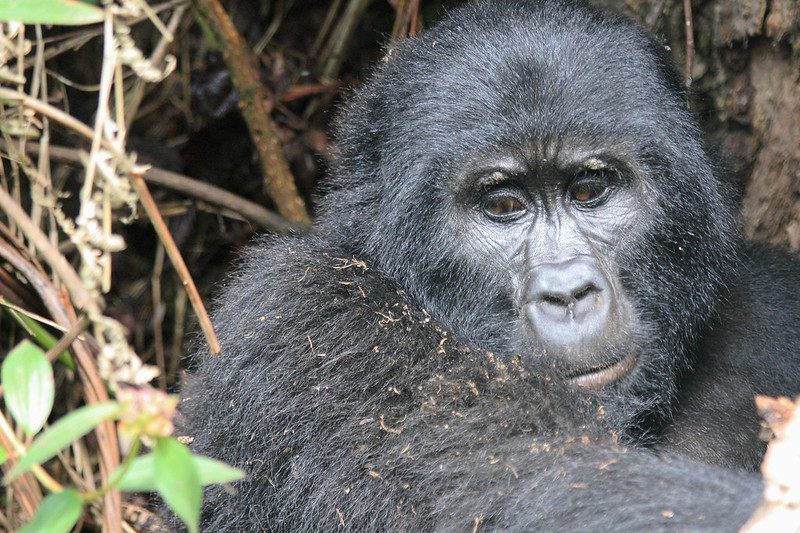
It is a very different day from a game drive, and the kit is different too: gardening gloves for nettles and thorny vines, gaiters, waterproof boots with real grip and a rain jacket. Porters can be hired at the start, and they carry your bag and give a hand on the steep sections. People who skip a porter to save money tend to regret it on the climb out. The gorilla trekking packing list goes through it item by item.
Day thirteen is the spare day, and it is what keeps this route from feeling rushed. Options include a second trek with a different family in another sector, a guided Batwa community walk run with the Batwa people, who lived in the forest before it became a park, a forest waterfall walk, or birding. Bwindi is home to almost half of the world’s mountain gorillas, with 459 counted there in the 2018 census out of a world total of 1,063. If you want longer with them, the gorilla habituation experience replaces the standard trek with about four hours alongside a family still being habituated, and permits for it are far fewer.
On day fourteen a morning flight returns you to Entebbe for an evening departure. Anyone with a cough or cold is not allowed to trek, since gorillas catch human illnesses, so the spare day also gives you one day of grace if you wake up unwell.
Matching the Serengeti and Gorilla Trekking Months
The calendars of the two countries line up well. Bwindi’s driest trekking months overlap the two best windows in the Serengeti.
| Months | Serengeti | Bwindi |
|---|---|---|
| Jun to Sep | West, then north | Dry, best trails |
| Oct to Nov | North, then south | Short rains |
| Dec to Feb | Calving at Ndutu | Dry, good |
| Mar to May | Long rains | Wettest |
June to September is the classic choice: dry trails in the forest, the Western Corridor in June and the Mara River from July. It is also the busiest time for permits, so Bwindi dates for August need booking months ahead. December to February is the quieter pairing, with calving in the south and a second dry spell in Bwindi; it suits families travelling over the school holidays.
April, May and November are wet in both places. Trails turn slippery, some Serengeti camps close, and in return Uganda offers a lower permit rate in those three months, covered in the FAQ. Rain in Bwindi falls in every month, so pack a rain jacket whatever the season. For month by month detail, see the best time to go gorilla trekking in Uganda and the best time to visit Tanzania.
Other Ways to Spend 14 Days on a Tanzania Safari
The gorilla route is one of five shapes a fortnight can take. Each of the others appears on the itineraries that rank for this trip.
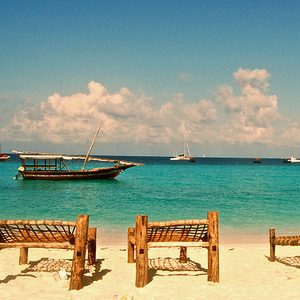
Safari plus Zanzibar. The most common plan online: eight or nine days in the north, then a flight of a little over an hour to Zanzibar for four or five nights. Split the island between Stone Town, for the old quarter, the spice farms and a boat to Prison Island, and the beach. The north coast around Nungwi and Kendwa can be swum at any tide, while the east coast lagoon drains far out at low water. Jozani Forest, home to the Zanzibar red colobus monkey, makes a good half day. The 15 day safari and Zanzibar holiday lays this version out in detail.
Two things trip people up on this version. Light aircraft into and out of the Serengeti carry a soft bag limit, so beach kit has to fit the same 15 kilogram bag as the safari layers. And a direct flight from the Serengeti to the island saves a night in Arusha, but schedules change by season, so ask whether your operator routes you direct or through Arusha.
Rwanda instead of Uganda. Fly Kilimanjaro to Kigali, drive about two and a half hours to Volcanoes National Park, trek the next morning and add golden monkey tracking on the spare day. The drive is shorter than any Bwindi transfer, but Rwanda’s permits cost much more. Our Rwanda gorilla trekking page compares the two. Our two week East Africa safari guide shows other ways to split fourteen days across the region.
The cultural route. Swap the gorillas for people. After the crater, spend a night at Lake Eyasi for an early morning out with Hadzabe hunter gatherers and a visit to Datoga blacksmiths, then two nights in a Maasai village in the Monduli hills with a family homestay, cattle herding at dawn and evenings by the fire with the elders. Finish with a homestay near Arusha that includes a cooking lesson. It suits travellers on a second safari who want time with people rather than more game drives.
Kilimanjaro and a short safari. A climb takes six to eight days on the better acclimatisation routes, so fourteen days fits one climb, a rest night in Moshi and a four or five day safari to Tarangire, the crater and the Serengeti. Our Kilimanjaro trekking guide covers the routes.
North and south by air. Ndutu, Seronera and the crater, then flights to Nyerere for boat safaris on the Rufiji and to Ruaha for walking safaris and big lion prides. The 12 day Tanzania safari sets out the north and south route day by day; two more days simply add a night to each southern camp.
For a shorter trip, the 10 day Tanzania safari covers the north on its own.
What the 14 Day Safari Package Covers, Visas and Health Rules
A quote for this 14 day safari package usually covers the private four wheel drive vehicle and driver guide in Tanzania, park, conservation area and crater fees, the gorilla permit, a driver in Uganda for transfers to the trailhead, all domestic flights, thirteen nights on full board outside the cities and airport transfers. The regional flight from Kilimanjaro to Entebbe is sometimes included and sometimes not, so check. Usual exclusions are international flights, visas, insurance, tips, drinks, laundry, porters in Bwindi and the balloon flight.
The same fortnight bends to different travellers. Honeymooners usually swap a road day for a flight and finish on Zanzibar or with a night at a lodge with a view; our Tanzania honeymoon package and gorilla trekking honeymoon pages go further. Photographers do best with a private vehicle, a beanbag for the window and the two Serengeti bases placed for light rather than comfort. Families with teenagers under 15 cannot trek gorillas, a rule that catches out plenty of parents who planned around a 13 year old, so they usually take the beach version instead.
Price depends on five things: lodge tier, season, the number of flights, how many people share the Tanzania vehicle, and whether you buy one gorilla permit or two. Use licensed operators, ask for the route and camps in writing, and compare at least three quotes. Our guides to choosing a Tanzania safari company, booking Uganda gorilla permits, the Tanzania safari cost breakdown and combining a Tanzania safari with gorilla trekking go into more detail. Our wider Tanzania safari guide covers the parks this route leaves out.

14 Day Tanzania Safari Questions
How much does a 14 day Tanzania safari cost?
Northern circuit operator prices fall into bands per person per day, two sharing, with park fees included: about US$250 to US$400 on a budget, US$450 to US$800 mid range and from about US$900 to past US$1,500 for luxury camps. Nine days in Tanzania on those bands comes to roughly US$2,250 to US$3,600 budget, US$4,050 to US$7,200 mid range and US$8,100 upward luxury. The Uganda half adds a gorilla permit at US$800 per foreign non resident, or US$600 in April, May and November, plus the Entebbe to Bwindi flights, four nights of lodging and a driver. A Zanzibar version swaps that for four or five beach nights: one UK operator’s published private fortnight of safari and Zanzibar in standard hotels starts at about £4,000 per person sharing and passes £5,500 on peak dates, with a solo traveller paying a single supplement on top. All of this excludes international flights, visas and tips, and these are market ranges rather than official rates, so ask for an itemised quote. A much cheaper quote usually means camps outside the parks, a shared vehicle, fewer full days or fees left out, so compare like for like. Our Tanzania safari cost guide builds full totals line by line.
What are the park fees and permit rules behind the price?
Tanzania National Parks charges non residents TZS 178,850 per adult per 24 hours for the Serengeti, about US$70, and TZS 127,750, about US$50, for Tarangire and Lake Manyara, with a nightly concession fee when you sleep inside a park; operators often add 18 percent VAT. With VAT, Serengeti entry comes to US$82.60 in the high season and US$70.80 from mid March to mid May. The Ngorongoro Conservation Area charges US$70.80 per adult per 24 hours, US$295 per vehicle per crater descent and US$59 per adult per night at rim lodges. In Uganda, foreign residents pay US$700 for a gorilla permit, or US$500 in the low season months, and the habituation experience costs US$1,500, with UWA announcing a rise to US$1,800 for foreign non residents from 1 January. Low season permits cannot be rescheduled, and permits are paid in full when booked. A Rwanda permit costs US$1,500.
What do visas, insurance, the balloon and tips add?
Tanzania’s tourist visa is US$50 for most nationalities and US$100 for US citizens, and Uganda’s single entry visa is US$50. The East Africa Tourist Visa costs US$100 but does not cover Tanzania. The government inbound travel insurance costs US$44 per adult for up to 92 days, and one policy covers both mainland Tanzania and Zanzibar. Shared Serengeti balloon flights are published at around US$599 to US$700. Tipping guidance is about US$20 to US$30 per vehicle per day for a Tanzania driver guide; in Bwindi, budget for your porter, the ranger team and lodge staff.
Is 14 days enough for a Tanzania safari and gorilla trekking?
Yes. Nine days covers the northern parks with four Serengeti nights, and five days allows the flights, one trek and a spare day in Bwindi. Squeezing both into ten days works, but travellers who did it often say they wished they had the extra days.
Is 14 days too long for a Tanzania safari?
Not if the days are split well. Fourteen straight days of game drives would be too much sitting for most people, which is why almost every two week plan breaks the safari at eight or nine days and moves on to something different: gorillas in Bwindi, a beach on Zanzibar, a Kilimanjaro climb or the southern parks.
Does Tanzania have gorillas?
No. Tanzania has chimpanzees at Gombe and Mahale on Lake Tanganyika, but no gorillas. Mountain gorillas live only in the Virunga volcanoes and Bwindi, which is why a Tanzania safari with gorilla trekking flies to Uganda or Rwanda for the trek. Our page on a Tanzania safari and gorilla trekking trip covers the other ways to link the two.
Is Tanzania safe for a two week safari?
The northern parks and Zanzibar are well travelled, and most problems visitors report are petty theft in towns. At the latest check the US State Department rated Tanzania at Level 2, Exercise Increased Caution. Keep valuables in the lodge safe, use the operator’s transfers after dark, and check the current advisory for Uganda or Rwanda too if gorillas are part of the plan.
How fit do I need to be for the gorilla trek?
Reasonably fit. Treks run from half an hour to most of a day on steep, muddy ground at altitude. Regular walking in the weeks before helps, a porter takes your bag, and rangers can assign slower walkers to a family that is usually closer. The minimum age is 15.
Should I do the gorillas or Zanzibar with my 14 days?
It depends on what you want from the end of the trip. Zanzibar is rest after the dust; Bwindi is another hard, early day, but a very different animal experience. Some travellers add Zanzibar after Bwindi and stretch to sixteen or seventeen days.
Can I do this route in reverse, gorillas first?
Yes, and it is common when flight days suit it. Arriving in Entebbe first means Tanzania will ask for a yellow fever certificate when you land from Uganda. Leave at least one buffer day before the trek, since a delayed international flight should never cost you the permit.
Is a 14 day safari suitable for families?
The Tanzania half suits children well with shorter drives and a lodge pool. The gorilla trek does not, because of the minimum age of 15. Families with younger children often do the Zanzibar version, or have one parent trek while the other takes the children on a forest walk or to a community project.
What should I pack for both the safari and the trek?
Neutral layers, a warm fleece for the crater rim, a hat, sunscreen, binoculars, and for Bwindi waterproof boots, gaiters, gloves and a rain jacket. Keep it to a soft bag of around 15 kilograms for the domestic flights. Our African safari packing list covers the full kit.
What currency should I bring on a 14 day safari?
US dollars are the easiest cash for tips and extras in both countries, and many places want notes printed recently and in good condition, since older and torn notes are often refused. Lodges and larger shops in Arusha and Stone Town take cards, usually with a surcharge, and cash machines give Tanzanian shillings or Ugandan shillings in the towns but not in the parks.