

To plan a Tanzania safari, settle how many days you have and which circuit fits them, then pick your month around the Great Migration, set a budget, and send one clear outline to three licensed safari companies. Lodges, bush flights, the visa and packing all follow from those choices. Most first trips cover the northern circuit of Tarangire, the Ngorongoro Crater and the Serengeti, often with Zanzibar or Kilimanjaro added.
Tanzania rewards a little order. The parks sit hours apart on long roads, the herds move through the Serengeti on a yearly loop, and the camps in the right place for calving or the river crossings fill early. So the decisions below run in sequence: route, month, money, company, beds, flights, paperwork, kit, extras. Each step has a tool or a chart where one helps, and ends with the detailed guides on this site for that decision. This site is an independent guide. It does not sell safaris; the operators you contact quote and book the trip.
Tanzania Safari Itineraries: Trip Length and Route
How long should a Tanzania safari itinerary be? Distance decides most of it. From Arusha, Tarangire is about two hours by road and the Ngorongoro Crater three to four, yet central Serengeti is around 325 kilometres and seven to eight hours away. Three days covers Tarangire and the crater. Five days is the realistic minimum for a Serengeti trip by road, and seven to ten days lets you place two or three Serengeti nights where the herds are.
Four routes cover nearly every trip. The northern circuit links Tarangire, Lake Manyara, the crater and the Serengeti, with Lake Natron or Lake Eyasi as side trips. The southern circuit means Nyerere, Ruaha and Mikumi: fewer vehicles, boat trips and walking, reached by light aircraft from Dar es Salaam or Zanzibar. Then there are the two big extras, a Kilimanjaro climb and a Zanzibar beach stay, each worth several days on its own.
Tanzania Safari Trip Builder
Pick your days, budget, month and interests. The closest itinerary on this site is highlighted in the table, with a rough daily cost range drawn from the site’s Tanzania cost guides.
Best match
6 day Tanzania safari
Fits 6 to 8 days at a mid range level, with the Great Migration and Big Five game drives.
- Daily cost
- US$340 to US$515 per person per day, two sharing, with a private vehicle and mid range lodges
- Safari days only
- US$2,040 to US$4,120 for 6 to 8 days on safari; park fees, vehicle, guide and full board included
- The herds
- Pick a month to see where the herds usually are.
- Season
- High season runs from July to October plus Christmas; late March to May is the low season.
- What it looks like
- Tarangire, Lake Manyara, two Serengeti nights and the crater at a gentler pace.
Also fits: the 7 day and 8 day safaris and the safari with gorilla trekking, all in the table below.
Next step: send this outline to three licensed operators from the safari company step and compare the quotes line by line.
Not a fit for your choices (12)
| Trip shape | Days | What it looks like |
|---|---|---|
| Ngorongoro Crater day trips and short tours | 1 to 4 | A crater day trip from Arusha or Karatu with up to about six hours on the crater floor, or an overnight on the rim with Tarangire or Lake Manyara added. |
| 3 day Tanzania safari | 3 | Tarangire, the Ngorongoro Crater and Lake Manyara, all within about two hours of each other. A fly in Serengeti version also works. |
| 4 day Tanzania safari | 4 | Tarangire and the crater plus one Serengeti night or Lake Manyara, with a version that starts from Zanzibar. |
| 5 day Tanzania safari | 5 | Tarangire, two nights in the Serengeti and the crater: the shortest trip that does the Serengeti justice by road. |
| 6 day Tanzania safari | 6 | Tarangire, Lake Manyara, two Serengeti nights and the crater at a gentler pace. |
| 7 day Tanzania safari with Lake Natron | 7 | Two nights at Lake Natron with walks, the northern Serengeti through Klein’s Gate, Seronera, the crater rim and Lake Eyasi. |
| 8 day Tanzania safari | 8 | Tarangire, three Serengeti nights, the crater and Lake Manyara, with fly in, southern parks and Zanzibar variants. |
| 9 day Tanzania safari | 9 | Three Serengeti nights placed by season: Ndutu for calving, Kogatende for the crossings or the Western Corridor in June. |
| 10 day Tanzania safari | 10 | Four Serengeti nights on the northern circuit, or a six or seven day safari followed by three nights on Zanzibar. |
| 12 day northern and southern circuit safari | 12 | Tarangire, the crater and three Serengeti nights, then a flight south to Ruaha and Nyerere for walking safaris and boat trips. |
| 14 day Tanzania safari with Bwindi gorillas | 14 | Ten days on the northern circuit, then a flight from Kilimanjaro airport to Entebbe and a gorilla trek in Bwindi. |
| 15 day Tanzania safari and Zanzibar | 15 | Tarangire with a walk or night drive, the crater rim, four Serengeti nights, then Stone Town and four beach nights on Zanzibar. |
| Tanzania safari and gorilla trekking | 7 to 14 | Usually nine to fourteen days, seven at the least: the northern parks, then a flight to Kigali or Entebbe for a gorilla trek. |
| Two week East Africa safari | 14 | Bwindi, Queen Elizabeth and Kibale in Uganda, the Masai Mara in Kenya, then the Serengeti and the crater. |
| Kilimanjaro climb and safari combined | 10 to 18 | A seven or eight day climb on the Machame or Lemosho route, then three or four days in Tarangire, the crater and the Serengeti. |
| Tanzania honeymoon safari and Zanzibar | 10 to 12 | Tarangire, two nights on the crater rim, the Serengeti, then a flight to a Zanzibar beach. |
Daily ranges come from the site’s Tanzania cost guides: published package prices per person, two sharing, including park fees, vehicle, guide and full board. Flights, tips, Kilimanjaro climbs and gorilla permits are extra. Last checked October.
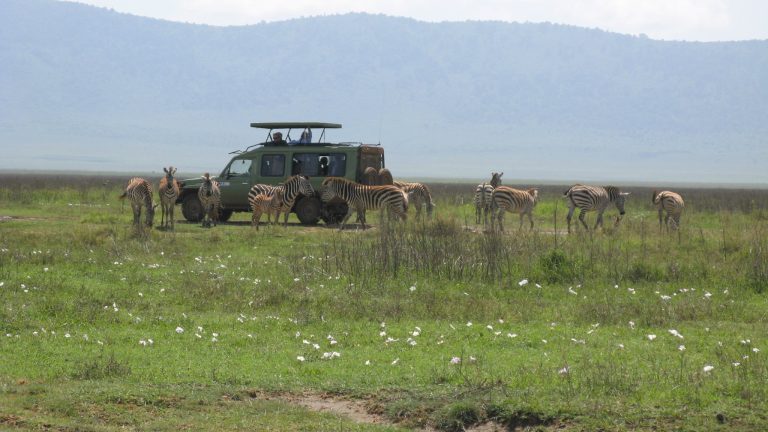
The southern circuit suits a second visit, or a first one by someone who dislikes crowds. Nyerere National Park, about 30,893 square kilometres and the largest park in the country, is known for boat trips on the Rufiji and walks of two to three hours with an armed ranger. Flights from Dar es Salaam or Zanzibar take about 45 minutes to an hour. Ruaha, further west, is drier and wilder still. Beyond them, Gombe and Mahale on the shore of Lake Tanganyika are the country’s chimpanzee parks, a specialist trip few people fold into a first safari.
A few extras between game drives belong in the plan early. A hot air balloon flight over the central or northern Serengeti lifts off before sunrise, drifts for about an hour and ends with breakfast in the bush; pickup comes before 5am and it needs booking well ahead. Maasai village visits are common around Ngorongoro and Mto wa Mbu, and a dawn walk with the Hadzabe hunter gatherers near Lake Eyasi shows a different side of the country. Both usually sit outside the package price, so ask for them by name in the quote, and book village visits through your operator or camp so the fee reaches the community.
Park and route guides for step 1
Compare Tanzania safari packages
When to Go on a Tanzania Safari: Seasons and the Migration Calendar
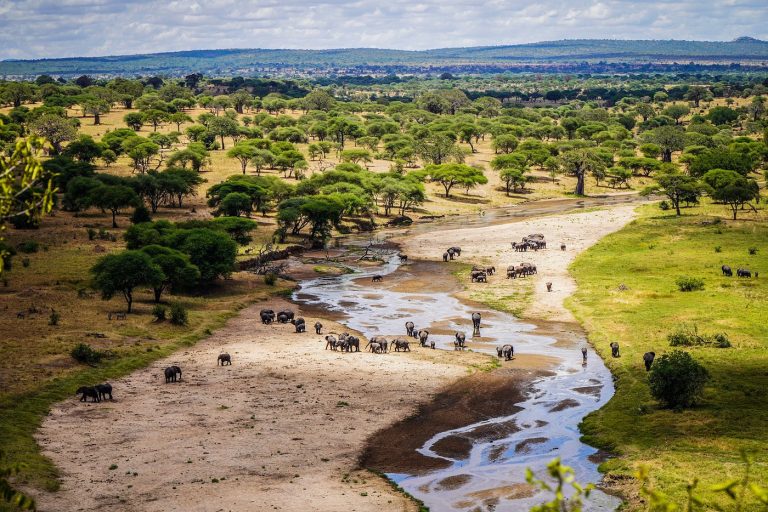
Tanzania safaris run all year, but the country has two dry spells and two wet ones. The long dry season from June to October brings thin bush, animals at the rivers and the highest prices. Late December to February is a shorter dry spell and the time of calving on the southern plains. The long rains fall from March to May, with April the wettest month almost everywhere, and the short rains arrive in November and early December.
For most first visitors the best months are August or September. Calving draws a different crowd in February. Several hundred thousand calves are born at Ndutu within two to three weeks, and lions, cheetahs and hyenas work the edges of the herds. Ndutu sits inside the Ngorongoro Conservation Area, on the short grass plains south of the Serengeti proper.
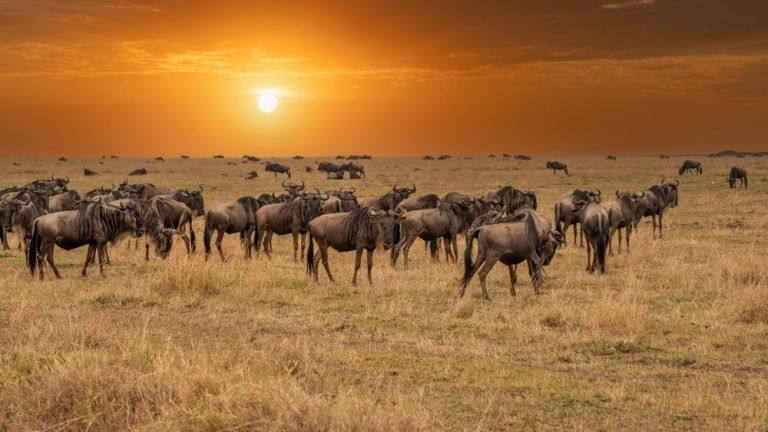
The Great Migration itself is a loop of roughly 800 to 1,000 kilometres, and the herds spend about nine months of the year in Tanzania. Planning around it means asking where the herds usually are in your month, then sleeping close to them. The planner below shows that month by month.
Great Migration Month Planner
Where the wildebeest herds usually are each month, with rain, crowds, calving and the river crossings on one strip. Pick a month for the detail and where to base yourself.
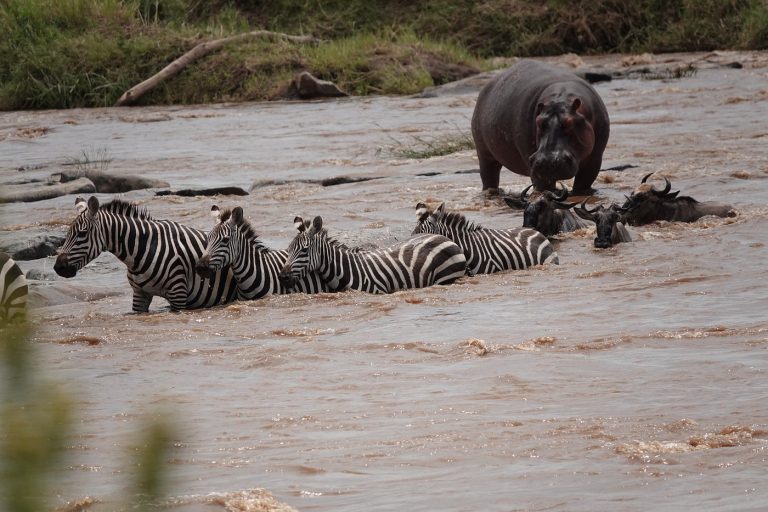
In words: calving runs from late December to March and peaks in February at Ndutu. Grumeti River crossings start in about mid June, and Mara River crossings run from July to October, most reliably from mid July to mid September. April is the wettest month and the quietest; July to September is the busiest.
The herds in February
Ndutu and the southern plains
Calving peak: several hundred thousand calves are born within two to three weeks, and predators gather around the herds.
- Rain in the north
- Low, a short dry spell
- Season
- Shoulder, but busy at Ndutu
- Book ahead
- 9 to 12 months
- Where to stay
- Ndutu and southern Serengeti camps
Month by month migration table
| Month | Where the herds usually are | What is happening | Rain | Season | Book ahead | Where to stay |
|---|---|---|---|---|---|---|
| January | Ndutu and the southern plains | Calving begins on the short grass plains, and the predators follow the herds. | Low, a short dry spell | Shoulder, busy over New Year | 6 to 12 months | Ndutu and southern Serengeti camps |
| February | Ndutu and the southern plains | Calving peak: several hundred thousand calves are born within two to three weeks, and predators gather around the herds. | Low, a short dry spell | Shoulder, but busy at Ndutu | 9 to 12 months | Ndutu and southern Serengeti camps |
| March | The southern plains | Young calves and predators on the plains while the long rains begin late in the month. | Rising | Shoulder, then low season from late March | 6 to 12 months early in the month, a few weeks late in it | Ndutu and southern Serengeti camps |
| April | Moru and Seronera, central Serengeti | The long rains peak and the herds start drifting north and west. Lodges cut rates and some southern camps close. | Highest | Low, rates cut by roughly 20 to 30 percent | A few weeks | Central Serengeti around Seronera |
| May | The central and western Serengeti | Long columns on the move, and the rut. | High, easing late | Low, rates cut by roughly 20 to 30 percent | A few weeks | Central Serengeti or the Western Corridor |
| June | The Western Corridor | Grumeti River crossings from about mid June into July, as the dry season begins. | Low | Shoulder | 6 to 12 months | Western Corridor camps near the Grumeti |
| July | The Grumeti area and the north | The front runners reach Kogatende in early July and the first Mara River crossings start. | Lowest | High | 9 to 12 months | Northern Serengeti around Kogatende |
| August | The northern Serengeti, on the Mara River | Mara River crossings, at their most reliable between mid July and mid September. | Low | High | 9 to 12 months | Northern Serengeti around Kogatende |
| September | The northern Serengeti, on the Mara River | Crossings in both directions as herds move between Tanzania and Kenya. | Low | High | 9 to 12 months | Northern Serengeti around Kogatende |
| October | The Mara River and Lobo | Late crossings, then the herds begin moving south. | Low, the short rains near | High, shoulder from late October | 6 to 12 months | Lobo or the northern Serengeti |
| November | Loliondo, Lobo and the east | The short rains green the plains and the herds head back south. | Short rains | Shoulder | A few weeks | Lobo or central Serengeti |
| December | Heading south toward Ndutu | The herds return to the short grass plains, and the first calves appear late in the month. | Short rains ending by mid December | High over Christmas and New Year | 6 to 12 months for Christmas | Central Serengeti or Ndutu |
Herd positions are typical, not fixed: the rain decides where the grass is, and the herds can run weeks early or late. Rain and crowd levels are relative, drawn from the site’s Tanzania season and migration guides. Last checked October.
Zanzibar and Kilimanjaro run on their own calendars. Zanzibar is at its best from June to October and from December to February, and April is its wettest month by a long way. On Kilimanjaro, the main climbing seasons are January to early March and June to October, with April and May the hardest months on the mountain. The southern parks are best from June to October, and many camps in Ruaha and Nyerere close in April and May.
Season and migration guides for step 2
Follow the migration month by month
Tanzania Safari Budget and Park Fees
What does a Tanzania safari cost per day? Published package prices, which include park fees, the vehicle, a guide and full board, start at about US$220 to US$460 per person per day for camping trips. Private mid range lodge safaris run about US$340 to US$515 a day, two sharing, and the price per head falls as the group grows. Luxury days rarely fall below about US$900 once the vehicle and fees are added, and the top camps run far higher.
Park fees are a large slice of any quote. They are charged per person for every 24 hours inside a park, and a night in a lodge inside the Serengeti adds a concession fee on top. TANAPA, which runs the national parks, lists its tariff in shillings and adds 18 percent VAT, so ask each operator whether VAT is included. With VAT, Serengeti and Nyerere entry is US$82.60 in the high season and US$70.80 from mid March to mid May, and Tarangire and Lake Manyara US$59 and US$53.10; the Kilimanjaro conservation fee stays at about US$82.60 all year. The Ngorongoro Conservation Area is priced in dollars and charges a separate fee for every vehicle that drives down into the crater.
Tanzania Park Fees Compared
Foreign non resident adult, per person for 24 hours, with VAT. The crater service fee is charged per vehicle for each descent, so a couple sharing a vehicle pays half each.
Add the extras that sit outside a package price. Bush flights cost a few hundred dollars per leg, with about US$277 for the Serengeti back to Arusha. Tips are usually budgeted at about US$15 to US$20 per guest per day in total. Low season, from late March to May, cuts lodge rates by roughly 20 to 30 percent, while July to October and the Christmas fortnight cost the most.
Cost guides for step 3
See the full Tanzania safari cost guide
Choosing a Tanzania Safari Company
A good Tanzania safari company matters more than any single lodge, because the guide and the vehicle shape every day. Start with the licence. Ask for the company’s tourism business licence, still widely called the TALA licence, which is renewed every year and should be displayed on its vehicles. Then check membership of the Tanzania Association of Tour Operators on TATO’s own member list. Membership is voluntary, but a TATO badge with no listing is a warning sign.
Shortlist three or four companies and ask at least three to quote the same itinerary. A useful quote names the lodges, says whether the vehicle is private or shared, and itemises park fees with VAT, the crater fee, meals, water, flights with their bag limits, transfers and what is excluded. Most operators ask a deposit of about 20 to 30 percent, and some ask up to 40 percent, with the balance some weeks before travel. Pay by card where you can and never into a personal account.
Decide early between a group and a private safari. A group or joining safari puts you in a Land Cruiser with other travellers on fixed dates, often camping, and is the cheapest way in for solo travellers. A private safari gives you the vehicle, the guide and the pace, and the price per head falls quickly once three or four people share it. Either way, ask for a 4×4 with a pop up roof and a window seat for every guest.
Walk away from pressure to pay at once, a price far below every other quote, a route that cannot be driven in the time given, or reviews that appear only on the company’s own site.
Operator guides for step 4
How to choose a Tanzania safari company
Tanzania Safari Booking Timeline: Twelve Months to One Week Out
Here is the whole Tanzania safari plan laid against the calendar. Travelling for the crossings, February calving or Christmas? Start at the top. A green season trip from late March to May can be arranged in a few weeks, though the best placed camps fill early in every month.
Tanzania Safari Booking Timeline
The order that keeps the hard to find parts, the right camps and the right month, from slipping away.
Twelve months out
Fix the month. For the Mara River crossings from July to October, calving at Ndutu in February, or Christmas, start now. Camps at Kogatende can fill a year ahead.
Nine to twelve months out
Shortlist three or four licensed companies, send each the same outline and check every licence and TATO listing before you compare prices.
Six to nine months out
Deposit paid, named lodges and fee lines confirmed in writing. Climbing Kilimanjaro from July to September or at Christmas? Book the climb now, along with international flights into Kilimanjaro or Dar es Salaam.
Three months out
Buy travel insurance that covers medical evacuation, plus Tanzania’s own inbound visitor insurance. Start hill walking if a climb is on the plan, and break in your boots.
Six to eight weeks out
Visit a travel clinic about malaria tablets, and about yellow fever if your route passes through a risk country such as Kenya or Uganda.
One month out
Apply for the eVisa, which is usually processed within ten days. Pay the balance when the operator asks for it.
Two weeks out
Print the visa, insurance papers, yellow fever card and a passport copy. Get clean, recent US dollar notes in small denominations, and weigh your soft bag against the 15 kg bush flight limit.
One week out
Reconfirm the airport pickup and any light aircraft times with your operator, and check the packing list once more.
Safari Lodges and Camps in Tanzania
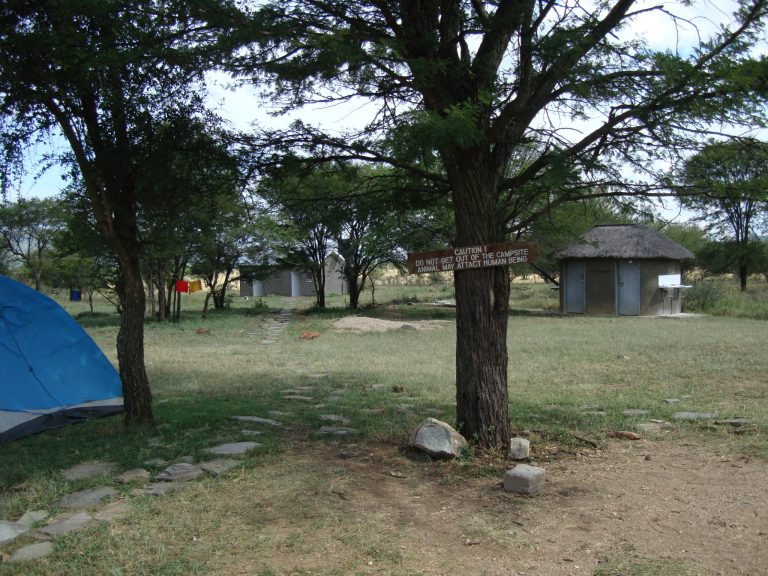
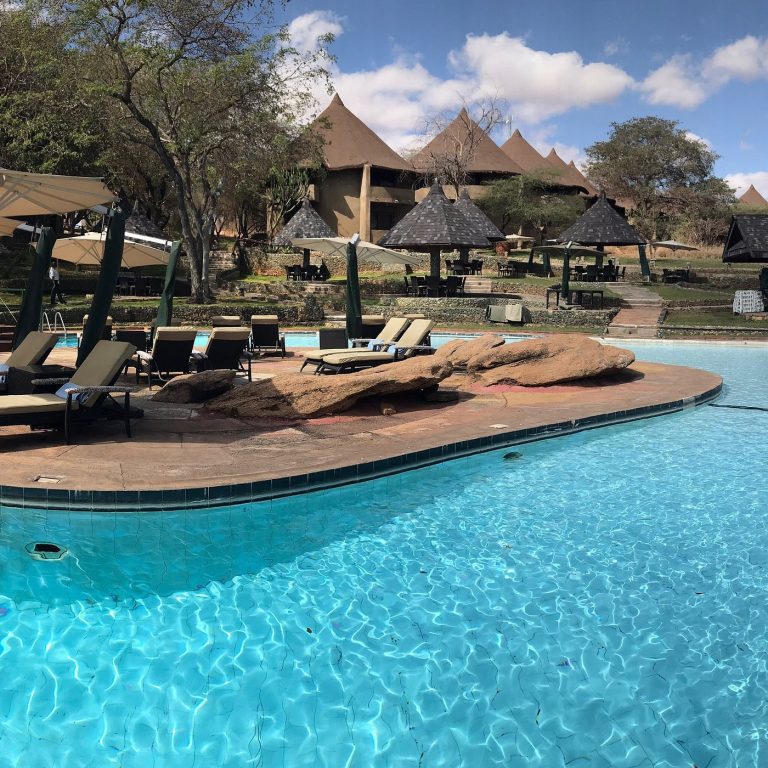
Where you sleep sets both the budget and the daily rhythm of a Tanzania safari. Budget trips use public campsites inside the parks, with dome tents and a cook. Mid range trips use permanent lodges, often in Karatu for the crater and around Seronera for the Serengeti. Higher up the scale come tented camps, some of them seasonal camps that move with the herds, sitting at Ndutu for calving and near Kogatende for the crossings.
Location beats luxury. A simple camp an hour from the herds gives you more than a grand lodge four hours away, since every hour of driving to the action is an hour lost at dawn. Sleeping on the crater rim, or in Karatu twenty to thirty minutes from the gate, lets you be at the descent road when it opens at about 6am.
Meals come with the full board rate: breakfast and dinner in camp, and on long Serengeti days a picnic box or a hot lunch at a lodge. Tell the operator about any diet when you book, because camps far from town buy supplies days in advance.
Where You Sleep on a Tanzania Safari
Each stop on a typical route, the kind of beds you will find there, and the detail that matters when you choose.
| Stop | What you sleep in | Good to know |
|---|---|---|
| Arusha | Town hotels and garden lodges for the first and last nights | About an hour from Kilimanjaro airport; there is nowhere to draw cash once you are in the parks. |
| Tarangire | Campsites, lodges and tented camps inside the park and on its edges | Best from July to October, when the river is the only reliable water. |
| Ngorongoro | Lodges in Karatu, or lodges and campsites on the crater rim | No camping or overnight stays on the crater floor; everyone is out by about 6pm. |
| Serengeti | Public campsites, permanent lodges and seasonal tented camps | Lodge and camp nights add a concession fee to the park fee. Seasonal camps follow the herds. |
| Nyerere and Ruaha | Tented camps and lodges by the rivers | Many close in April and May, a few from mid March. |
| Zanzibar | Stone Town guesthouses and hotels, beach hotels on the coast | A hotel levy of up to US$5 per person per night is paid in cash. |
Trip style guides for step 5
Getting to Tanzania for Your Safari: Airports and Bush Flights
Fly into Kilimanjaro International Airport for a northern circuit safari or a climb. It sits about 46 kilometres east of Arusha, roughly an hour’s drive, and most safaris start in Arusha the next morning. The smaller Arusha airport, just west of the city, handles domestic and light aircraft flights. For the southern parks and the coast, Dar es Salaam is the gateway, and Zanzibar has its own international airport.
Light aircraft save whole days on the road. The flight from Arusha to Seronera in the Serengeti takes about an hour, against seven to eight hours by road, and many trips drive in and fly out. Bush flights allow about 15 kg per person in a soft bag, hand luggage included. Coming overland from Kenya? The shuttle from Nairobi to Arusha via Namanga takes roughly six hours, while the Bologonja border between the Serengeti and the Masai Mara is closed to tourists.
Travel day guides for step 6
Visas, Health and Money for a Tanzania Safari
Most visitors need a Tanzania visa, applied for online through the official eVisa portal. The ordinary single entry visa costs US$50 and allows up to 90 days. United States citizens cannot take the ordinary visa and must buy the US$100 multiple entry visa, valid for a year. The East Africa Tourist Visa covers Kenya, Uganda and Rwanda only, not Tanzania, so a trip that combines them needs a separate Tanzanian visa. Passports need at least six months of validity.
Health rules are short. A yellow fever certificate is required if you arrive from a country with yellow fever risk, Kenya and Uganda included, or after an airport transit of more than 12 hours in one; it is not needed when flying in directly from the United States. Malaria is present in most safari areas all year, with a lower but real risk on Zanzibar, so ask a travel clinic about tablets. Tanzania also asks visitors to buy its inbound travel insurance, about US$44 per person for up to 92 days, and a separate policy with medical evacuation cover is still wise.
Money is mostly a cash question. Bring clean, recent US dollar notes in small denominations, since older or torn notes are refused, and keep them for tips and park extras. Cards work for many lodge bills, sometimes with a surcharge. Plugs are mostly the British Type G, at 220 to 240 volts. A local SIM bought with your passport works in the towns and parts of the parks, and most lodges have wifi in the main area.
Paperwork and health guides for step 7
Packing for a Tanzania Safari
Packing for a Tanzania safari starts with the bag, not the clothes. A soft duffel kept to about 15 kg forces sensible choices: neutral layers in khaki, olive or tan, a warm fleece for dawn drives and the cold crater rim, a sun hat and a light rain shell for the short rains. Skip dark blue and black, which draw tsetse flies. Leave camouflage at home too, because it is illegal for civilians in Tanzania.
Binoculars matter more than a long lens. One pair per person keeps the vehicle peaceful when a leopard appears in a tree. Add a headlamp for camp, a portable battery for vehicles without charging, and dust protection for the camera.
Gear guides for step 8
Tanzania Safari Add Ons: Zanzibar, Kilimanjaro and Gorilla Trekking
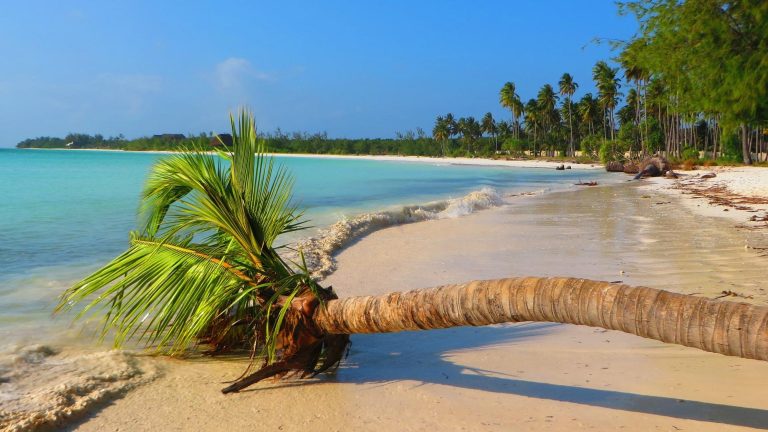
A Zanzibar beach stay is the most popular extension. Arusha to Zanzibar takes about an hour by air, and some flights leave straight from Serengeti airstrips, so the safari can end on the coast without a night back in Arusha. Three or four nights covers Stone Town and a beach.
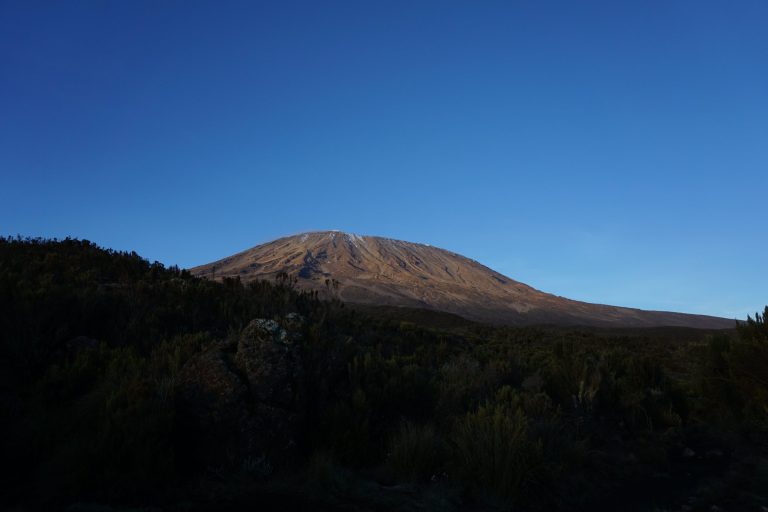
Climbing Kilimanjaro is a trip in its own right. Uhuru Peak stands at 5,895 metres, there are seven official routes, and a climb takes five to nine days, with seven or eight recommended. The eight day Lemosho or seven day Machame suits most first climbers, and the minimum age for a summit attempt is 10. Climbs start in Moshi or Arusha, so pairing a climb with a safari needs ten to fourteen days in all.
Gorillas are the other big pairing. Mountain gorillas do not live in Tanzania, but flights from Kilimanjaro airport to Entebbe or Kigali take one to two hours and run a few times a week. A safari followed by gorilla trekking in Uganda in Bwindi, or a trek in Rwanda’s Volcanoes National Park, works well in nine to fourteen days. Gorilla trekkers must be 15 or older, and a permit should be secured before anything else is booked. For the Uganda side, the site’s gorilla safari planning guide walks through permits, sectors and lodges.
Add on guides for step 9
Read the Kilimanjaro trekking guide
Responsible Safari Travel in Tanzania
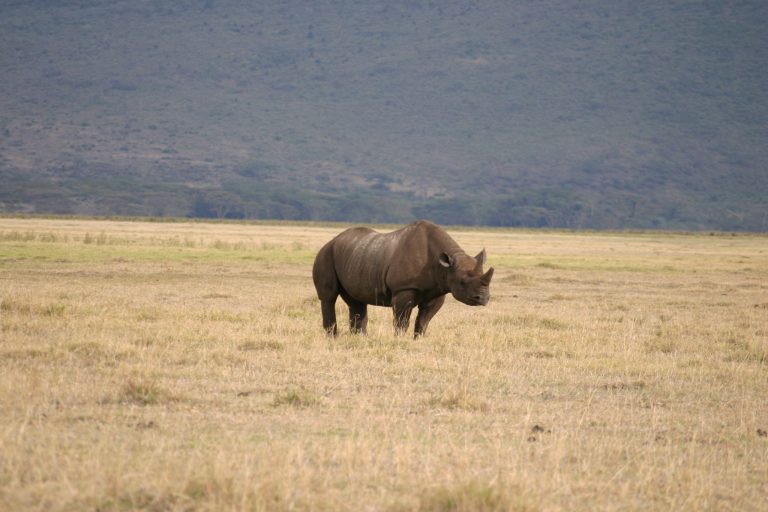
Good habits on a Tanzania safari are mostly about the vehicle. In the Ngorongoro Crater, drivers keep to the tracks, hold to 25 kilometres per hour and leave the floor by about 6pm; nobody walks or camps there and there are no night drives. Elsewhere, ask your guide to keep a fair distance at sightings and to back off when an animal changes its behaviour. A crowd of vehicles around one cheetah ruins the hunt for her and the view for everyone.
Carry a refillable bottle, since lodges and most vehicles have filtered water. Ask before photographing people, including Maasai herders and villagers on the road. On Kilimanjaro, choose a company that treats its porters fairly; the Kilimanjaro Porters Assistance Project, now part of KRTO, lists partner companies, and porter loads have a set ceiling. Tip guides and staff directly, in cash, and buy crafts from the people who make them.
Tanzania Safari Planning FAQ
How many days do you need for a Tanzania safari?
Five days is the realistic minimum for a road safari that includes the Serengeti, because the drive from Arusha takes seven to eight hours. Seven to ten days lets you add Tarangire and the crater at an easy pace and spend two or three nights where the herds are. Three days covers Tarangire and the Ngorongoro Crater only.
What is the best month for a Tanzania safari?
August or September suit most first visitors, with dry weather, thin bush and the Mara River crossings in the northern Serengeti. February is the month for calving at Ndutu. Late March to May is the cheapest time, with lodge rates cut by roughly 20 to 30 percent, at the cost of heavy rain and some closed camps.
How much does a 7 day Tanzania safari cost?
Using the site’s daily ranges, a week costs roughly US$2,400 to US$3,600 per person on a private mid range lodge safari, two sharing, with park fees, vehicle, guide and full board included. Camping trips start lower, and luxury weeks run from about US$5,000 to over US$18,000. Add flights, tips of about US$15 to US$20 per guest per day, and the visa.
Should I book a Tanzania safari directly with a local operator?
Many travellers do, and it is usually cheaper than booking through an overseas agent. Check the tourism business licence and the TATO listing, get at least three quotes for the same route, and pay the deposit by card rather than into a personal account.
Is a Tanzania safari suitable for children?
Yes, with pacing. Long drive days are the main problem, so families often fly one leg and stay two nights in each place. Children aged 5 to 15 pay lower park fees and under 5s go free. Walking safaris and Kilimanjaro have minimum ages, commonly 12 or 16 for walks and 10 for a summit attempt.
Can I combine a Tanzania safari with gorilla trekking?
Yes. Fly from Kilimanjaro airport to Entebbe or Kigali in one to two hours, then trek in Bwindi or Volcanoes National Park. Allow nine to fourteen days in total and secure the gorilla permit first.
Do I need a yellow fever vaccination for Tanzania?
Only if you arrive from a country with yellow fever risk, such as Kenya or Uganda, or after an airport transit of more than 12 hours in one. Direct arrivals from the United States or Europe do not need it. Malaria tablets are advised for most safari areas.
Can you wear red or white on a Tanzania safari?
Yes, nothing bans either, and the Maasai you pass near the crater wear red shuka cloths every day. White is the impractical choice: dust in a pop up roof vehicle turns it grey within an hour, and bright colours stand out to animals on a walk. Khaki, olive and tan work best, dark blue and black draw tsetse flies, and camouflage is illegal for civilians in Tanzania.
How do you go to the bathroom on a Tanzania safari?
Lodges and tented camps have their own bathrooms, mostly with flush toilets, and public campsites have shared blocks. On game drives the guide stops at a picnic site, a gate or a lodge with toilets, or at a safe open spot after checking it, and gives you privacy. Carry tissues, hand sanitiser and a small bag to carry waste out.
What do people wish they knew before a Tanzania safari?
Mostly the distances and the early starts. The drive from Arusha to central Serengeti takes seven to eight hours, so a short trip spends much of its time on the road unless one leg flies. Park fees run per 24 hours, mornings on the crater rim are cold, dust gets into everything, and bush flights hold you to a 15 kg soft bag. Bring clean, recent US dollar notes for tips, one pair of binoculars per person, and accept that no sighting is ever guaranteed.
Is it safe to go on safari in Tanzania?
The northern and southern safari circuits are well travelled, and the main risks are road accidents on long drives and ordinary theft in towns. Follow your guide’s instructions at sightings, stay in the vehicle unless told otherwise, and keep valuables out of sight in Arusha and Stone Town. Americans should read the State Department advisory for Tanzania before booking and again before flying, since its level has moved with protests around elections, and keep away from demonstrations in towns.