
Gorilla trekking at a glance
Best Gorilla Safari Tour Companies in Uganda and Rwanda
Among the best gorilla trekking companies in Rwanda and Uganda:
Book your gorilla watching experience with these safari tour operators in Uganda and Rwanda. The first test is whether a company can secure a permit for your dates; price and recent reviews come after that.
How to check a gorilla tour operator. Start with membership. Uganda gorilla permits are sold to licensed tour operators, so ask which company will buy yours and look for its name on the member list of the Association of Uganda Tour Operators (AUTO). Then ask for its Uganda Tourism Board licence number. A registered company gives it without fuss.
Ask for the permit to be bought in your own name and passport number, and for a scan of it once UWA issues it. Permits held under someone else’s name sit behind most gorilla booking scams.
A clear quote says what is in it: the permit, each lodge by name and board basis, the vehicle and driver guide, park entry, transfers and any flights. It also says what is not, usually tips, porters, visas, drinks and insurance. Get the deposit, the balance date and the refund terms in writing, and check that those terms follow UWA’s own permit rules, since an operator can only hand back what UWA refunds. Then read recent reviews on independent sites, newest first, and look at how the company answers complaints.
Gorilla Trekking in Uganda: Where the Mountain Gorillas Live
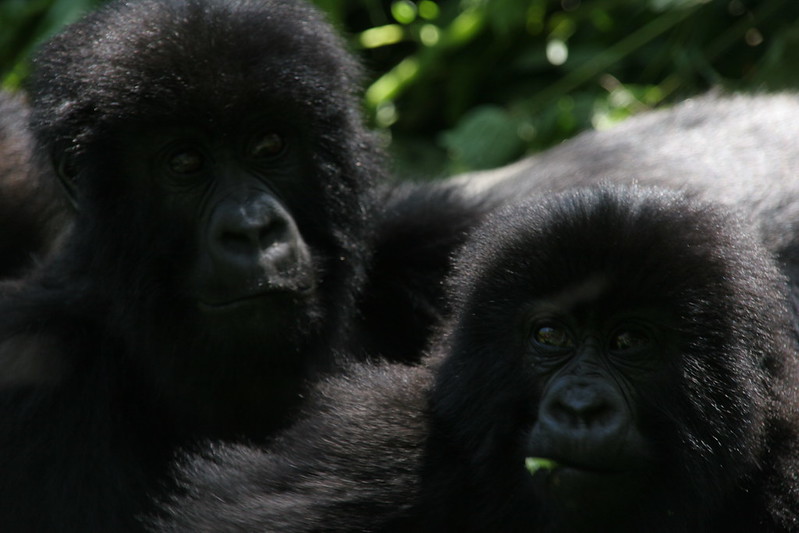
Wild mountain gorillas live in only two forest blocks on earth, and you can visit them in both. One is Bwindi Impenetrable Forest in southwest Uganda. The other is the Virunga Massif, a chain of volcanoes shared by Uganda (Mgahinga), Rwanda (Volcanoes National Park) and the DR Congo (Virunga National Park). Uganda is the only country with a foot in both, which is why a Uganda gorilla safari offers more trailheads and more gorilla families than anywhere else. Our page on where to see gorillas in Africa covers the lowland species further west too.
The last full counts put the world total at 1,063 mountain gorillas, and the 2018 Bwindi census counted 459 in Bwindi alone. Add Mgahinga’s share of the Virunga population and Uganda holds close to half of every mountain gorilla alive. A newer census has been carried out across the range; its results are still awaited.
Lowland gorillas are a separate animal and a separate trip. Eastern lowland (Grauer’s) gorillas live in Kahuzi Biega in the DR Congo, and western lowland gorillas in the Republic of Congo, where Odzala Kokoua National Park runs tracking trips, Gabon and the Central African Republic. They are smaller, browner and far more numerous. People ask about Kenya and Tanzania often, so plainly: there are no wild gorillas in Kenya, Tanzania or South Africa. Those countries pair well with a gorilla trek, though, and plenty of safaris combine the Masai Mara or Serengeti with Bwindi.
Bwindi Impenetrable Forest Gorilla Trekking
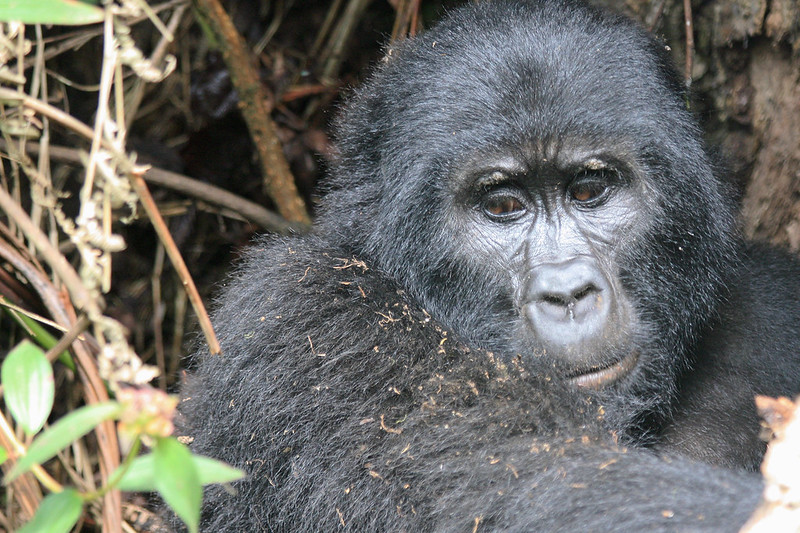
Bwindi gorilla trekking is what most people mean when they talk about seeing gorillas in Uganda. The park covers about 321 square kilometres of steep ridges and valleys between 1,160 and 2,607 metres, and it became a UNESCO World Heritage Site in 1994. No park in Africa has more habituated gorilla families: around twenty are open to visitors, which gives Bwindi about 150 to 160 trekking places a day, eight per family.
The trek is harder than in Rwanda. Trails drop into valleys and climb back out, often off path, through tangled growth that rangers cut as they go. Visibility can shrink to a few metres. Then the vegetation opens and the family is sitting there, feeding.
Bwindi is more than gorillas. Chimpanzees, black and white colobus, L’Hoest’s monkeys, forest elephants and about 350 bird species share the forest, so the walk in is rarely quiet. Birders come for the Albertine Rift endemics that live nowhere else in Uganda.
Bwindi Sectors and Gorilla Families
Bwindi trekking is split across four trailhead sectors, and choosing between them is the decision first time visitors most often get wrong. Your permit is issued for one sector, and switching later is hard. The sectors sit hours apart by road, so the lodge has to be in the same sector as the permit or you face a predawn drive on trek morning.
Buhoma gorilla trekking is the usual pick for a first trek on a classic Uganda circuit that also takes in Queen Elizabeth. Rushaga makes sense if you are arriving from Kigali or need the best chance of a permit on a busy date. New families are habituated and opened every few years, so ask your operator which are bookable for your month. Our sector guides cover Rushaga gorilla trekking and the other three in more depth. For the high eastern trails see Ruhija gorilla trekking, and for the steep southwest see Nkuringo gorilla trekking.
Mgahinga Gorilla Trekking in the Virunga Volcanoes
Mgahinga Gorilla National Park is Uganda’s second site for tracking gorillas, a small park on the slopes of three Virunga volcanoes: Muhavura (4,127 m), Gahinga (3,474 m) and Sabyinyo (3,645 m). Its bookable family is the Nyakagezi group, which once wandered across the borders into Rwanda and Congo but has stayed on the Ugandan side for years now.
The setting is different from Bwindi: bamboo and open montane forest instead of a dark, dense canopy, which often means better light for photos. Only eight people trek here a day. Mgahinga suits travellers who want a quieter gorilla day with golden monkey tracking and the Batwa trail on the same trip, and its gate is a short drive from Kisoro town. See our guide to Mgahinga gorilla trekking for routes and lodges, and our comparison of Bwindi and Mgahinga sets the two parks side by side.
Getting to Bwindi for Gorilla Trekking: Routes and Transfer Costs
Getting to Bwindi for a gorilla trek takes longer than most people expect, and the sector on your permit decides the best route in. There are three ways to do it.
By road from Entebbe or Kampala. The drive to Buhoma or Ruhija takes about 8 to 10 hours, and the southern sectors are further still. Most trips break it with a night near Kibale, Queen Elizabeth or Lake Mburo, which turns a long transfer into part of the safari. A 4×4 with a driver costs about US$120 to US$150 a day. Our page on car hire and gorilla trekking covers self drive and fuel, and the guide to gorilla trekking from Entebbe compares the routes.
By air. Scheduled light aircraft fly from Entebbe in a little over an hour to Kihihi, the airstrip for Buhoma and, with a longer transfer, Ruhija, and to Kisoro, the airstrip for Rushaga, Nkuringo and Mgahinga. A lodge or operator vehicle meets the plane for a one to two hour drive.
Seats cost roughly US$300 to US$600 each way. Baggage is tightly limited, so pack a soft bag. Our Uganda fly in gorilla safari guide has schedules and sample trips.
From Kigali. Rwanda’s capital sits about four to five hours by road from Rushaga and Nkuringo, crossing at Cyanika or Katuna. It is the quickest way into southern Bwindi and Mgahinga, and the East Africa Tourist Visa covers both countries. Borders and timings are on our page about gorilla trekking in Uganda from Kigali.
Match the route to the sector. Buhoma suits the Kihihi flight or the northern road through Rukungiri; Ruhija, the road through Kabale; Rushaga, Nkuringo and Mgahinga, a flight to Kisoro or the drive from Kigali. Distances and road conditions for every option are in our guide on how to get to Bwindi.
Best Time for Gorilla Trekking in Uganda
You can see the gorillas in Uganda in any month, because they stay in the same forest whatever the weather. The real question is how wet you are willing to get. Bwindi mornings sit around 11C and afternoons around 23C through the year; what changes is the rain.
A rainforest is never fully dry. Even in July you can get a shower, and in April a clear morning. If budget matters more than dry boots, April, May and November are the months to look at; one traveller’s muddy November trek is another’s quiet one. The month by month detail is in our guide to the best time to go gorilla trekking in Uganda.
Gorilla Safari Lodges in Bwindi and Mgahinga: Prices by Tier
Where you stay on a gorilla trek depends on two things: your budget and your permit’s sector. Every Bwindi sector has lodges at each level, though Buhoma and Rushaga have the widest choice.
At the top end, Clouds Mountain Gorilla Lodge in Nkuringo, Gorilla Forest Camp in Buhoma and Mahogany Springs offer full board with views into the forest. For a comfortable midrange stay, look at Gorilla Heights Lodge, Gorilla Safari Lodge or Lake Mulehe Gorilla Lodge. Budget travellers use Bwindi Backpackers Lodge, Gorilla Valley Lodge, the Buhoma Community Rest Camp and the CTPH Gorilla Conservation Camp, where money goes back into gorilla health work. Several trip reports point out that a simple community lodge gives you the same gorilla hour as the most expensive one.
Lodge prices by tier. These are rough nightly ranges from current operator listings. Some lodges price the room and others charge per person sharing on full board, and many drop their rates in April, May and November.
| Tier | Per night | Example lodges |
|---|---|---|
| Budget | US$40 to US$150 | Bwindi Backpackers, Gorilla Valley |
| Midrange | US$150 to US$400 | Gorilla Safari Lodge, Lake Mulehe |
| Luxury | US$450 to US$1,500 and up | Gorilla Forest Camp, Clouds |
Near Mgahinga, Mount Gahinga Lodge has balconies facing the volcanoes, and Kisoro town has cheaper hotels. Rwanda’s options run from simple hotels in Musanze to some of Africa’s priciest lodges. Browse our Bwindi lodges guide to compare by sector and budget, and our page on luxury gorilla trekking in Rwanda and Uganda for the top tier.
How Much Does a Gorilla Safari Cost?
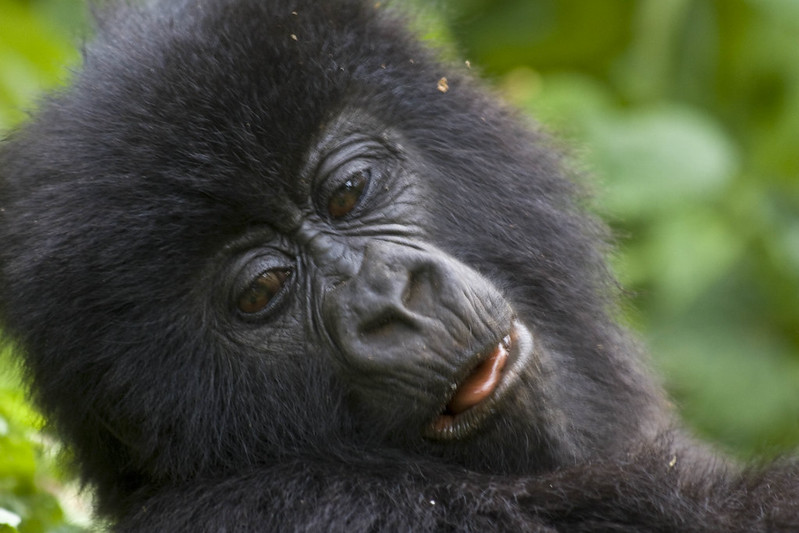
1 Day Gorilla Trekking Uganda from US$950
2 Days Gorilla Safari from Kigali from US$1,350
3 Day Gorilla Tour by Road from US$1,250
Various tour operators will give you quotes, and group size moves them a lot. The cheapest gorilla safari is a one day trip from Kigali or Kisoro, from about US$950 per person for two sharing. A three day road trip from Entebbe runs about US$1,250 to US$1,400 on a budget and US$1,500 to US$2,100 at midrange lodges, permit included; two day trips start from Kigali instead, which is why they can cost more than a budget three day trip by road.
Super luxury packages cost between $4,000 and $6,000 per person. Booking during the low season can reduce costs. See our guides to Rwanda gorilla trekking and Congo gorilla safaris.
A gorilla permit in Uganda costs $800 (US$600 in April, May and November). It pays for park entry, one hour with the gorillas, the advance trackers and the ranger guides, and part of every permit funds conservation and the communities around the parks through UWA’s revenue sharing scheme.
Other trekking costs. Plan for these on top of the permit. Figures are typical quotes at the latest check, so confirm them with your operator.
| Cost | Typical amount |
|---|---|
| Food and drinks | about $40 per day (most tour operators include meals) |
| International air ticket | roughly $500 to $2,400 return, depending on where you fly from |
| Chartered or domestic flight to the trekking area | about $300 to $600 one way |
| Car hire with driver | about US$120 to US$150 per day |
| Visa | Uganda single entry $50, or the East Africa Tourist Visa at $100, which covers Uganda, Rwanda and Kenya (not Tanzania) |
| Porter | about $15 to $20 per trek, plus a tip |
| Sedan chair, for trekkers who cannot walk the trail | about $300 to $500, booked ahead |
| Packing items | insect repellent, sunscreen, rain jacket and similar |
Tipping on a gorilla trek. Tips are expected, and they are paid in cash at the end of the day. Porters charge about US$15 to US$20 for the trek, and most trekkers add US$5 to US$10. Groups usually pool a tip for the ranger guide, around US$20 to US$30, plus US$10 to US$15 for the trackers who found the family. Driver guides commonly get US$10 to US$20 per person a day, handed over at the end of the trip.
Carry small, clean US dollar notes from recent series, since older or torn notes are often refused, or Uganda shillings changed in Entebbe or Kampala. Cash machines are scarce near the trailheads.
Tips on cutting costs. Don’t travel alone: share vehicle and guide costs with a group. Stay in budget lodges. Choose Uganda over Rwanda, where permits cost less. Avoid chartered flights and drive instead.
Book during the low season, when Uganda’s permits drop to $600 in April, May and November. Our guide to budget gorilla trekking in Uganda has more ways to save.
Gorilla Trekking Permits in Uganda and Rwanda: Prices, Booking and Refunds

In Uganda you trek in Bwindi Impenetrable National Park or Mgahinga National Park. Mgahinga has only one bookable family, Nyakagezi, so most permits are for Bwindi. Bwindi sells about 150 to 160 permits a day across its four sectors, with only 8 people allowed per gorilla family.
Gorilla permit prices. These are the rates at the latest check.
| Permit | Price |
|---|---|
| Uganda gorilla permit | $800 for foreign non residents (1 hour with the gorillas); $600 in the April, May and November low season |
| Uganda gorilla habituation permit | $1,500 (up to four hours with a family in Rushaga), rising to $1,800 for foreign non residents and $1,600 for foreign residents from 1 January |
| Rwanda gorilla permit | $1,500, or $1,050 from November to May with qualifying nights in Nyungwe or Akagera |
| Congo gorilla permit | Virunga gorilla treks are closed until further notice at the latest check; the last published fee was about $400 |
| Foreign residents (Uganda) | $700, or $500 in the low season |
| East African citizens (Uganda) | UGX 300,000 |
Every trekker needs a gorilla permit from the Uganda Wildlife Authority (UWA). Each permit covers a single trek on a single date, in one sector, with one family. UWA now takes full payment at booking, since the old seven day reservation hold was suspended, and the discounted low season permits are tied to fixed dates that cannot be moved. Uganda gorilla permits are booked through a licensed tour operator that is a recognised member of the Association of Uganda Tour Operators (AUTO), which buys the permit from UWA in your name and passport number. The rule covers every visitor, foreign residents and East African citizens included: nobody books directly with UWA.
An operator that buys only the permit for you may add a service fee on top. When the permit is part of a full tour, most operators waive that service fee.
Supply is tight. Each family takes eight people a day, so a sector with four families has 32 places, and the busy months sell out well ahead, which is why most people book permits before flights. Our page on booking Uganda gorilla permits walks through the process and refund rules. The permit is only one line of the bill: our gorilla trekking cost guide adds up the whole trip, from lodges and transport to porters and tips.
What the gorilla permit includes. The permit covers park entry for the trek day, the ranger guides and armed escort, the advance trackers, your hour with the family and UWA’s community contribution. Porters, tips, transport, lodges, visas and bank charges sit outside it. Each permit carries the trekker’s name and passport number, and rangers check it against the passport at the briefing.
Cancellation and refunds. Permit money goes to UWA, so refunds follow UWA’s rules, not the operator’s, and the date UWA receives a written request counts as the cancellation date. On a fully paid permit, UWA refunds on this scale:
| Notice before the trek | Refund |
|---|---|
| 61 days or more | 75 percent, less bank charges |
| 46 to 60 days | 50 percent |
| 15 to 45 days | 25 percent |
| 14 days or fewer | No refund |
A few cases sit outside the scale, at UWA’s discretion. A trekker who falls ill in the park before tracking can get 50 percent back with a medical report. If a group tracks all day and never finds the family, which is rare, UWA may move the permit to the next day or refund 60 percent.
Rescheduling is often the better move: the first change is free, subject to space, and a second costs 25 percent of the permit. Low season permits cannot be rescheduled at all, and a rescheduled permit can no longer be refunded. The full rules, with a checker, are in our guide to Uganda gorilla permit refunds and rules.
Rwanda works differently. The Rwanda Development Board sells permits online or through licensed operators, families are assigned on the morning of the trek, and a discounted low season offer runs from November to May for travellers who add qualifying nights in Akagera or Nyungwe. Our page on Rwanda gorilla permits covers the rules. The calculator below compares permit costs for your group in both countries by trek month.
Gorilla Trek Cost Calculator
Compare gorilla permit costs in Uganda and Rwanda for your group and trek month.
Uganda’s permits cost USD 1,400 less for your group in July.
Uganda: Bwindi or Mgahinga
- Your group
- USD 1,600
- Per person
- USD 800
Standard permit, one hour with the family.
Rwanda: Volcanoes National Park
- Your group
- USD 3,000
- Per person
- USD 1,500
Standard permit; the low season offer runs November to May only.
Permit rates for every season
| Permit | Per person | When |
|---|---|---|
| Uganda standard | USD 800 | All year |
| Uganda low season | USD 600 | April, May, November |
| Uganda habituation | USD 1,500 | All year, Rushaga sector |
| Rwanda standard | USD 1,500 | All year |
| Rwanda low season offer | USD 1,050 | November to May, with an Akagera or Nyungwe stay |
Indicative rates for foreign nonresidents; residents and African nationals pay less. Uganda low season permits cannot be rescheduled. The habituation permit rises to USD 1,800 for foreign nonresidents from 1 January. Lodges, transport, guiding and porters are extra. Last checked October.
Sources: Uganda Wildlife Authority conservation tariff and letter TDO 93/04, Rwanda Development Board and Irembo booking portal.
Most visitors use a gorilla safari operator, who holds the permit, matches the lodge to the sector and handles the long transfers. Choose on licensing, recent reviews and how clearly they answer questions, not on price alone. Operators running gorilla trekking tours in Uganda and Rwanda include Insight Safari Holidays, Wild Whispers Africa, Kori Safaris and Tranquil Safaris. Our list of gorilla safari companies has more.
The classic mistake when booking alone is a permit in one sector and a lodge in another. A good operator catches that before you pay.
A Uganda Gorilla Trek Day From Briefing to the Final Hour
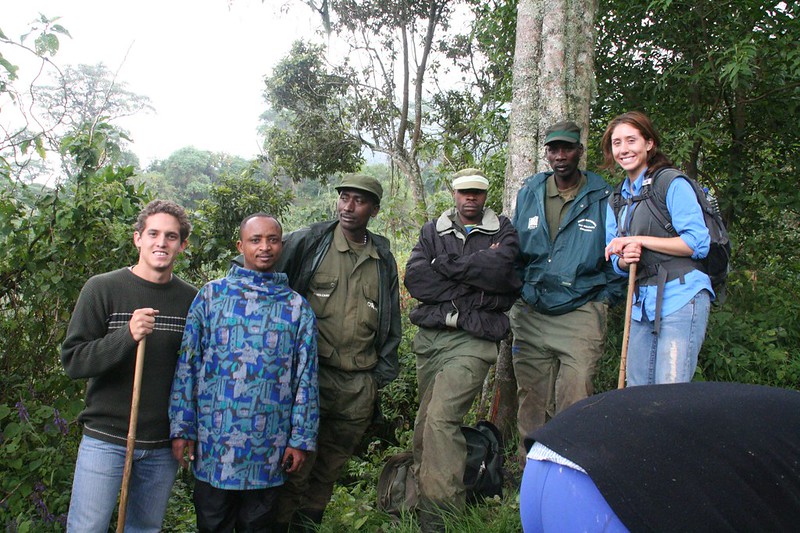
The day starts early. Be at your sector’s briefing point by about 7:30am with your passport and permit, after breakfast and with a packed lunch from the lodge. Some sectors open with a song and dance from local community groups. Rangers then run through the rules, hand out walking sticks and split visitors into groups of up to eight, one group per gorilla family.
Every family on the list is habituated. For two to three years researchers and rangers visited it daily until it accepted people nearby without fear or aggression, and it now receives a single group of trekkers a day. By then the trackers are already out. They start from where the family built its nests the night before and radio the guide with its position. That is why sightings are so reliable, though nobody can promise one: gorillas move, and some days they move a long way.
The walk might take twenty minutes. It might take most of the day. It depends on the family, the terrain and luck, and two groups leaving the same briefing can have completely different days. Armed rangers walk at the front and back. Most trekkers say the hard part is footing rather than distance: wet clay, roots and slopes where a hand on a vine is the only thing keeping you upright.
Close to the family, you leave bags and sticks with the porters and walk the last stretch with a camera. Then the clock starts on your hour. You might watch a silverback strip wild celery a few metres away, juveniles wrestling in a tree, a mother nursing. The hour goes far faster than anyone expects, and many trekkers say they wish they had put the camera down for ten minutes of it.
Photographing the gorillas. Flash is banned and the forest is dim, so light is the problem, not distance. Gorillas often sit within a few metres, and even at the ten metre limit a lens of around 200 mm is plenty; on a phone, skip the digital zoom. Raise the ISO, open the aperture wide and brace against a tree.
Video is allowed. Leaves fool autofocus, so set a single focus point and put it on the eyes. Rain arrives fast, which is why a camera cover or dry bag and a spare lens cloth belong in the pack. And put the camera down for a few minutes of the hour. Our guide to gorilla trekking photography covers lenses and settings.
After the walk out, rangers hand over trekking certificates at headquarters. Afternoons are free for a community walk in Buhoma or a visit with the Batwa, the forest’s former inhabitants.
How Difficult Is Gorilla Trekking in Uganda: Fitness, Porters and Sedan Chairs
Gorilla trekking in Uganda is a moderate to strenuous hike, and how hard it feels depends on the day. Bwindi’s trails run between roughly 1,200 and 2,600 metres, with most of the park above 2,000 metres, over slopes that are steep and slippery after rain. A short trek is thirty minutes. A long one runs six hours or more, round trip.
You do not need to be an athlete. People in their sixties and seventies trek every week. Tell the rangers at the briefing, or better your operator in advance, if you need a nearer family; in Uganda families are tied to your sector permit, so the request matters most when the permit is bought. Walking a few hours on hills in the weeks before helps more than any gym routine.
Hire a porter. Even with a light pack, a porter gives you a steadying hand on the descents, and the work goes to people from the villages around the park, some of them former poachers. Plenty of trekkers skip one and regret it two hours in. For visitors who cannot walk the trail, a sedan chair carried by a team of porters can be booked ahead. Our pages on trekking difficulty and fitness and gorilla trekking for travellers with special needs go into more detail.
The checker below shows whether a trek is open to your group and which park, family and support options suit you.
Gorilla Trek Readiness Checker
Check whether a gorilla trek is open to your group and which park, family and support options suit you.
Can trek
A standard gorilla trek suits your group
Ask at the briefing for a family that usually stays closer, and hire a porter for the steep sections.
Volcanoes and Mgahinga often have shorter, more open walks than Bwindi.
Guidance for every situation
| Situation | What it means for you |
|---|---|
| Anyone under 15 | Not permitted to trek in Uganda or Rwanda; plan another activity for younger children |
| Regular hiker | Any park and any family; consider Bwindi or the habituation experience |
| Moderately active | Ask for a closer family, hire a porter, consider Volcanoes or Mgahinga |
| Limited mobility | Book a sedan chair carried by porters in Bwindi or Volcanoes, months ahead with the permit |
| Wants more than one hour | The habituation experience in Bwindi’s Rushaga sector gives up to four hours, groups of four |
| Cold, flu or other illness on trek day | You cannot trek; rangers can turn sick visitors away to protect the gorillas |
General guidance only; park staff make the final decision on the day. Last checked October.
Sources: Uganda Wildlife Authority trekking rules and conservation tariff, Rwanda Development Board.
Gorilla Trekking Rules in Uganda and Rwanda
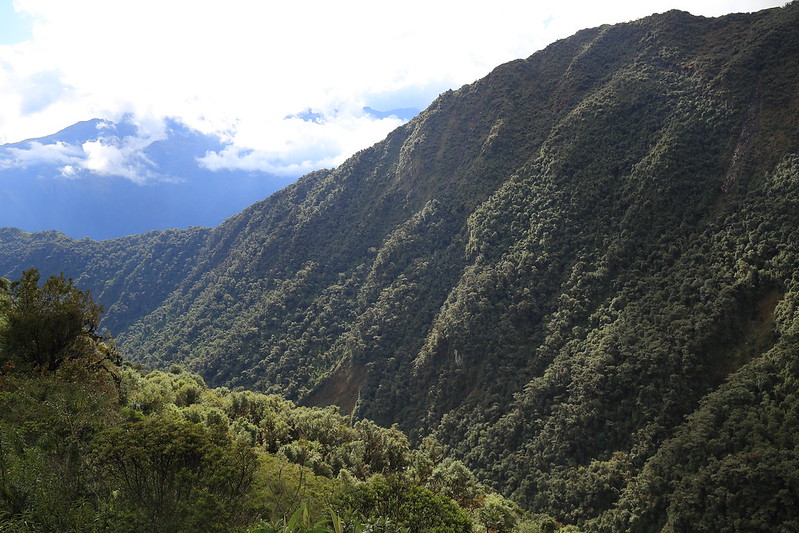
The rules exist mostly to protect the gorillas from us. Mountain gorillas share about 98 percent of their DNA with people and catch our respiratory infections easily, so a cold carried into the forest can kill.
Distance. UWA asks trekkers to stay ten metres back; Rwanda’s rule is seven. Curious juveniles do not read the rules, so when one comes closer, the guide will ease you backwards.
Health. A cold, flu or upset stomach means no trek. Rangers can stop sick visitors at the briefing, and face masks may be given out for the last stretch to the family.
Group and time. One group of eight per family each day, and sixty minutes once you reach them.
Age. Fifteen is the minimum in Uganda, Rwanda and Congo, and passports are checked.
Behaviour. Flash stays off. Food, drink and cigarettes stay in the bag near the family, voices stay low, and a sneeze goes into your elbow, facing away.
If a gorilla charges. Freeze, crouch, keep your eyes down and let the ranger handle it. Nearly every charge is a bluff.
Gorilla Trekking Safety and Injuries
Visiting gorillas has a strong safety record. Habituated gorillas are calm around people, and rangers manage every visit. Silverbacks sometimes charge or brush past trekkers, usually when a group stands too close or does not move back when told, but serious injuries to visitors from gorillas are very rare. The rangers and trackers working with families still being habituated carry more risk than tourists do.
The injuries that do happen are ordinary hiking ones: slips on wet clay, twisted ankles, scratches and nettle stings. If someone is hurt far from a road, porters carry them out on a stretcher, so travel insurance that covers hiking and medical evacuation is worth having before any trek.
Is gorilla trekking in Uganda safe? On the trail, yes: every group walks with armed rangers, and habituated gorillas are calm with people who follow the rules.
Getting there safely is the other half of the question. Bwindi and Mgahinga lie close to the Congo border, so check your government’s current advisory before booking and use a licensed operator who follows the road situation. Our guide to whether Uganda is safe to visit sums up the current advice. The ethics are sound when the rules hold: visitor numbers are capped, and permit money funds rangers, vets and the villages around the park.
Gorilla Habituation Experience in Rushaga: Price and What You Get
The gorilla habituation experience is the longer alternative to a standard trek, run in Bwindi’s Rushaga sector. Instead of one hour with a fully habituated family, you spend up to four hours with a family that researchers and rangers are still getting used to people, a process that takes two to three years.
Each habituation family takes just four visitors a day. You set out with the trackers from the nest site, watch how the gorillas react to people and see how the work is done. These gorillas are less settled than a tourist family, which is part of the point, and the day is usually longer and harder than a standard trek.
It costs US$1,500 for foreign non residents, nearly double a standard permit, rising to US$1,800 from 1 January under UWA’s revised tariff (letter TDO 93/04). Our gorilla habituation experience guide explains who it suits.
Gorilla habituation permit prices by residency. Every category books through a licensed AUTO member operator, and habituation keeps its full price in April, May and November.
| Visitor | Now | From 1 January |
|---|---|---|
| Foreign non resident | US$1,500 | US$1,800 |
| Foreign resident | US$1,000 | US$1,600 |
| Other African citizens | US$1,000 | US$1,000 |
| East African citizens | UGX 750,000 | UGX 750,000 |
Packing for a Uganda Gorilla Trek
Pack for mud, nettles and rain, whatever the season. The list is short, and each item earns its place on a gorilla trek.
Wear broken in waterproof hiking boots with ankle support, and tuck long trousers into your socks or wear gaiters for gorilla trekking to keep out safari ants. Long sleeves are your defence against nettles and thorny creepers. Old gardening gloves are what trekkers mention most often afterwards, because you grab branches all day. Carry a light rain jacket or poncho; even dry season mornings can turn wet.
In the daypack: two litres of water, the packed lunch and snacks, insect repellent, sunscreen and a rain cover. A camera with a fast lens matters more than a long one, since the gorillas are often close and the forest is dark; switch off the flash. Binoculars help with birds and monkeys on the way. Evenings at altitude get cold, so bring a fleece for the lodge.
Clothing, footwear and gear hire are all in our full gorilla trekking packing list, and our safari gear and clothing guides compare each item. Use the checklist below to see what your season calls for.
Gorilla Trek Packing Checklist by Season
Choose the season of your trek to show what to pack for it, then tick items off as you go. Every item stays listed for an all season trip.
0 of 18 items packed
For the trail, every season10 items
Rainy months6 items
Dry months2 items
Ticks are kept only while this page is open. Trekkers must be at least 15 years old. Pack for the hardest version of the day: a trek described as short at the briefing can still run for hours.
Last checked October. Based on park trekking rules and traveller trip reports from Bwindi and Volcanoes National Park.
Uganda or Rwanda for a Gorilla Trekking Safari: Price, Access and the Trek
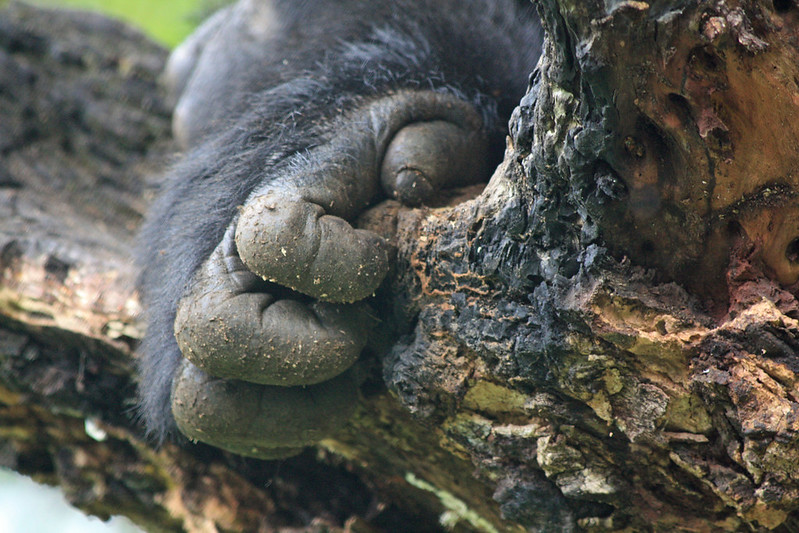
Both countries protect the same subspecies, apply near identical rules and give you the same hour. Where they part ways is the permit price and how long it takes to reach the trailhead.
| Factor | Uganda | Rwanda |
|---|---|---|
| Main park | Bwindi | Volcanoes |
| From airport | 8 to 10 hrs | 2.5 hrs |
| Open families | About 20 | About 12 |
| Terrain | Dense, steep | Higher, open |
| Permit price | Lower | Higher |
| Longer visit | Habituation | None |
| Other wildlife | Wider choice | Akagera |
Uganda wins for most people on value and range. The permit is cheaper, there are more families, the four hour habituation experience exists only here, and a Uganda safari can fold in tree climbing lions in Ishasha, chimpanzees in Kibale and a boat trip below Murchison Falls. Its drawback is the drive: Entebbe to Bwindi takes a full day by road, though scheduled light aircraft to Kihihi and Kisoro cut that to about an hour plus a lodge transfer.
Rwanda wins on time. With three days, a Kigali arrival and a quick drive to Kinigi is hard to beat, and in Rwanda guides assign families at the briefing, so a request for a short or long walk can be met on the day. Plenty of travellers split the difference by flying into Kigali and crossing to Rushaga or Nkuringo, about four to five hours by road, which keeps Uganda’s permit price with a short international leg; see gorilla trekking in Uganda from Kigali. Our comparison of Rwanda vs Uganda vs Congo gorilla safaris goes further.
Rwanda Gorilla Trekking in Volcanoes National Park
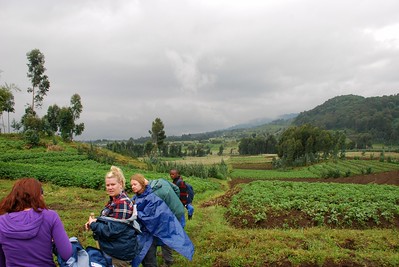
Rwanda’s gorilla treks take place in Volcanoes National Park, on the Rwandan side of the Virunga mountains. Its big advantage is access. Park headquarters at Kinigi sits about two and a half hours from Kigali International Airport on a good tarmac road, so a gorilla trek fits on the end of a business trip or a wider East Africa safari.
On the ground it is a different walk. Fields climb right up to a stone wall at the park boundary, and above it come bamboo and Hagenia woodland on the volcano slopes, higher and more open than anything in Bwindi. Many Rwanda treks are shorter, yet the thin air makes a short climb feel longer. About twelve families are open, eight visitors each, and the guides give the hardest climbs, such as the Susa family high on Karisimbi, to the fittest groups.
Rwanda leans upmarket. The cost of gorilla trekking in Rwanda starts with a permit at nearly twice Uganda’s price, and the lodges around the park include some of the most expensive in Africa: Singita Kwitonda, Bisate Lodge, One&Only Gorilla’s Nest and Sabyinyo Silverback Lodge. Budget beds exist in Musanze, Hotel Muhabura being the longstanding choice. Each year, usually in September or October, Rwanda holds Kwita Izina, the ceremony that names the year’s newborn gorillas.
A few extra days in Rwanda buy golden monkey trekking in the same park, the climb to Dian Fossey’s grave at Karisoke, chimp tracking in Nyungwe Forest or a Big Five drive in Akagera. For permits, itineraries and Rwanda based operators, read our full Rwanda gorilla trekking guide.
Congo Gorilla Tours in Virunga and Kahuzi Biega
The DR Congo has the cheapest gorilla permits in the region, but it gets a short mention here for a reason. Virunga National Park, home to the Congolese share of the Virunga mountain gorillas, has been closed to tourism for long stretches, and its gorilla treks are again listed as closed until further notice after armed conflict around Goma. Government travel advisories for eastern Congo sit at their highest level.
Further south, near Bukavu, Kahuzi Biega National Park takes visitors to Grauer’s gorillas, the eastern lowland subspecies and the biggest gorilla of all. Access rises and falls with local security, so any Congo plan stays conditional until the park and your government’s advice both say yes. For the latest position, see our Congo gorilla safaris page.
Uganda Gorilla Trekking Tours, Prices and Primate Safari Extensions
Most gorilla trekking tours in Uganda follow a handful of shapes. A three day gorilla tour is the shortest practical trip from Entebbe or Kigali: a day in, a trek day and a day out. Our 3 day gorilla safari shows the usual plan, and our guide to gorilla trekking from Entebbe compares the road and air routes. Some overland camping trips sell the trek as an add on, which suits travellers already on a long Africa route.
A 4 day gorilla safari in Uganda adds a rest stop after the trek, most often Lake Bunyonyi or Lake Mutanda, a short drive from Rushaga and Nkuringo, with canoe trips and island walks.
Sample gorilla tours and prices. Starting prices from operator listings, per person for two sharing with the gorilla permit included, as gathered on our trip pages. Solo travellers pay more, groups of four or more pay less, and international flights are extra.
| Trip | Route | From, per person |
|---|---|---|
| 1 day, Uganda | Kigali or Kisoro to Bwindi | US$950 |
| 1 day, Rwanda | Kigali to Volcanoes | US$1,700 |
| 3 days by road | Entebbe to Bwindi | US$1,250 |
| 3 days fly in | Kihihi or Kisoro flights | US$1,900 |
| 4 days | Bwindi and Lake Bunyonyi | US$1,700 |
| 7 days | Kibale, Queen Elizabeth, Bwindi | US$2,400 |
| 10 days | Murchison to Bwindi | US$3,500 |
| 14 days | Uganda, Kenya, Tanzania | US$5,000 |
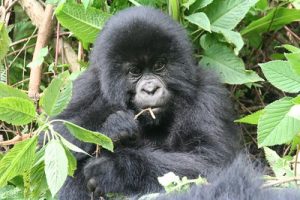
Give it a week and the full Uganda circuit comes into reach. On a seven day trip, the gorilla trek is usually paired with chimpanzees in Kibale and game drives in Queen Elizabeth National Park. Ten days adds Murchison Falls for game drives and a boat up the Nile to the foot of the falls. Two weeks lets you trek in Uganda and Rwanda together, with golden monkeys on the side. Some travellers book two gorilla treks on consecutive days, in different sectors, to see two families and to double the odds if weather spoils one.
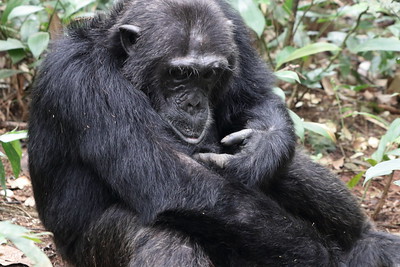
The add on most people choose is chimpanzee tracking in Kibale Forest, home to 13 primate species. Chimp treks leave Kanyanchu in the morning and afternoon, and a full day chimp habituation suits those who want longer. Plenty of trip reports rate the chimps as livelier than the gorillas, so the pairing works. Times, permits and lodges are in our Kibale chimpanzee trekking guide, and routes that pair the two are in our guide to gorilla and chimpanzee safaris in Uganda.
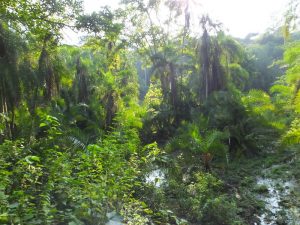
Driving south from Kibale to Bwindi, you pass straight through Queen Elizabeth National Park. Stop for the Kazinga Channel launch, a harder chimp walk in Kyambura Gorge with far fewer permits than Kibale, and the tree climbing lions of Ishasha, right on the road into Buhoma.
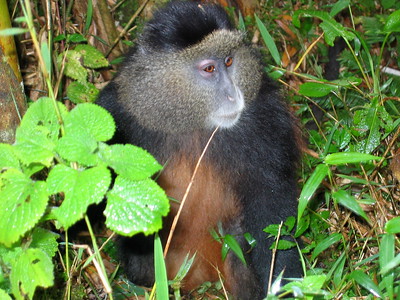
Third on the primate list is golden monkey tracking, run in Mgahinga and in Rwanda’s Volcanoes. These monkeys race about in the bamboo, so the hour is lively, and the walking is gentler than any gorilla trek.

Then there is the big game of the savannah. A popular two country plan finishes the gorilla trek, then takes a short regional flight to Kenya for the Masai Mara, ideally between July and October when the migration is in the reserve.
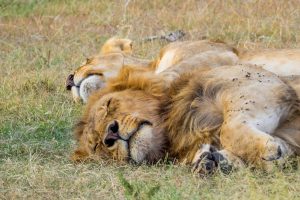
Tanzania works the same way, with the Serengeti and Ngorongoro after Bwindi; flights and the order of parks are on our Tanzania safari and gorilla trekking page.
Mountain Gorilla Facts for Trekkers
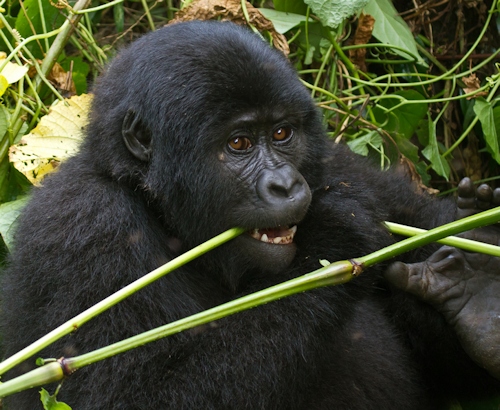
Knowing what you are looking at makes the hour richer. The mountain gorilla, Gorilla beringei beringei, belongs to the eastern gorilla species, and its long, thick, dark coat is the giveaway: it is built for cold nights at altitude, which lowland gorillas never face.
Adult males can weigh around 200 kg and stand roughly 1.7 metres upright, with an arm span wider than their height. From about twelve years old a male’s back turns grey, hence silverback. He leads, breaks up squabbles and chooses where the family eats and sleeps. Groups vary from a handful to over thirty animals; around ten is typical. Wild mountain gorillas live around 35 to 40 years.
They are mostly ground dwellers, though juveniles and even big adults climb to feed. They eat leaves, stems, wild celery, bamboo shoots, bark and fruit, and an adult male gets through a large pile of vegetation a day. They feed in the morning, rest around midday, feed again, then build a fresh nest each evening, which is what trackers use to find them.
Babies arrive in any month. A female has her first infant at around ten and then one roughly every four years, so even a long life yields only a few offspring, and that slow pace is why each loss matters. Listen during your hour: researchers have identified about 25 calls, and the one you are most likely to hear is a low, contented belch rumble rather than the alarm bark.
Gorilla Conservation in Uganda and the Recovery of a Species
Few species have come back the way mountain gorillas have. In 1981 a count across the Virungas found roughly 254. Today there are more than 1,000, and the IUCN downgraded the threat level from Critically Endangered to Endangered in 2018. Endangered is still the status, and gorilla tourism is one of the main reasons the numbers moved the right way.
Your permit pays ranger salaries, veterinary teams and daily monitoring of every habituated family. In Uganda, UWA shares a fixed levy from every gorilla permit and a fifth of park entry fees with the parishes next to Bwindi and Mgahinga, which pays for schools, clinics, water tanks and livelihood projects. You will see a revenue split quoted online that sends three quarters of each permit to conservation; that is not a formula UWA publishes, so treat it with care. Alongside the park authorities, the International Gorilla Conservation Programme, the Dian Fossey Gorilla Fund and Conservation Through Public Health run antipoaching, veterinary and community programmes in all three gorilla countries.
Four names come up again and again on the trail. Paul Matschie, a German zoologist, gave the mountain gorilla its scientific description in 1903. In the late 1950s George Schaller spent months watching Virunga gorillas, and his 1963 book The Mountain Gorilla: Ecology and Behavior replaced the old monster myth with real behaviour. Dian Fossey set up the Karisoke Research Center in Rwanda in 1967, learned to tell individuals apart by their nose prints, campaigned for antipoaching patrols and wrote Gorillas in the Mist; she was killed at Karisoke in 1985. Then, through the war years of the 1990s, Eugène Rutagarama and Rwanda’s park rangers kept guarding the gorillas while risking their own lives.
Gorilla Trekking in Uganda: Your Questions Answered
How much does it cost to trek with gorillas in Uganda?
Uganda’s standard gorilla permit is US$800 for foreign non residents, US$700 for foreign residents, US$500 for citizens of other African countries and UGX 300,000 for East African citizens. A discounted US$600 rate (US$500 for foreign residents) applies on fixed dates in April, May and November, and those permits cannot be rescheduled. The habituation experience is US$1,500, rising to US$1,800 for foreign non residents and US$1,600 for foreign residents from 1 January. For comparison, Rwanda charges US$1,500, or US$1,050 from November to May for travellers who add qualifying nights in Nyungwe or Akagera. Most visitors spend more on lodges and transport than on the permit, and our gorilla trekking cost guide breaks the whole trip down by tier.
Is a gorilla trek worth it?
For most people who make the trip, yes. You spend a full hour a few metres from a wild mountain gorilla family, an animal found in only two forest blocks on earth, and the walk in through Bwindi or the Virungas is part of the day. It is expensive and can be hard work, so it suits travellers who accept mud, early starts and a permit that is the biggest line of the bill. Many trekkers also count where the money goes: rangers, vets and the community projects that helped the population recover.
Is it safe to go gorilla trekking in Uganda?
Yes, for the trek itself. Every group walks with armed rangers, and habituated gorillas are calm with people who keep the distance and follow the guide. Bwindi and Mgahinga lie near the Congo border, so read your government’s current travel advice, avoid eastern Congo while advisories are at their highest level and travel with a licensed operator who tracks road security.
How safe is gorilla trekking in Rwanda?
Treks in Volcanoes National Park run normally, with armed rangers in radio contact throughout, and Rwanda is one of the safest countries in East Africa for visitors. The current United States advisory has a do not travel warning for the strip within 10 kilometres of the Congo border, and it states that Volcanoes National Park is not part of that strip. Read your own government’s advice and ask your operator before you book. Our Rwanda gorilla trekking guide covers the park in full.
Which is better for gorilla trekking, Rwanda or Uganda?
Uganda is better value and has more families, the habituation experience and a wider safari to combine. Rwanda is quicker to reach, with Volcanoes about two and a half hours from Kigali airport, and suits short trips and travellers who want a high end lodge. Flying into Kigali and trekking in southern Bwindi mixes the two.
How difficult is gorilla trekking in Uganda?
Moderate to strenuous. Bwindi’s trails are steep, muddy and sit between about 1,200 and 2,600 metres, and a trek can last from thirty minutes to six hours or more. A porter, a walking stick and an honest word with your operator about your fitness make a big difference.
How many days do you need for a gorilla safari?
Three days is the practical minimum from Entebbe or Kigali: a day to reach your sector, the trek day and a day back. Closer starts make shorter trips possible, though rushed. Four days adds a rest stop such as Lake Bunyonyi, a week brings in chimpanzees and a savannah park, and ten days covers Uganda’s whole wildlife circuit. The sample trips table in the tours section above gives a starting price for each length.
Can you do gorilla trekking in one day?
Yes, if you start close to the gorillas. From Kigali, a one day gorilla trek in Rwanda leaves at about 4am for the briefing at Kinigi and is back in the city by early evening. In Uganda, a one day gorilla trip to Bwindi works from Kigali, Kisoro or Kabale to the southern sectors or Mgahinga, with a dawn start. From Entebbe or Kampala it does not work, because the gorillas are eight to ten hours away by road.
How long does a gorilla trek take?
Plan for most of a day. The briefing starts early, the walk to the family can take thirty minutes or several hours, you spend one hour with the gorillas, and the walk out can be just as long. Most trekkers are back at their lodge by early afternoon, but a family that moves far can stretch the day to evening.
Has anyone been injured in gorilla trekking?
Yes, mostly through slips and falls on steep, wet trails. Serious injuries to visitors from gorillas are very rare, though silverbacks occasionally charge or brush past trekkers who stand too close. Keep your distance, follow the guide and carry insurance that covers medical evacuation.
Is seeing the gorillas guaranteed on a gorilla trek?
No, but the odds are very high, and rangers often quote sighting rates above 95 percent. Trackers find the family before you set off. When a group does fail to reach the gorillas, UWA’s rules allow a partial refund, so ask your operator for the terms in writing.
How far ahead should I book gorilla permits in Uganda?
For June to September and the Christmas period, book six months to a year ahead, especially for Buhoma. In the rainy months a few weeks can be enough, though popular families still fill. Secure the permit first, then build flights and lodges around it.
Is there an age limit, and can older travellers do a gorilla trek?
The minimum age is 15 in all three countries, checked at the briefing, so younger children cannot trek. There is no upper limit. Older trekkers go every week; ask for a nearer family, hire a porter, take the stick and go slowly. A sedan chair is available for those who cannot manage the walk.
Can I choose which gorilla family I trek?
In Uganda the family is linked to the sector on your permit, and the rangers assign groups at the briefing, so you can ask but not insist. Mention any mobility limits when the permit is bought. In Rwanda families are allocated on the morning of the trek at Kinigi.
What happens if I am ill on the day of my gorilla trek?
Tell the rangers. Visitors with a cold, flu or a stomach bug are kept away from the gorillas to protect them, and UWA’s rules allow part of the permit to be refunded when a ranger stops you for illness. Travel insurance that covers missed activities helps.
Can I see the gorillas more than once?
Yes, as long as each trek has its own permit. Many people book consecutive days and do two treks in different sectors or countries. You usually see a different family each time.
How many mountain gorillas are left in the wild?
The last full counts put the world total at 1,063 mountain gorillas. The 2018 Bwindi census counted 459 of them, and the rest live in the Virunga volcanoes shared by Uganda, Rwanda and Congo. A newer census has been carried out across the range, and its results are still awaited. The IUCN lists the mountain gorilla as Endangered, moved down from Critically Endangered in 2018. Eastern and western lowland gorillas are counted separately and are far more numerous.
Do I need a yellow fever vaccination or a visa for a trip to see gorillas?
Uganda’s immigration service announced in October that a yellow fever certificate is no longer a condition of entry, and the UK’s National Travel Health Network now lists no certificate requirement for Uganda. Some sources, including the US CDC’s country page at the latest check, still show the old rule. Yellow fever occurs in Uganda, so the vaccine is still recommended, and Rwanda asks for a certificate from travellers arriving from risk countries, Uganda included, so carry the card if you cross. Uganda’s single entry eVisa is US$50, or US$100 for the East Africa Tourist Visa covering Uganda, Rwanda and Kenya.
Do I need a tour operator for gorilla trekking in Uganda, or can I go independently?
Uganda permits are booked through a licensed operator that is a recognised AUTO member, since UWA sells permits to licensed operators. Most visitors use the same operator for the whole trip because of the long transfers. Some independent travellers buy only the permit through an operator and then self drive or use public transport. If you go that way, read our guide to getting to Bwindi first.
Is gorilla trekking worth it in the rainy season?
For many people, yes. The gorillas stay in the forest and trackers find them in any weather, so sightings hold up; the cost is mud, steeper going and fewer usable photos in heavy rain. April, May and November bring Uganda’s US$600 low season permit and quieter trails. Pack gaiters, gloves and a dry bag, and hire a porter.
Should I hire a porter if I am fit?
It is worth it even for fit hikers. A porter carries your daypack, steadies you on wet clay descents and earns about US$15 to US$20 plus a tip, money that goes to families living around the park.
Do I need a long lens to photograph the gorillas?
Not usually. The gorillas are often a few metres away, so a zoom of around 28 to 200 mm or a good phone covers nearly every shot. Low light is the real problem: flash is banned, so a lens that gathers light matters more than reach.
Can I get a Uganda visa on arrival?
Do not rely on it. Apply for the eVisa online and wait for approval before you fly, since travellers counting on a visa at the airport have been stopped at check in. A single entry visa is US$50, or US$100 for the East Africa Tourist Visa, which also covers Rwanda and Kenya.